Thetford was home to the Iceni titian-haired warrior Queen Boudicca. This is where she put together her battle plan to try to overthrow the Romans - killing 70,000 in the process. In Saxon times, Thetford was the capital of East Anglia and it was a prosperous place to live, which led to it having its own mint in the 10th century. By 1086, the Domesday Survey estimated Thetford's population had grown to between 4,000 and 4,500 people, making it the country's sixth biggest town.
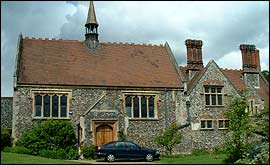
Religious centre Shortly after this time, Thetford became an important religious centre. The foundation stone of the Cluniac Priory was laid in the 12th century and 22 churches were dotted about the town. However, in the 1500s King Henry VIII decided to seize the wealthy monasteries to boost the royal coffers. The dissolution of the monasteries meant the Cluniac Priory was left to fall to ruin, along with the rest of the town's religious houses. The priory site soon became a source of cheap building material and stones from many fallen religious buildings can be found today around the town including King's House, the town council's offices. Charles Burrell Afterwards the town's population and fortune dwindled until Thetford became a manufacturing centre for Charles Burrell's steam traction engines in the 1800s. The foundry turned out machinery widely regarded as the Rolls Royces of the steam industry. The works attracted engineers from London, the Midlands and Yorkshire until it closed in 1928. Population boost With no major employer, the number of people living in Thetford fell to around 5,000 until the 1950s when the borough council approached London County Council to bring businesses to the town. A plan was drawn up for 5,000 Londoners to settle here and their county council built homes in Norfolk, after a number of city firms relocated. Today around 22,000 people live in Thetford, many of them descendants of those who moved from London and those who relocated to work at Charles Burrell.  Take our tour of Thetford Take our tour of Thetford
The Thetford Tour requires RealPlayer
Please be patient - the tour will take a few moments to load. On our tour discover how Thetford got its name, find out about its royal residents and visit the Ancient House Museum, Castle Hill, Cluniac Priory, the Charles Burrell engineering works' site, the Grammar School, King's House, the Little Ouse river, the Town Bridge and old theatre. | 





 View
View