 | 24 September 2014 |

| |
| BBC Homepage | | |
| |||
| Contact Us | | |
Nature & ScienceYou are in: Norfolk > Features > Nature & Science > Food allergy molecule discovered 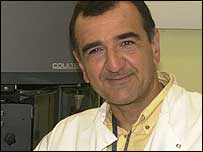 Dr Claudio Nicoletti led the scientists Food allergy molecule discoveredA molecule which may protect against food allergy has been identified by scientists at the Institute Of Food Research in Norwich. Audio and Video links on this page require Realplayer A molecule that offers resistance to food allergy has been found. Interleukin-12 has been shown to be "missing" in mice which were bred to be allergic to peanuts. The results published in the Journal Of Allergy And Clinical Immunology suggest that the molecule normally stops allergies to food developing. Scientists from the Institute Of Food Research in Norwich said the findings offered a potential target for the prevention or treatment of food allergies. In people who suffer from a food allergy, the immune system responds to a food protein as if it was harmful by producing antibodies. Life-threateningIn the most severe cases individuals can suffer life-threatening reactions, including anaphylactic shock. One of the most well-known food allergies is to peanuts. This problem is becoming increasingly common, affecting one in 70 schoolchildren. There is currently no way to treat food allergy and the only way for sufferers to manage the problem is to avoid certain foods and make sure they have injectable adrenaline at hand. 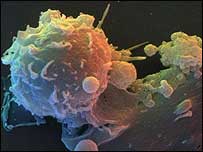 Dendritic cells secrete IL-12 Over-stimulationDr Claudio Nicoletti and colleagues had already done research which showed that special types of white blood cells called dendritic cells are important in helping the immune system decide on how to respond to foreign molecules. They found that in allergic mice the dendritic cells are much longer lasting than normal, which over-stimulates the immune system. In the latest study, he compared the activity of dendritic cells in the gut and in the spleen of allergic and allergy-resistant mice. He found that in the gut of susceptible mice, dendritic cells have stopped producing interleukin-12. Controlling reactionsDr Nicoletti said delivering an allergen, such as peanut, alongside the interleukin-12 molecule, may help to bring allergic reactions back under control. He is doing a further study to test this theory in mice. "A food protein can be perfectly harmless to one person and lethal to another," he said. "We have identified the missing molecule that normally keeps immune responses under control and appropriate." Dr Nicoletti is also working with researchers in Ireland to identify whether similar characteristics can be found in human dendritic cells. Preliminary findings suggest the dendritic cells in individuals with a food allergy are also longer lasting. David Reading, director of the Anaphylaxis Campaign, said: "Food allergy can place an extremely heavy burden on the families affected. "We welcome this research and look forward to further developments." last updated: 04/07/07 SEE ALSOYou are in: Norfolk > Features > Nature & Science > Food allergy molecule discovered
|
| | About the BBC | Help | Terms of Use | Privacy & Cookies Policy |



 Listen to the latest
  Watch the