
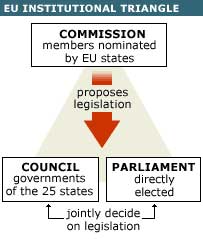
The European Union has expanded from 15 to 25 members with the addition of 10 countries, mainly from Eastern Europe on 1 May 2004.
More countries, including Bulgaria, Romania, and possibly Turkey could be admitted in the future.
The new members are poorer than existing EU members, triggering changes in EU subsidy payments and fears that many of their workers will move west.
The increased size of the EU has also led to plans to change how it is run.
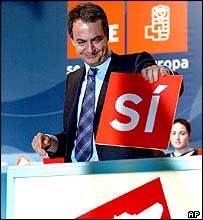
Spain was the first country to vote in favour of the EU Constitution.
The proposed EU constitution aims to simplify the governing structure of the EU by giving fewer veto powers to individual countries.
It will also strengthen moves towards a common foreign and defence policy.
Critics say it will lead inevitably to a European super-state.
The Constitution must be ratified by all member states before taking effect.
Britain plans to hold a referendum, probably in 2006, after most other member states.
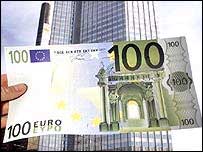
The ECB, based in Frankfurt, is in charge of the single currency
The euro is the currency used by 12 EU states since 1999.
Denmark, Sweden, the UK and the 10 new entrants are outside the euro zone.
Interest rates in the euro zone are set by the European Central Bank; critics say this "one size fits all" policy has harmed economic growth.
Labour says it will only join the euro when it has judged conditions are right for the UK economy.
The Conservatives would stay out of the euro, while the Lib Dems favour euro membership in principle.
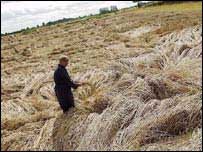
The income of UK farmers has been shrinking despite CAP payments
Nearly half the money spent by the EU goes to subsidise farmers through the Common Agricultural Policy (CAP).
This keeps European farm prices higher than international prices and harms farmers in developing countries.
Under recent reforms, money will switch from production subsidies to money for environmental improvements.
The new entrants to the EU will get a reduced level of subsidy for many years despite their large farming sectors.
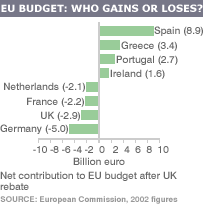
The UK is a big net contributor to the EU budget, paying more than it receives from agricultural and regional subsidies.
Since the l980s the UK has received a rebate, now worth �3bn, which the EU wants to abolish.
The UK's share of agriculture and regional subsidies is likely to shrink further as more goes to new members.
All the main parties want to retain the rebate and fight to increase the UK share of regional aid.
UK's trade is strongly oriented towards the EU
The majority of UK trade is with other EU nations, and the EU acts as powerful voice in world trade negotiations.
Some believe that the UK, like Norway, could gain the economic benefits of EU membership without accepting its political aims.
The UK wants to speed up liberalisation of the EU, opening markets in services and professions to all member states, to boost economic growth - but progress has been slow.
Critics say that the huge cost of bureacratic EU regulations reduces economic growth in the UK.
