
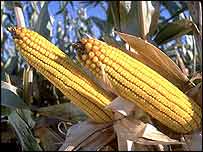
Maize is among the GM crops which have been developed
Genetically modified food is produced from plants which have had their genetic make-up tweaked in the lab.
Scientists "cut and paste" a gene from another organism into a plant's DNA to give it a new characteristic.
This can be to increase yield or to allow the plant to exist in a more hostile environment than normal.
Pro-GM scientists say this means cheaper more plentiful food but opponents argue we do not know the consequences of meddling with nature.

The first step in GM is identifying a gene for a particular characteristic such as herbicide resistance.
The gene, which may come from any other organism, is inserted into the DNA of a plant cell, giving it that trait.
This means, for example, that a field can be sprayed with weedkiller and the GM crops will be unaffected.
Plants can also be modified for pest resistance and for bigger yields.
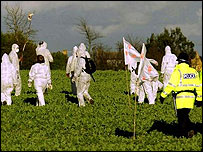
Environmental groups have campaigned against GM
Farmers have modified their crops for thousands of years by crossing similar species. However, modern GM is controversial.
Critics say the modified crops could "escape" and cross with wild plants, with unknown consequences.
They also argue that more chemicals are used on some GM fields which may have a negative impact on wildlife.
And while no study has found GM food to be harmful to humans, opponents say it is too soon to be sure.
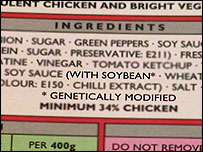
Supporters of GM say there is no evidence that modified crops cause illness in humans.
They say the regulatory structures that govern GM foods are in many ways far stricter than for conventional foods.
As for environmental concerns, they argue that GM crops can mean less use of agro-chemicals such as pesticides.
Those that are used have low toxicity, are rapidly degraded and stay in the soil rather than being washed into rivers, they say.
