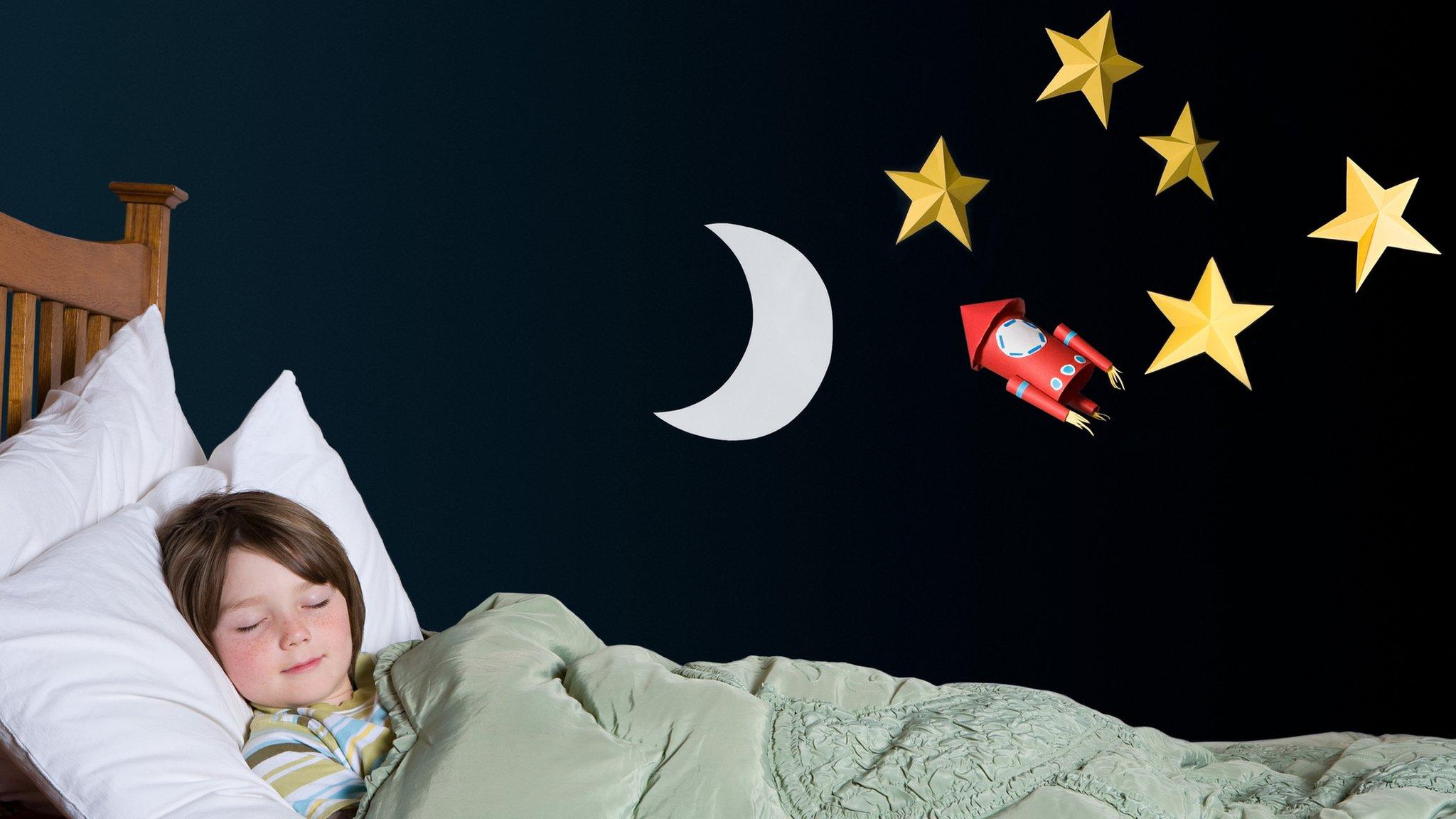
Body clock: Do we need more sleep in winter?
- Published
- comments

A scientist behind a recent sleep study says school times should change in winter to help us feel less sleepy.
German scientists studying sleep think people may need more in winter because of how our body works.
In their research at the Clinic for Sleep & Chronomedicine St Hedwig hospital they noticed people naturally slept longer in the cold dark months if they weren't woken up by alarms.
They think that people could benefit if school and other work schedules changed in winter to allow us a little extra shut-eye.
So do YOU need more sleep in winter? Take part in our vote and leave a comment at the bottom.
If you cannot see the quiz, click here.
Why do we need more sleep in winter?

Before we answer that, we need to know more about sleep.
There are two stages of sleep called NREM and REM which stand for Non-Rapid Eye Movement and Rapid Eye Movement.
REM sleep is important because it is the deepest most restful sleep we have, and is usually when we have dreams.

We may need more sleep in darker, colder months researchers say
The researchers said we naturally have more REM sleep in the winter so it's important to get more sleep in general to allow time for it.
The reason we have more REM in winter is to do with something called our circadian rhythm.
Circadian rhythm is part of our body clock, which is our body's way of telling us when to go to sleep and when to wake up.
The new research suggests our body clock adjusts to the changing seasons so we should do the same with our sleeping patterns.

Is school more tiring in winter?
Dr Dieter Kunz, one of the researchers behind the study, says "societies need to adjust sleep habits, including length and timing, to season or adjust school and working schedules to seasonal sleep needs".
They found it even affects people living in big cities where scientists thought the amount of streetlights and other noises may trick our body clocks into thinking it's not winter.
Scientists do say that most of the research was based on people who have problems sleeping but that it could be even more of an issue with the rest of us.
They say everyone could benefit from a bit more sleep this time of the year.
- Published7 February 2019
- Published7 May 2020
- Published15 March 2024