 | 24 September 2014 |

| |
| BBC Homepage BBC Northern Ireland | | |
| |||
| » | Newsline Meet The Team In Pictures NI News Online Politics Show Let's Talk Hearts and Minds Good Morning Ulster Talkback Evening Extra Titanic Journey | | |
| Contact Us | | |
BBC NewslineYou are in: BBC Newsline > The Battle of Passchendaele 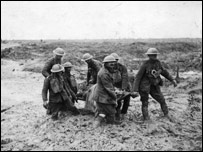 The Battle of PasschendaeleIn the summer of 1917, Robert Kelly Pollin was killed near a small village in Flanders which would give its name to one of the bloodiest battles of the First World War. Also known as the Third Battle of Ypres, half a million men from both sides lost their lives in one hundred days of fighting, for a territorial gain of just five miles. The British war poet Siegfried Sassoon summed up the horror and suffering endured by the troops who fought alongside him in the offensive with a simple but haunting epitaph; “I died in hell (They called it Passchendaele)”In the weeks before the battle, the British bombarded the area with shells, wiping out entire villages but somehow, not the powerful German defence. The first day of the attack coincided with the heaviest rainfall in many years. The battlefield, already churned up by relentless shellfire, was transformed into a sea of stinking mud in which many soldiers drowned before they even fired a shot. 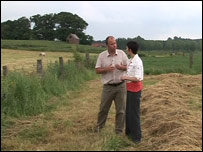 Franky Bostyn and Julie McCullough Franky Bostyn, curator of the Memorial Museum Passchendaele 1917, took us to Westhoek Ridge, close to where Robert Kelly Pollin lost his life on the opening day of the attack. Help playing audio/video Notable veterans who saw action in this battle include Harry Patch, the last British survivor of trench warfare, who died at the weekend aged 111. On the other side, a young Austrian called Adolf Hitler was fighting for Germany. Despite suffering devastating casualties, the Allies prevailed at the Battle of Passchendaele when Canadian forces took control of what little was left of the ruined village on 6th November 1917. However this ground was lost to the Germans the following year. 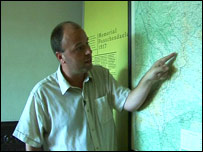 Franky explains how the fight for control of the high ground around Passchendaele Ridge helped to determine the outcome of the whole First World War. Help playing audio/video last updated: 30/07/2009 at 15:45 SEE ALSOYou are in: BBC Newsline > The Battle of Passchendaele
Latest Bulletins |
| | About the BBC | Help | Terms of Use | Privacy & Cookies Policy |

