A border check point in the 1970s
Have you heard the one about the farmer who thought he was clever by opening and closing a blocked border road with his digger when he needed to use it?
He lifted the concrete bollards to one side and then replaced them after his secret sortie.
He was rumbled after the three bollards were daubed with an 'IRA' slogan and when he moved and replaced them under the cover of night they then read 'RAI'.
The army moved in and the bollards were replaced by a crater.
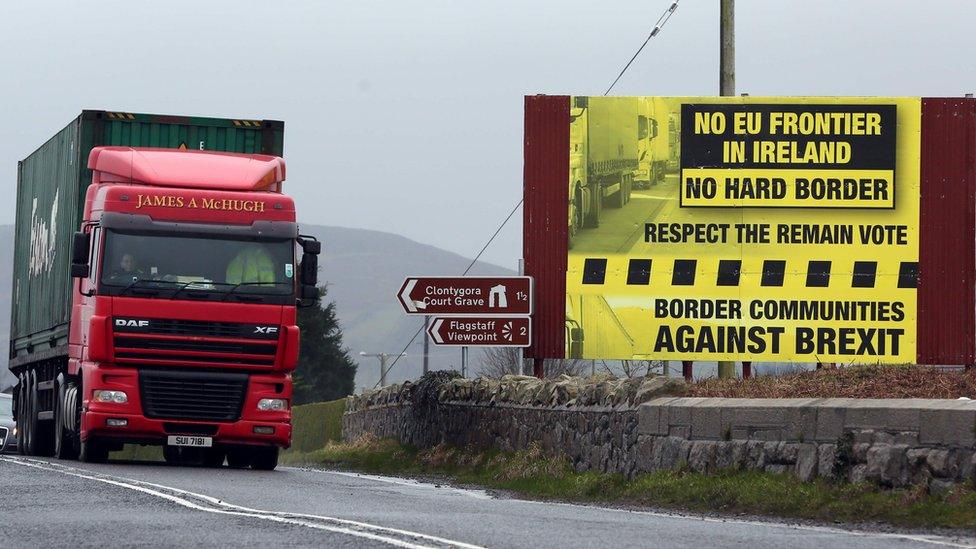
This is just one of the many border stories now being recalled by those who live and work on the frontier and who are worried about the impact of Brexit.
"Policing the border now is mission impossible," explained former UK custom officer Gerry Temple.

During The Troubles there were just 20 border crossings open
He patrolled the Londonderry/Donegal border for two decades at the height of The Troubles.
"It would cost billions to monitor the maze of roads which now criss-cross the border - Donald Trump's wall would be easier to build," said Mr Temple.

Former customs officer Gerry Temple said policing the border will be "mission impossible"
"The border runs through many properties and it would be impossible for customs to check what comes in the southern side and goes out the northern side.
"The re-opening of the unapproved roads has changed everything and made the task for customs impossible."
The border runs for 300 miles and during The Troubles, there were 20 border crossings open. Today there are 260 border roads.

Customs officers say check points like this one would not work today
One option might be to use CCTV cameras to monitor the minor crossing points, as suggested by Michael Lux, the former head of European Commission Customs.
He said the cameras could be controlled centrally and mobile patrols could then be dispatched to search vehicles.

Hundreds of border roads which were blocked during The Troubles are now back in use
But Eamon Ó Fearghail, who spent 40 years as a customs officer in Donegal, said cameras are not the answer.
"I can tell you those cameras won't last - as soon as they are erected, the chances are they will disappear," he said.

Eamon Ó Fearghail said cameras are not the answer
"Drones and helicopters have also been mentioned. All pie in the sky.
"The only way to monitor the border is with trained and experienced staff.

"In 1969, there were 80 customs officials in Donegal, now I'm being told there are just three uniformed officers in the county. So that's the scale of the task facing those in charge."
But farmer Robert Moore, who lives on the Derry/Donegal border and is a Brexit supporter, said people are rushing to bring back the cement bollards.
"There's a lot of scaremongering out there at a time when the UK hasn't even officially told the EU it's leaving. Border crossings are managed elsewhere in Europe and it will be the same here," he said.
As for his farming friend, who was rumbled by mixing up the bollards and misspelling the IRA, he joked: "We did have the concrete evidence, but not anymore."
- Published1 February 2017
- Published31 January 2017