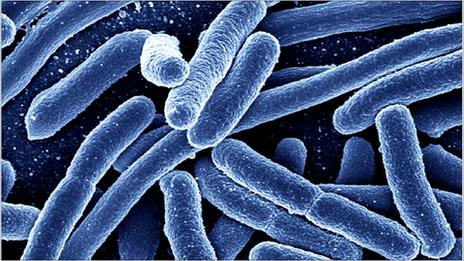
Public Health England investigated a cluster of the rare E. coli 055 in Dorset last year
A number of pets linked with an E. coli outbreak in Dorset are being tested as experts work to identify the source.
It follows the discovery of the E. coli O55 strain in animal droppings outside a house of a family recently affected.
Public Health England (PHE) described this - the first non-human case - as "interesting".
Two children were treated in hospital for serious kidney problems following E. coli O55 infections last month. They have since been allowed home.
'Submit faeces'
It is not clear whether the faecal sample which tested positive came from a wild or domestic animal.
A cluster of cases of the bacterial illness in Dorset was investigated in November 2014, with another outbreak in May, but no common source was found.
A PHE statement said: "As part of the ongoing investigation, the multi-agency team are contacting some cases from 2014 who reported having pets, asking them to submit a faecal sample from their pet for further testing."
Last month PHE said it was reviewing data but admitted it was unlikely to find a single source of the strain which seemed to be "particular to Dorset".
Ten people in the Blandford area of Dorset were diagnosed with E. coli O55 between July and November 2014.
A further two cases were identified in Portland, four in Bournemouth and Poole as well as three cases outside the county which had links to people from Dorset.
Nursery children were among those infected with the bacterial illness, which can lead to kidney problems in some cases.
Clusters of the particular strain had not been identified in England since records began in 1994.
PHE said any previous cases of the O55 strain had been associated with travel.

Avoiding E. coli infection
Wash hands thoroughly after using the toilet, before and after handling food, and after handling animals
Remove any loose soil before storing vegetables and salads
Wash all vegetables and fruits that will be eaten raw
Store and prepare raw meat and unwashed vegetables away from ready-to-eat foods
Do not prepare raw vegetables with utensils that have also been used for raw meat
Cook all minced meat products, such as burgers and meat balls, thoroughly
People who have been ill should not prepare food for others for at least 48 hours after they have recovered
Source: Public Health England, external

- Published30 May 2015
- Published28 May 2015
- Published27 November 2014
- Published26 November 2014
- Published4 June 2011