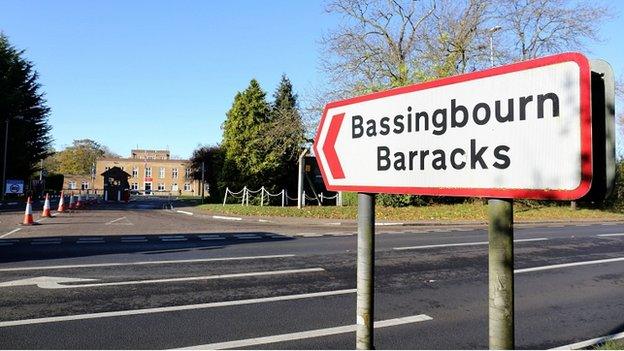
About 300 Libyan recruits arrived for training at Bassingbourn in June 2014
More than £1m has been spent on a barracks left empty since cadets returned to Libya a year ago after a series of sex attacks, figures show.
The Ministry of Defence (MoD) confirmed it spent £946,659 on bills and £138,000 on repairs at Bassingbourn Barracks.
Some 300 cadets were sent to the barracks, with five later jailed for sex attacks in nearby Cambridge.
All cadets being trained to support the then new Libyan government were returned home in November.
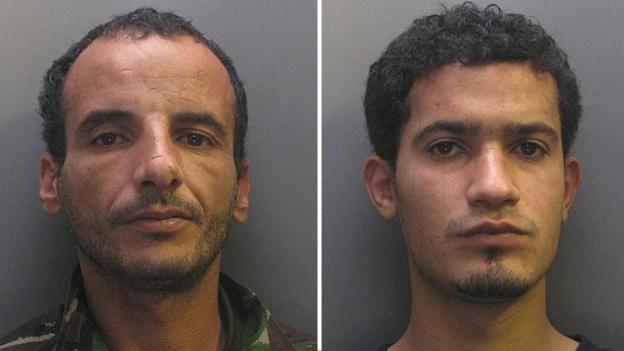
Moktar Ali Saad Mahmoud, 33, and Ibrahim Abugtila, 23, were both jailed for 12 years, for the rape of a man on Christ's Pieces, in October 2014.
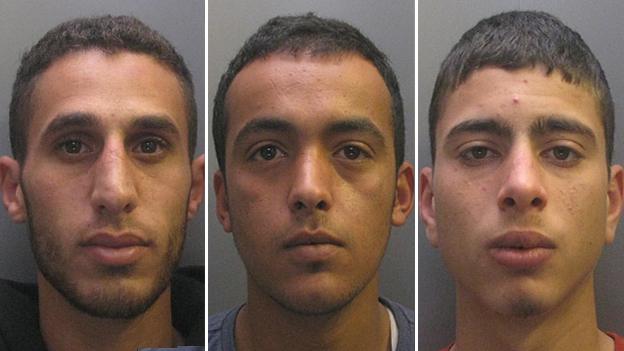
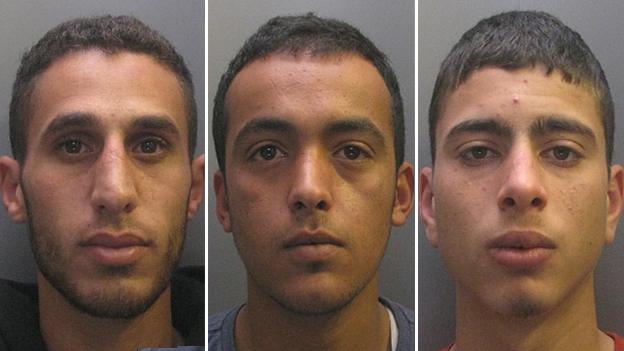
On the same night Khaled El Azibi, 19, Ibrahim Naji El Maarfi, 21, and 28-year-old Mohammed Abdalsalam fled the barracks and carried out sex attacks on three women.
El Azibi was sentenced to 12 months and El Maarfi and Abdalsalam each to 10 months.
All three have been released and are seeking asylum in the UK.

The military in Bassingbourn
The airfield at Bassingbourn first became an RAF training base in 1938
The Boeing B-17F bomber Memphis Belle completed 25 combat missions from Bassingbourn after the 91st Bombardment Group of the United States Army Air Forces moved there in September 1942
The British Army took over the base in 1970
In the 1990s it became home to the Army Training Regiment
More than 50,000 soldiers were trained at Bassingbourn during four decades of Army occupation
The final tranche of Army recruits marched off the parade square in August 2012
A Freedom of Information request by the BBC revealed Bassingbourn is costing the MoD £32,250 a month in business rates.
"Since the Libyan cadets left in November, the MoD has paid £544,659 in business rates and £402,000 in utilities," it said.
It refused to disclose how much it has paid for security at the site, where guards are on 24-hour patrols.
The MoD said: "We continue to pay for utilities as the barracks remain in use and those on site need access to electricity and water.
"Bassingbourn is a very large site so naturally running costs are high.
"The MoD is currently considering the site's future use."

Bassingbourn Barracks has been home to the military since World War Two when it was an RAF base
- Published1 October 2015
- Published30 September 2015
- Published18 May 2015
- Published15 May 2015
- Published15 May 2015