

Space shuttle timeline
 1977 Test flight
 1981 First launch
 1983 Spacewalk
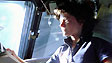 1983 US spacewoman
 1984 Untethered spacewalk
 1986 Challenger disaster
 1988 Return to flight
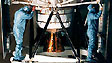 1989 Magellan launched
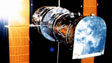 1990 Hubble telescope
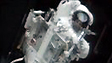 1993 Hubble repaired
 1995 Shuttle-Mir docking
 1998 Oldest man in space
 1998 ISS mission begins
 2003 Columbia disaster
 2004 Beginning
of the end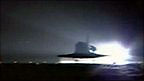 2005 Return to flight
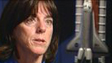 2007 Teacher in space
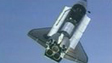 2008 Columbus lab
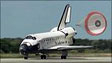 2011 Discovery's last flight
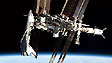 2011 Endeavour's last flight
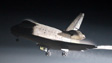 2011 The final flight
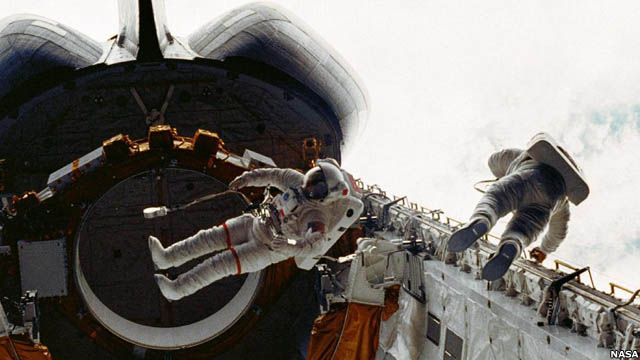
Spacewalk
4 April 1983
Challenger, the second shuttle, was the first to conduct a spacewalk. With two machines Nasa now had a fleet of re-usable spaceplanes. They would change the way humans would live and work in space. Large payloads could be taken into orbit - even retrieved and returned safely to Earth.
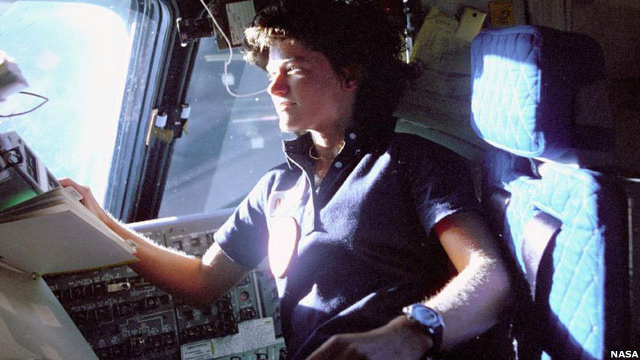
Spacewoman
18 June 1983
The multi-seat shuttle meant many more people could go into space than had been the case with Nasa's earlier capsule designs. Many non-military personnel were called up, including physicist Sally Ride - the first American woman to go into space.
Untethered spacewalk
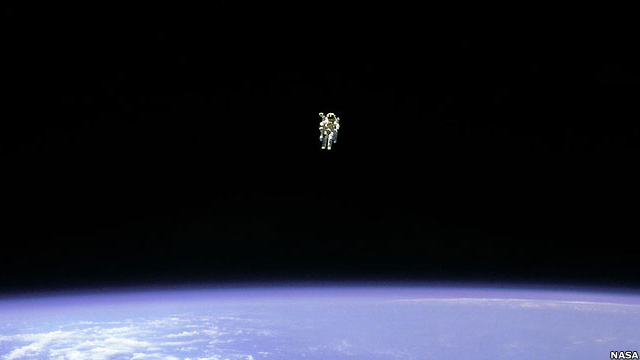
7 February 1984
Shuttle missions provided some iconic moments. Bruce McCandless hanging in space above a blue globe is surely one of the most majestic. McCandless was testing the Manned Maneuvering Unit, a device that enabled un-tethered spacewalks.
Challenger disaster
28 January 1986
Challenger's destruction 72 seconds into its mission punctured the notion that space flight had become routine. An investigation concluded that the seal on a rocket booster had failed, leading to the shuttle's disintegration. Among the seven astronauts lost was Christa McAuliffe, who was to become the first US civilian in space.
Magellan launched
4 May 1989
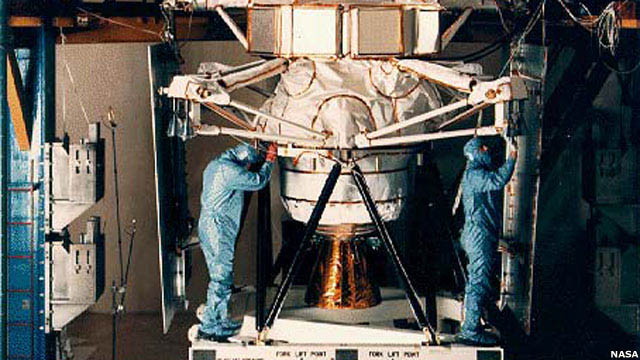
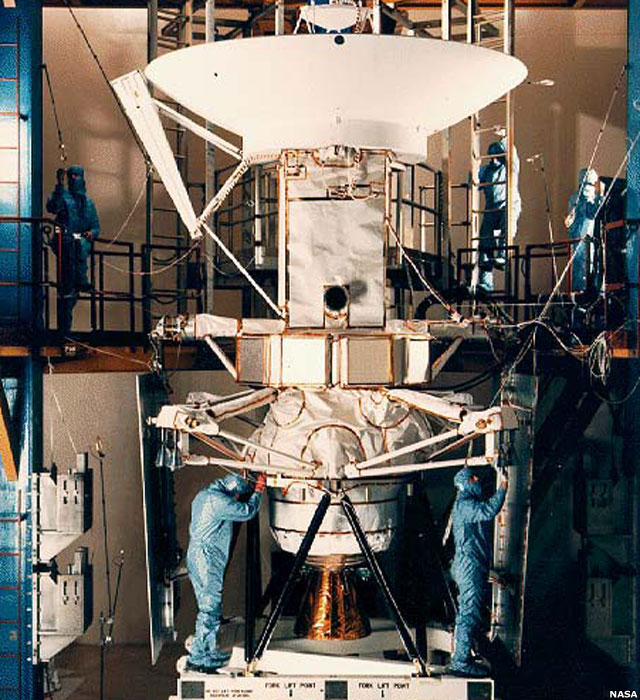
Magellan was the first planetary mission to be launched by an orbiter. It was despatched to Venus to make a radar map of its surface. In the years ahead the shuttle would launch a range of science probes and telescopes.
Hubble telescope
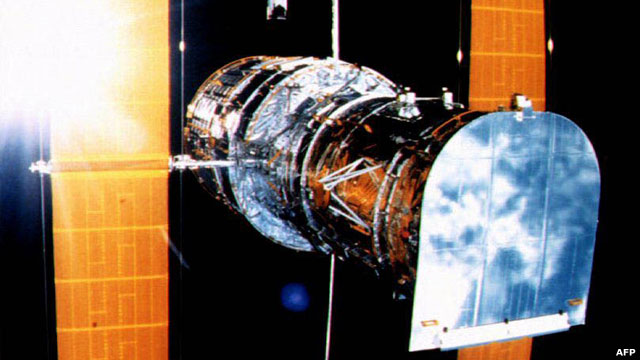
24 April 1990
The shuttle would have a recurring association with the Hubble Space Telescope. The astronomical facility would transform our knowledge of the cosmos, but without the regular servicing from orbiter astronauts the HST would never have lasted as long.
Columbia disaster
1 February 2003
Columbia's loss underlined once again the vulnerabilities in the shuttle transportation system's design. Insulation foam falling off the external tank on lift-off had damaged the ship's left wing. The hot gases encountered on re-entry penetrated the hole and tore Columbia apart.
Beginning of the end
14 January 2004
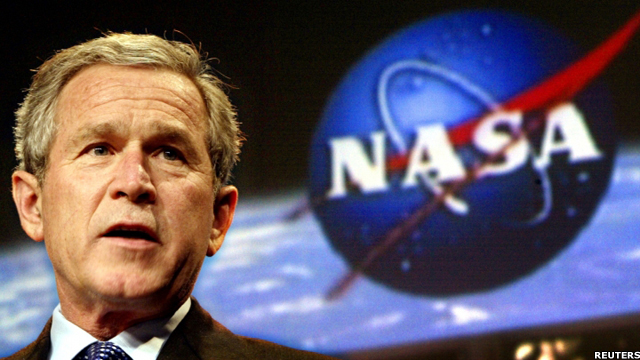
Shuttle safety was now a pressing issue. George W Bush signalled the fleet's retirement, and suggested a replacement transport system be developed to take astronauts back to the Moon. His Constellation project would be cancelled by his successor, however.
“Start Quote
End QuotePresident George W Bush14 January 2004In 2010, the space shuttle, after nearly 30 years of duty, will be retired from service.”
Return to flight
26 July 2005
When Eileen Collins and her crew took Discovery back into space, a series of modifications had been introduced to the shuttle and its operation. This included the introduction of a back-flip manoeuvre at the ISS, to allow for a photo inspection of the orbiter's heatshield.
Endeavour's last flight
16 May 2011
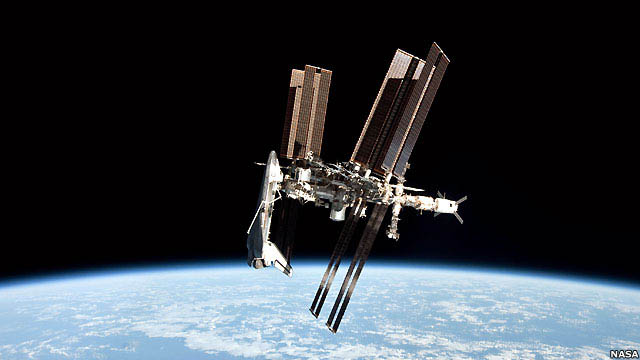
The space station could not have been built without the space shuttle. Remarkably, though, it was not until the penultimate flight of the programme that everyone got to see a close-up image of a shuttle actually docked to the orbiting outpost.
Magellan


Space shuttle
Features and Analysis
 Space shuttle makes final landing
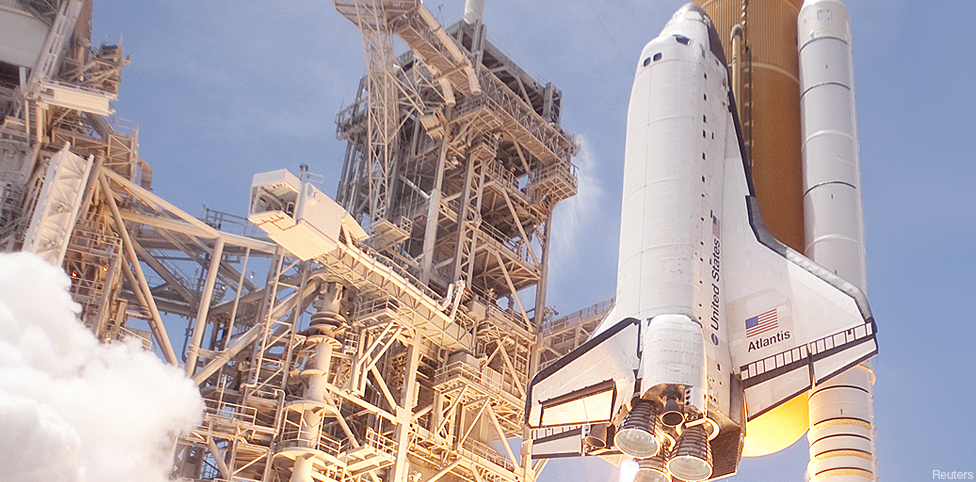
The Atlantis shuttle lands at the Kennedy Space Center in Florida, bringing a close to Nasa's 30-year orbiter programme.
The darker view of shuttles' end
Retirement ushers in new era
 Space shuttle makes final landing
More Science & Environment stories
RSS Drones bounce back from collisions
Researchers in the US copy bird and bat wings to build a drone that can rebound and recover from mid-air collisions.
Bloodhound car has engine fitting
Getting ready for the mission to hell
 Drones bounce back from collisions