Summary

  1. What we’ve covered on BBC Verify Live todaypublished at 17:08 GMT

    Thomas Copeland
    BBC Verify Live journalist

    We’re going to be closing today’s BBC Verify Live shortly so take a few minutes now to read back on our work.

    It’s been a busy day for our video verification team. They’ve been analysing footage from Pakistan, where an explosion at a mosque is reported to have killed 24 people, from Russia after the shooting of a high-ranking general and from inside Gaza, where what appears to be an explosive demolition has taken place at a school.

    Legislation has come into force in the UK today making it a criminal offence for anyone to create or request deepfake intimate images of adults without consent, so we’ve been breaking down exactly what a deepfake is and why they’re hard to detect.

    As well as those we debunked this fake viral photo that claims to show Jeffrey Epstein is alive.

    That’s all from the live page team for this week. We have people on shift all weekend feeding into BBC News’ reporting and BBC Verify Live will be back on Monday. We’ll see you then.


    BBC Verify Live banner
  2. The Epstein files one week onpublished at 16:52 GMT

    Ros Atkins
    BBC News analysis editor

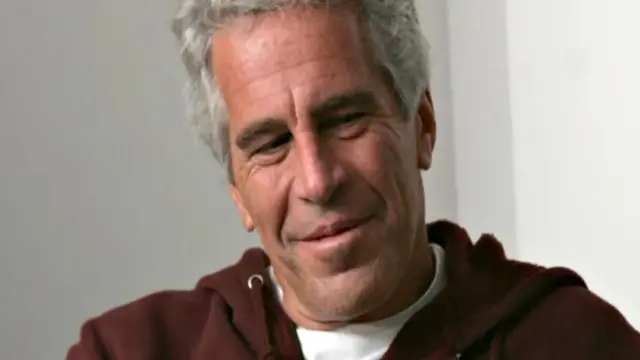
    Jeffrey Epstein, pictured in 2004Image source, Getty Images
    Image caption,

    Jeffrey Epstein in Cambridge, Massachusetts, in 2004

    The way the Epstein files were released has, in part, shaped the way this story has evolved. There are millions of files - emails, letters, photos, audio recordings, videos - and they are not easily searched and sifted.

    This has meant significant developments have emerged on almost every day of the past week - not least the escalating scandal over Prime Minister Keir Starmer's decision to appoint Peter Mandelson the UK’s ambassador to the US in 2024.

    Finding and reporting those stories is made more complex by several other factors. Fake documents are circulating online that claim to be from the Epstein files but aren't.

    In addition, many files such as videos and photographs come with no information, such as date, location or where the material was found.

    There have also been mistakes in the redactions. In some cases, the US Department of Justice failed to redact the faces of some survivors who are seen in photos and videos. Some of this material has now been taken down, but not all. In reporting this story great care is being taken to avoid identifying any survivors who are affected by these redaction errors.

    In terms of UK politics, we're seeing how one act of transparency in the US has led to demands for transparency in Westminster with senior UK government figures now having to share their electronic communications with Mandelson.

    This means there will be more for all of us to see, not just in relation to Mandelson, but with regards to the UK's relationship with the US.

    For No 10 Downing Street this story has far from run its course.

  3. Deepfakes harder than ever to spot, experts saypublished at 16:39 GMT

    Thomas Copeland
    BBC Verify Live journalist

    We’ve been talking today about deepfakes as legislation comes into force which makes it illegal in the UK for anyone to create or request deepfake intimate images of adults without consent.

    I’ve been talking to experts about how advances in AI-generation have made spotting deepfakes so much harder.

    “Deepfakes have advanced at breathtaking speed,” says Henry Ajder, an expert in generative-AI, “making many nearly impossible to detect with untrained human eyes and ears.”

    “We can’t all be digital Sherlocks, and even those of us that are, find confidently identifying AI-generated content a growing challenge,” Ajder told BBC Verify.

    Both Ajder and BBC data scientist Woody Bayliss say the best hope is more watermarking of AI content and an approach called “content provenance”.

    Content provenance relies on AI companies adding a digital label to their output. This is embedded within the content and lists important information about where it has come from and how it’s been edited.

    One of the best-known content provenance initiatives is C2PA which has the backing of big tech firms like Microsoft, OpenAI and Google. However, experts say its effectiveness depends on it being adopted widely, so that people can understand where a piece of content has come from and can question material if it’s missing.

    “We need to see much greater adoption to help the everyday person confidently navigate a world where deepfakes and synthetic content are everywhere - hidden in plain sight,” say Adjer

  4. What happens when people do not want to be returned to their home country?published at 16:18 GMT

    Rob England
    BBC Verify senior data journalist

    I’ve been looking into the return of foreign nationals from the UK after the Democratic Republic of Congo agreed to take back its citizens who have no legal right to be here.

    But what do we mean by a “return”, and what happens when someone does not want to leave? In official statistics, returns include people who:

    • entered the UK without permission, such as by small boat or using false documents
    • overstayed their legal right to remain, for example after a visa expired
    • breached the conditions of their leave, such as working without permission
    • are subject to deportation, often following a serious criminal conviction
    • were refused asylum

    Most people who fall into these categories leave the UK voluntarily. Some receive financial support to help them resettle, or have their travel costs covered by the government. Others depart without notifying the Home Office and are recorded later in the data.

    The most complex type of removal is known as an enforced return. These are where people refuse to leave voluntarily and are legally and logistically more difficult for the government.

    They often require escorts and can be delayed by last-minute legal challenges or by destination countries refusing to issue or accept travel documents. This is an issue the UK government says it has had with some countries including the DRC.

  5. How many enforced returns were there to the DRC before the UK’s visa threats?published at 15:41 GMT

    Rob England
    BBC Verify senior data journalist

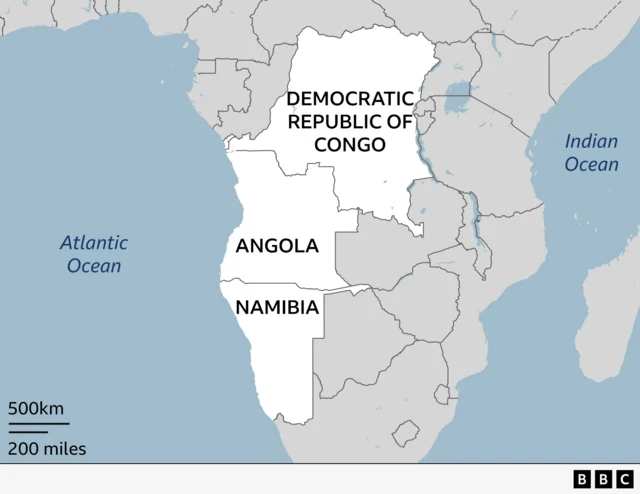
    The Democratic Republic of Congo (DRC) has agreed to take back its citizens who have no legal right to remain in the UK after the home secretary threatened to restrict issuing visas to people from the country.

    It is the third African nation to reach such an agreement following Namibia and Angola. Shabana Mahmood previously accused all three of failing to co-operate with the UK over returning their nationals.

    The UK issued nearly 6,000 visas to citizens of the DRC, Angola and Namibia in the year to September 2025.

    This Flourish post cannot be displayed in your browser. Please enable Javascript or try a different browser.

    Official figures show enforced returns to these countries are very low with one person returned to the DRC, two to Angola and two to Namibia in the year to September 2025. Since July 2019 a total of 29 people have been forcibly removed to the three countries combined.

    By contrast, Albania is the country with the highest number of enforced returns. About 2,500 Albanian people were removed or deported in the year to September 2025.

    The Home Office said the new arrangements with the three African countries could make at possible to return 3,000 people.

    Map of Africa highlighting the three countries that have agreed return deals with the UK: DRC; Angola; and Namibia
  6. Fake image sparks baseless ‘Epstein is alive’ claimspublished at 15:00 GMT

    Shayan Sardarizadeh
    BBC Verify senior journalist

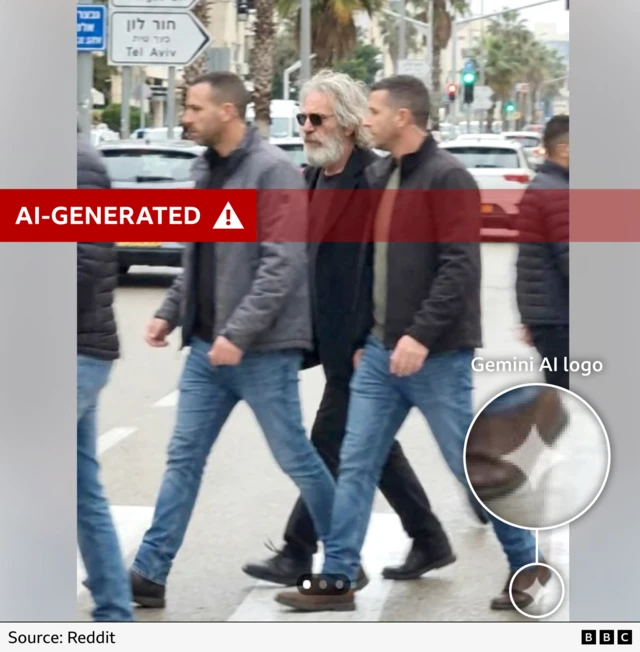
    An image made with artificial intelligence has led to viral online posts falsely claiming that the dead sex offender Jeffrey Epstein is alive and has been spotted on the streets of Israel.

    The image has been widely shared on platforms such as X, Reddit and Facebook, with some users claiming the man in the centre of the image wearing sunglasses bears a strong resemblance to Epstein.

    “Someone who looks like Jeffery Epstein was just spotted walking in Tel Aviv, Israel,” claimed one X post that has had more than five million views.

    “This is Epstein, isn't it?” asked another user, sharing a cropped version of the image zooming into the face of the man in the middle. The post has been viewed more than seven million times.

    We ran a reverse search to locate the source of the image and found what appears to be the earliest version on Reddit which was posted four days ago.

    A Gemini watermark can be seen in the bottom right of the uncropped image on Reddit which indicates it was created using Google’s generative-AI model.

    The street signs in Hebrew in the background also make no sense, a consistent error with AI-generated images and videos.

    An AI-generated of three men. People online are claiming - falsely - that the man in the middle is the dead US sex offender Jeffrey Epstein who is seen here in Tel Aviv, Israel
  7. The challenge of detecting deepfakespublished at 14:20 GMT

    Thomas Copeland
    BBC Verify Live journalist

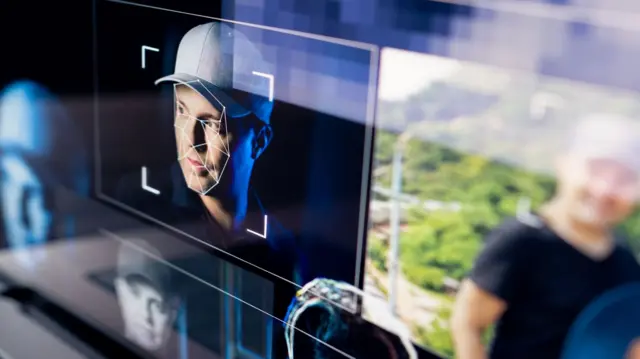
    A stock image mocked up to represent the process of creating deepfake images using pictures of real peopleImage source, Getty Images

    We’ve been reporting today that it is now illegal in the UK for anyone to create or request deepfake intimate images of adults without consent.

    The UK government has also said it’s collaborating with Microsoft and tech companies on deepfake detection.

    Deepfakes of all kinds - from celebrities appearing to endorse products, to students using it to bully their peers - are becoming easier to make. So working out how to spot them is increasingly important, including for us here at the BBC.

    “To detect deepfakes we must know deepfakes,” says Woody Bayliss, a data scientist with the BBC’s Research and Development team.

    “To achieve this at scale you have to train machine learning models that can differentiate between real content and AI-generated content by themselves,” he explains.

    But there are two main challenges:

    • Some content is partially manipulated - a mixture of AI-generated and authentic material - which is hard for deepfake detectors to classify as real or fake
    • The quality of the material

    “Often clips that need analysis have been passed around the internet and with each pass information can be lost,” Bayliss says,” and this is why we always ask for the oldest version of the content.”

  8. Creating non-consensual sexualised deepfakes now illegal in the UKpublished at 13:49 GMT

    Thomas Copeland
    BBC Verify Live journalist

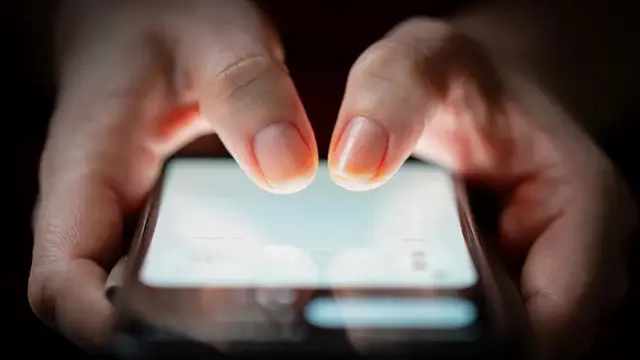
    A person using a smartphone with their thumbsImage source, Getty Images

    Legislation has come into force in the UK today making it a criminal offence for anyone to create or request deepfake intimate images of adults without consent.

    Artificial intelligence-generated pornography involving the faces of non-consenting people has surged in recent years. In recent weeks the UK, EU and US have been investigating the creation of sexualised deepfakes generated by Grok - the artificial intelligence chatbot on the Elon Musk-owned X social media platform.

    So what are deepfakes? Simply put, it’s the use of artificial intelligence to convincingly simulate the voice and appearance of real people.

    The “deep” in deepfake refers to deep learning, a complex process used to scan data - in this case audio, images or videos - and find patterns that can then be replicated in a fake, digital version of a real person.

    Here at BBC Verify we’ve seen deepfakes used for other malicious purposes including this fake TV report from the Irish presidential election and this British 999 call handler whose voice was cloned by a Russian-linked disinformation campaign.

  9. Verifying footage of blast at school in Gazapublished at 12:47 GMT

    Kayleen Devlin and Emma Pengelly
    BBC Verify

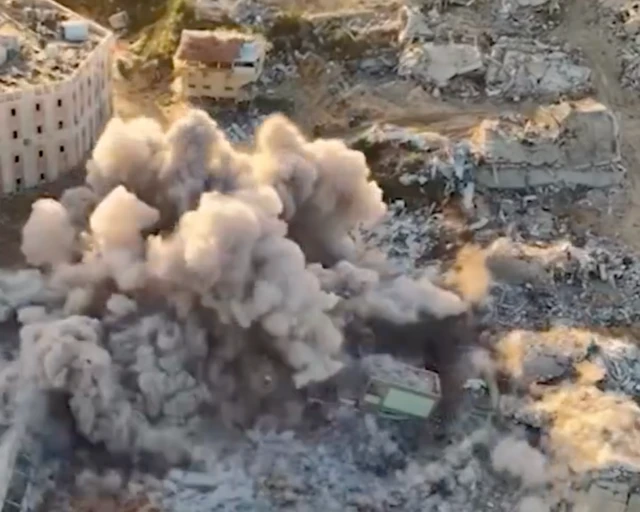
    A screengrab taken from what appears to be a drone video of the explosion at the school in GazaImage source, X

    We have reviewed a video circulating online that claims to show an explosion at a school in Gaza. The footage shows what appears to be an explosive demolition at the Kuwait Secondary School for Girls in Beit Lahia, northern Gaza.

    The earliest version of the video we were able to trace was posted on 5 February. Satellite imagery from the beginning of the month shows parts of the school were damaged during the two-year war between Israel and Hamas - but one section is still standing which suggests the blast in the video happened recently.

    The school is in a part of Gaza around 240m east of the so-called “yellow line” where Israeli troops withdrew to as part of the US-brokered ceasefire deal that is currently in effect.

    We’ve found no public mention by the Israel Defense Forces of the targeting of this school in their official statements or social media channels.

    According to the United Nations children’s charity Unicef more than 90% of schools in Gaza have been damaged or destroyed since the war began. It also says around 60% of school-aged children currently have no access to in-person education.

  10. Confirming location of Russian general’s shooting in Moscowpublished at 12:06 GMT

    Peter Mwai
    BBC Verify senior journalist

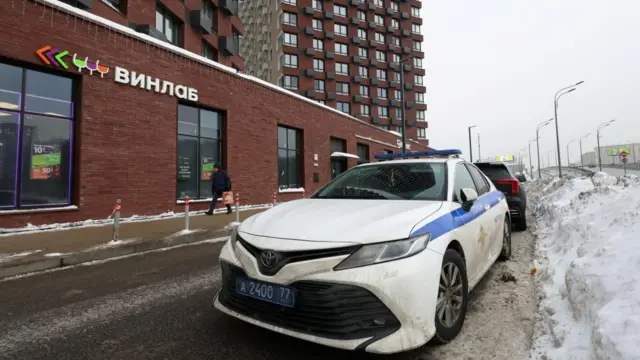
    A white Russian police car is parked next to a red-brick building and a metre-deep pile of snowImage source, Reuters
    Image caption,

    News agency photographers are now at the scene of the shooting in north-west Moscow

    We’ve used video shared online to confirm the location where a high-ranking Russian military officer was shot in Moscow.

    An unidentified individual fired several shots at Lt Gen Vladimir Alexeyev in an apartment building on Volokolamskoye Highway, according to Russia's Investigations Committee.

    We haven’t yet seen footage of the shooting nor its immediate aftermath, but Russian Telegram channels have shared video of emergency vehicles at the scene.

    BBC Verify confirmed the video shows the scene by checking buildings in the footage with street level imagery on Yandex, a Russian search engine. The footage was filmed in a road of residential high-rises off the Volokolamskoye Highway in north-western Moscow which is consistent with local reports.

    Alexeyev is deputy director of Russia's military intelligence agency (GRU). He was placed under European Union sanctions after the GRU was accused of being behind the 2018 nerve agent attack in the English city of Salisbury.

  11. How many people have been deported since Labour took power?published at 11:42 GMT

    Aidan McNamee and Rob England
    BBC Verify

    The home secretary has said nearly 60,000 foreign nationals have been returned from the UK in the 19 months since Labour took office in July 2024 – a rise of 15% on the previous period.

    Provisional Home Office figures back this up, but they also show a notable dip at the start of the year. January 2026 saw the lowest number of removals in almost three years, driven largely by a drop in voluntary returns.

    Under Labour, voluntary departures have made up around three-quarters of all removals. In January, that share fell to 62%.

    That includes people who leave the UK on their own, sometimes with financial support, as well as the largest cohort - those who leave the UK without the Home Office knowing.

    These figures are still provisional and could change when the final data is published later this month.

    This Flourish post cannot be displayed in your browser. Please enable Javascript or try a different browser.

    The Home Office uses “returns” to cover anyone who leaves the UK after losing the right to live or work here. That can happen for a range of reasons, including an expired visa, a refused asylum claim, or a criminal conviction leading to deportation.

    Labour pledged to increase returns of people with no legal right to be in the UK and the numbers have been rising for some time. Figures for the 12 months to September 2025 show an 11% increase on the same period a year earlier.

    Enforced returns can be slower and more complex, often involving legal challenges or difficulties securing travel documents.

    There are no official statistics on the number of people in the UK illegally, so it’s difficult to say what proportion of the population are removed from the country.

    For more on the latest immigration and asylum data, check out BBC Verify’s migration tracker.

  12. Checking reports of deadly Sudan hospital attackpublished at 11:23 GMT

    Peter Mwai
    BBC Verify senior journalist, reporting from Nairobi

    I’m checking reports of two separate attacks in Sudan - where the Sudanese army and the paramilitary group Rapid Support Forces (RSF) have been fighting a civil war for almost three years.

    The Sudanese Doctors Network (SDN) alleges in the first incident the RSF bombed a military hospital in al-Kuwayk in South Kordofan killing 22 people including four medics.

    The town is under the control of the army and is located not far from the city of Kadugli where earlier this week government troops managed to end a siege that had lasted for two years.

    In the second incident, the SDN says 12 people, including one woman, were injured after army drones targeted al-Naam market in West Kordofan, near the border with South Sudan.

    ”The drones struck a fuel market, causing civilian casualties who were subsequently transported to a local hospital for treatment,” the group says in a statement., external

    Footage we are looking at, said to be from the market, shows a huge fire burning. I’m working to verify that video.

  13. Video shows worshippers outside Islamabad mosque after deadly blastpublished at 11:09 GMT

    Shruti Menon
    BBC Verify senior journalist, reporting from Delhi

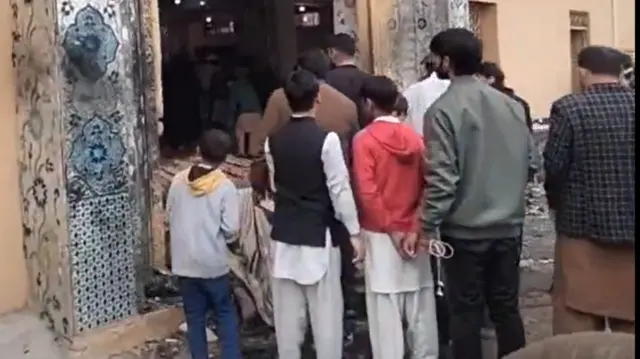
    A screengrab from the video showing worshippers clustered outside the mosque's doors after the blastImage source, X

    We’ve verified a video showing the aftermath of an explosion during Friday prayers at a mosque in the Pakistani capital, Islamabad, where at least 24 people were reportedly killed.

    The video shows footwear scattered across the mosque compound and people lying or sitting on the ground while others call for help.

    We’ve established the video is recent by conducting reverse-image searches and confirmed the blast happened at Imambargah Khadijatul Kubra in the Tarlai area of Islamabad.

    The cause of the explosion is being investigated.

    We will update here when more details become available.

  14. Welcome to BBC Verify Livepublished at 11:05 GMT

    Rob Corp
    BBC Verify Live editor

    BBC Verify has confirmed that footage posted on social media shows the aftermath of an explosion during Friday prayers at a mosque in the capital of Pakistan, Islamabad. It’s being reported that at least 24 people were killed.

    We’re following up on reports of two separate attacks in Sudan where a civil war has been fought for almost three years. We’re checking what footage shows of the two incidents.

    As of today it’s a criminal offence in the UK for anyone to create or request deepfake intimate images of adults without consent. We’ll bring you more on that this morning and also look at what are deepfakes and how they can be detected.

    Our verification team has seen footage being shared apparently showing a girls’ school in Gaza being destroyed. We’re working to verify the video - seemingly shot from a drone - and will bring you more on this shortly.

    You can ask us a question or send us a story to investigate by following this link.

    BBC Verify