Our live updates have endedpublished at 17:59 GMT 25 March
Our live coverage has now concluded for the day.
You can read more about today's proceedings here.
Warning: This page contains details that readers may find distressing
The bereaved families of 19-year-old students Barnaby Webber and Grace O'Malley-Kumar, who were killed in the Nottingham attacks on 13 June 2023, have given evidence to a public inquiry on Wednesday. Ian Coates, 65, was also killed in the spate of attacks by Valdo Calocane
Barnaby's father David Webber said the family panicked after tracking their son's phone using an app to a police station
A number of senior police figures have said detaining Calocane - who had a warrant out for his arrest for nine months before his killings - would not have made a difference, a view David branded "offensive"
Emma added messages sent by police officers in a WhatsApp group discussing the victims being "properly butchered" were "disgusting and grotesque"
Later Grace's parents Dr Sanjoy Kumar and Sinead O'Malley-Kumar gave evidence, expressing their disgust at their daughter and Barnaby being tested for drugs - but their killer was not
The pair cited "enormous gaps" in medical reports, and said Calocane's sentencing felt "like going to watch a play". Sanjoy then described his daughter's killer as "an oil tanker who crashed into our children and Ian"
Our live coverage has now concluded for the day.
You can read more about today's proceedings here.
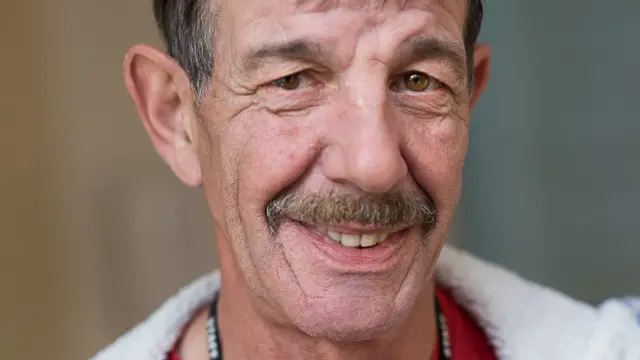
On Tuesday, we heard evidence from the family of the third person to die at the hands of Valdo Calocane - Ian Coates.
Two of Ian's three sons, James and Lee, were the first of the bereaved families to formally give evidence to the Nottingham Inquiry, external.
James told the hearing yesterday he learned of his father's death when messaged by a family friend on Instagram.
James added the family had already pieced together what occurred - with police only contacting them 10 minutes before a major press conference was held.
Lee told the hearing he decided to leave the family house where they had gathered to visit the scene in Magdala Road.
The following day, they visited to lay flowers and spoke of the huge press interest.
The brothers told the inquiry they were not invited to a vigil being held in the city centre but after learning of it through a journalist, they called the council to attend.
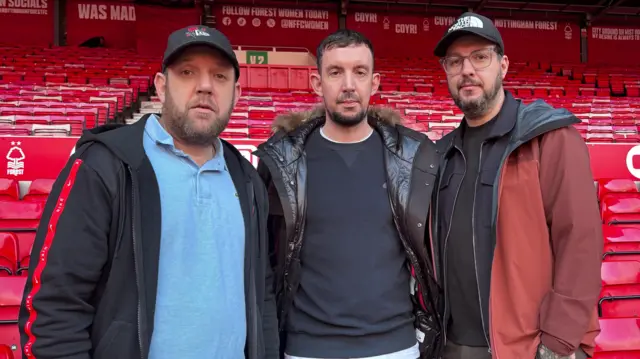
The Coates brothers also praised the support of the other families of Calocane's victims.
Lee said throughout they had felt like "second-class citizens" with the way they had been treated by the authorities.
Both an "astounded" James and then Lee gave statements explaining how they now felt since the inquiry had begun.
We also heard from Elaine Newton, Ian's partner.
Elaine was told for hours that Ian had died in a road traffic accident but no further details were provided, the inquiry heard.
The officers who explained that he had been stabbed were shocked Elaine had not been told, and Elaine said it felt like her partner had been "killed twice" on hearing the news.
Elaine explained she and Ian had been "private" people, and after the death she shut herself away.
She told the inquiry of her meetings with senior police officials as details began to emerge of mistakes within the force.
She told the inquiry she blames a lack of communication between the police and the NHS for her partner's death.
She added she was given "condescending" advice by police to sell her house and buy a dog.
This afternoon, we heard evidence from the parents of Grace O'Malley Kumar, Dr Sanjoy Kumar and Dr Sinead Malley Kumar.
Here were some of the key takeaways:
This morning, the inquiry heard evidence from the parents of Barnaby Webber, Emma and David Webber.
Here are some of the key points from their testimony:
As set out to chairwoman, senior retired judge Deborah Taylor KC (pictured below), the inquiry will examine what happened, the events and actions that led to them, and triple killer Valdo Calocane's care and monitoring.
It will look at a broad range of areas in connection with the attacks, including:
The statutory inquiry will undertake a "thorough, independent assessment" of the events that culminated in the attacks and provide recommendations to prevent similar incidents.
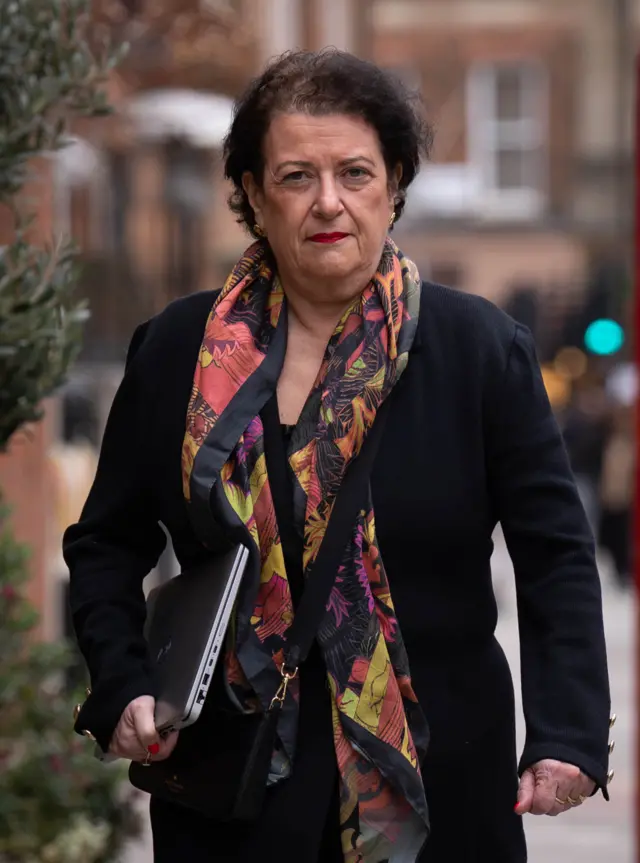 Image source, Stefan Rousseau/PA Wire
Sanjoy has told the inquiry he believes that had Valdo Calocane - who is being referred to throughout the inquiry as VC - not brutally attacked his daughter, he would have done it to someone else.
He said: "The analogy I use with VC is that VC was like an oil tanker who crashed into our children and Ian.
"A one-degree change in his course, he could have ended up in a different continent."
He added: "If he'd missed our children, he would've hit someone else's."
Senior police figures previously told the inquiry they do not believe that executing an outstanding warrant for Calocane's arrest before the attacks would have made a difference.
Sanjoy described this as being "so horrendously abusive to us".
"Because it is quite obvious, as Mr Moloney [Tim Moloney KC, who is representing the bereaved families] pointed out, if this man had been arrested and if the police had done their jobs, we would have had a different outcome," he added.
Sinead and Sanjoy paid tribute to their daughter in an emotional statement to the inquiry.
Grace - who played for England Hockey's under-16s and under-18s - was studying medicine at the University of Nottingham at the time of her death.
Sanjoy said: "We have been deprived of a beautiful and brave daughter who would have one day got married, given us grandchildren, and given us a lot of joy.
"She was the love of my life.
"She was following in my footsteps, my wife's footsteps, her family's footsteps, who are all doctors. She made us immensely proud."
He added the family "miss her dearly".
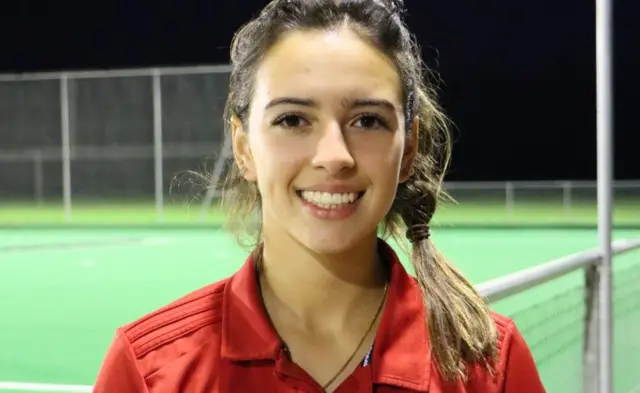 Image source, Southgate Hockey Club
The inquiry has heard how Sinead and Sanjoy found out their daughter's health records were inappropriately accessed.
Sinead had contacted Nottinghamshire Healthcare NHS Foundation Trust to ask if Calocane's medical records had been shared with Prof Nigel Blackwood, who carried out the killer's mental health assessment at the request of the Crown Prosecution Service.
She was told the trust would do its own audit and come back to her.
But it was through that audit that Nottinghamshire Healthcare became aware there had been "inappropriate access that spread from their own trust to the acute trust".
"It became clear that, yes indeed, there had been a member of staff who looked without any lawful or medical reason to do so," Sinead said.
Sinead has spoken of the importance of psychiatrists in keeping the public safe.
She told the inquiry a point she had been making from the beginning is that psychiatry is the only medical profession in which refusal to take treatment can lead to a death of a third party.
She said psychiatrists had "let us down".
"They were lazy and, quite frankly, it's unacceptable," Sinead added.
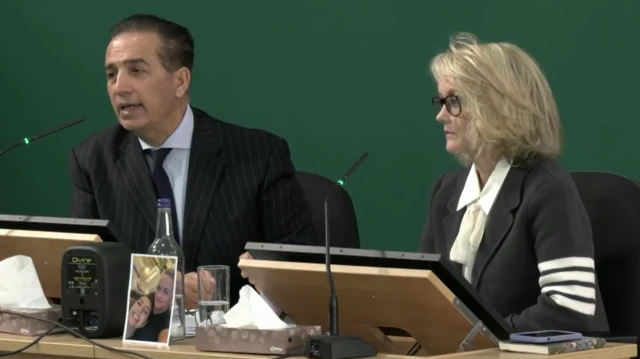 Image source, The Nottingham Inquiry
Sanjoy has told the inquiry there was "not a single institution involved" in the aftermath of the attacks that did "not fail" the victims.
He added that he had never asked for anything "extraordinary".
He said they had just asked: "Have the people involved in our case done their job?"
Sanjoy told the hearing the police watchdog - the Independent Office for Police Conduct (IOPC) - had been "unprofessional" and "nothing but a joke".
He added he believed people who said the organisation was "not fit for purpose".
The inquiry has heard the Care Quality Commission (CQC) reviewed Nottinghamshire Healthcare NHS Foundation Trust, Rampton Hospital and Calocane's treatment.
Sinead told the hearing that a copy of the CQC report showed it was becoming "clearer and clearer" that the NHS also needed to be held to account.
"They are ultimately responsible for the management of their patient," Sanjoy added.
Sanjoy Kumar has told the inquiry he believes an incident involving Calocane and a young woman in May 2020 was underplayed by mental health services.
The inquiry previously heard the woman fell from her first-floor window as she tried to escape Calocane, who had broken into her flat in Brook Court, Radford, in Nottingham.
The woman - who gave evidence anonymously through an Italian interpreter - broke her spine in several places and needed screws and metal work surgically fitted. The inquiry heard she was studying to be a nurse and working as a cleaner at the time.
At the time, Calocane had not been given a formal diagnosis for his mental health issues.
"As a parent I was shocked at how that was underplayed," Sanjoy said.
"You know, this is a young girl from a different country who doesn't know the system, who jumped out of the window out of fear for her life and who fractured her spine."
Referring to a report detailing Valdo Calocane's care by the NHS in February 2025, and a separate healthcare watchdog paper into the trust that treated him, Sanjoy said it was clear the killer's care had not been effective.
"We couldn't understand why there was a total lack of transparency as doctors," he added. "We wanted to know his history.
"We wanted to know how many times he'd been admitted. We wanted to know how he'd been treated. We were not there to deny diagnosis.
"We wanted to know whether the treatment had been good, effective and efficient, and it turns out that it hadn't been."
Sanjoy told the hearing after the sentencing hearing in January 2024, he was "full of rage" and united with other families in "grief" and "injustice".
"If anything, we were rebellious because we didn't think at all that justice had been served to us," he said.
"We felt a total sense of betrayal."
Sanjoy added the sentencing motivated the families to "fight to rebel" against what they had heard in the hearing.
"We didn't agree with a word we heard," he said.
Victims' families react to triple killer's sentence
Of the sentencing hearing, Sinead told the inquiry there was "very little questioning of the psychiatric evidence".
Sanjoy added: "I found it surreal. It was like going to watch a play where people and actors were just acting out with total disregard for what was being said, and how that would affect us because of how much resistance and how much pushback that we had actually provided to date."
He said "there were holes everywhere" in the evidence.
"We didn't think his actions had been mapped out properly, him coming from London etc.
"It was surreal to think this was being concluded with so many questions up in the air."
Sanjoy and Sinead told the inquiry of concerns they raised with the psychiatrists about not interviewing others in relation to Calocane's mental health assessment.
Sanjoy said he was concerned that the psychiatrist had not spoken to the security guard, who was present on the day of the Nottingham attacks.
He questioned why specially trained officers were not interviewing him, given he was "so important" to find out about Calocane's state of mind.
Sanjoy told the inquiry that toxicology samples should have been taken from Valdo Calocane.
Earlier in the inquiry, we heard how the killer had refused consent for blood and urine samples to be taken and that no hair samples were taken, despite a specific request by Sanjoy.
He said "any detective would agree" that the forensics were "really important".
"To not take it was an enormous gap and, you know, regardless of what it had proved or not proved. It may have proved nothing or it may have proved everything," he said.
Sanjoy added he could not understand why it was not done.
At a meeting with the CPS on 7 December, Sinead and Sanjoy said they "pushed back" on the mental health assessment made of Valdo Calocane - who is being referred to as VC throughout the inquiry.
"We were constantly pushing back because we had to be reassured, we had to be reassured beyond reasonable doubt," she said.
Sinead said they felt toxicology needed to be excluded, but later learned that no toxicology samples were ever taken.
"We felt all of the self-reporting by VC was taken at face value," she said.
Sinead added it was clear the CPS were acting on behalf of the Crown, and that as victims, they were "having to act on our own behalf and voice our own concerns".
Both Sinead and Sanjoy said they did not dispute Calocane's previous diagnosis of paranoid schizophrenia.
Sanjoy said he raised concerns about the reliability of the mental health assessment report on Calocane - who had been diagnosed with paranoid schizoprhenia in 2020 - at a meeting with the Crown Prosecution Service (CPS) and the other bereaved families on 24 November 2023.
He told the inquiry the families had to "cling on to little things and extract as much information" as they could.
He added: "We are not freely told that this is a person who's been sectioned four times.
"We are not being told about a person who is violent.
"We are not being told about a person who has a police history and has not been charged."
Sanjoy said, at the same time, there was a "real sense of panic" that things were moving so fast "without us having established the facts".
He added the process to get Calocane to court was "enormously rushed", adding he felt the senior investigating officer in the case and the CPS were not placing enough importance on the questions he was asking.
