Summary

  1. Budget 2025: 'Fair and necessary' choices or a 'truly dismal' future?published at 16:40 GMT 27 November 2025

    Nabiha Ahmed
    Live reporter

    It's been over 24 hours since Chancellor Rachel Reeves delivered her Budget – after being pipped to the post by the Office for Budget Responsibility (OBR), who published their analysis document early in error that has left its boss "personally mortified".

    The chancellor extended a freeze on tax thresholds for an extra three years in a move that will drag millions into paying more tax.

    But she said the biggest burden would fall on those "with the broadest shoulders" through higher taxes on property and savings, including a new tax on homes worth more than £2m.

    Here's what has followed the day after Reeves's announcement:

    • Prime Minister Keir Starmer has accepted that everyone is being asked to "make a contribution" which he said was "fair and necessary"
    • Independent economics research group the Institute for Fiscal Studies (IFS) says households are in for a "truly dismal" increase in their disposable income, which they say will increase by just 0.5% a year over the next five years
    • Other political parties have weighed in. Shadow chancellor Mel Stride says tax hikes are a "clear breach" of Labour's manifesto pledge
    • Liberal Democrats leader Ed Davey says Starmer's government is taxing "ordinary people to record levels". Meanwhile, a Green Party spokesperson says the Budget lacks any "transformational changes" and Reform UK leader Nigel Farage called the Budget "an assault on aspiration"
    • Scottish First Minister John Swinney has ruled out an increase to income tax rates there - Scotland sets its own rate, called the Scottish rate of income tax
    • Reeves has defended her Budget and the "fair and necessary choices" it has made
    • From how your energy bills will drop, to if a minimum wage increase can help with the cost of living, we've also been answering your Budget-related questions
    • At the heart of this Budget was the chancellor choosing to tax big and spend big, writes our political editor Chris Mason

    We're ending our live coverage now. You can read more details from today in our news story.

    If you're left wondering how the budget might change things for you, we've got an article unpicking its key takeaways.


  2. I'm under 25 - what has the budget got to do with me?published at 16:16 GMT 27 November 2025

    Woman wearing headphones sat on sofa with laptop on her lapImage source, Getty Images

    You're under 25, you've seen the numerous measures announced in the Budget, and you're wondering how it might affect you.

    Let’s take a look:

    • Your minimum wage will go up soon. Minimum wage workers will see their hourly rate go up from April. Chancellor Rachel Reeves says 2.7 million people will benefit from these increases
    • Your rent may slowly increase - private renters may see rent hikes. The tax rate on income from properties, paid by landlords, will rise by 2% - but the Office for Budget Responsibility (OBR) says this could lead to "a steady long-term rise in rents"
    • You may be supported in finding work. £820m will fund Reeves's guarantee to offer paid work for youngsters who have been not in employment, education, or training (Neet) for the past 18 months. £1.5bn has been earmarked to help 16 to 24-year-olds into work or training over the next five years
    • Buying your first property may get easier. First-time buyers will be helped with savings, after Reeves promised a "new, simpler" way to help them onto the property ladder - starting with a consultation in early 2026 on what could be a replacement for the Lifetime Isa (LISA)

    From buying your favourite supermarket milkshake, to paying back your student loans, there are plenty more ways the Budget may affect you. The best place to find out how is our news story.

  3. Pensions, EVs and black holes: A quick recap of your questionspublished at 16:10 GMT 27 November 2025

    Jamie Whitehead
    Live editor

    Your voice written in white on a red background

    We're bringing an end to Your Questions Answered now, hopefully the announcements made by Chancellor Rachel Reeves yesterday are a bit clearer for you.

    If you weren't able to join as our correspondents tackled your queries, don't worry. Kevin Peachey explained what's happening with tax on the state pension and weather or not the rise in minimum wage will help with the cost of living.

    We've also looked at the new tax for EV drivers and if it will affect Mobility customers, our disability correspondent Nikki Fox says we're still trying to find that out.

    You may have noticed that a lot of the measures don't kick in for a few years, one question we got asked was how we cover today's budget black hole? Business reporter Ben King says pencilling in future tax rises helps the chancellor meet her fiscal rules.

    We'll be continuing our coverage of reaction to yesterday's Budget for a little while longer, thank you for sending us your questions.

  4. Can anyone define what a 'working family' is?published at 16:05 GMT 27 November 2025

    Harry Farley
    Political correspondent

    Your Voice graphic

    Tom asks: Can anyone define a working family in one sentence?

    It's a good question.

    To most people, it's a family where one or two people are working in it.

    But it gets more complicated when you dissect what politicians mean when they say it. What I think Tom is getting at is Labour's promise to protect working families before the election.

    For Labour, Tom's question is one of the past. It's obsolete. They've admitted everyone will have to chip in some way - this is the cost of battling the country's child poverty.

    Whether that's justified is up for you to decide.

  5. Taxes on private jet travel to risepublished at 15:57 GMT 27 November 2025

    Dearbail Jordan
    Senior business and economics reporter

    Red banner with your voice written on it in white.

    Kane asks: Has Reeves restored tax on aviation fuel for private jets? Couldn't the government collect an estimated £2bn in income from the super-rich instead of asking "ordinary people to pay a bit more"?

    Recent research from climate charity Possible suggests that changing taxes on private jets could raise as much as £2.7bn a year for government coffers.

    It says that the amount of Air Passenger Duty (APD) private passengers pay in proportion to the total cost of their flight is lower than what people shell-out to travel commercially. What's more, no fuel duty is paid on kerosene for private jets.

    There was no announcement in the Budget regarding fuel duty for posh planes, but the government has hiked charges these travellers will pay on long-haul flights from around £253 to £1,141 per flight.

    At the moment, private jets weighing more than 20 tonnes or that have fewer than 19 seats pay higher tax charges. But from April 2027, that will expand to include private aircraft weighing more than 5.7 tonnes.

  6. How will my energy bills go down?published at 15:52 GMT 27 November 2025

    Marc Ashdown
    Business correspondent

    Your Voice graphic

    Clive asks how households can get the £150 off their energy bill that Reeves announced yesterday.

    That's a difficult one, because it's energy companies that manage our bills.

    The government contributes with green subsidiaries paid through bills - but these are going to be ramped down.

    They hope scrapping these green levies will decrease energy bills, as well as the spikes in bills caused by the war in Ukraine over time.

    This should add up to around £130-150 in the next few years.

  7. Many measures don't kick in a for a few years, how do we cover today's black hole?published at 15:42 GMT 27 November 2025

    Ben King
    Business reporter

    Your voice written in white on a red background.

    Cliff asks: So many of the measures do not actually kick in until some years down the line. How does that cover the black hole that exists today?

    Excellent question. There is no "black hole" today. The term "black hole" is often used to refer to the chancellor being on course to miss her fiscal rules.

    And the two main rules only look at how the public finances are projected to look in the future - currently the financial year 2029/30.

    All day-to-day spending has to be covered by tax revenue in the official forecasts for that year, in order to meet those rules.

    So pencilling in future tax rises helps the chancellor to meet her fiscal rules - and thus fill in any so-called "black holes" - because those rules are looking out into the future too.

  8. We're still answering your Budget questions - follow livepublished at 15:29 GMT 27 November 2025

    BBC your voice banner, your voice is written in white on a red background

    From freezes on tax thresholds to minimum wage increases, the Budget affects everyone - and it's important to learn how it will impact you.

    That's why our correspondents are answering even more of your Budget-related questions right now.

    You can Watch live at the top of this page to follow along, or have a scroll here as we continue to bring you the answers to your questions.

    Do you have a question, you can get in touch here.

  9. How will the change to salary sacrifice pensions savings affect me?published at 15:22 GMT 27 November 2025

    Kevin Peachey
    Cost of living correspondent

    Banner that reads 'Your Voice'

    A reader asks: “Can someone please explain more about the change to salary sacrifice pension savings? Is the £2,000 cap on the total paid in by the employee?”

    This can be quite complicated, and it is worth highlighting that only one in 10 workers in the public sector and three in 10 in the private sector use a pension salary sacrifice arrangement.

    Income tax relief on pension contributions remains untouched.

    Under salary sacrifice, workers give up some of their salary with the equivalent being put into their pension.

    The cap, from 2029, relates to the amount the employee would have put into their pension, not the employers’ contribution.

    But, with employers facing a larger national insurance bill as a result, they might be less generous in what they put in for their staff, or even how much they pay overall.

  10. What happened with stamp duty in the Budget?published at 15:11 GMT 27 November 2025

    Tarah Welsh
    Housing correspondent

    Your Voice graphic

    Sean from Penzance says that he was hoping to sell his house and buy in another area but rumours of stamp duty changes caused the market to flatline. What happened to stamp duty in the budget?

    There were no changes to stamp duty in this Budget.

    As a reminder, stamp duty is a tax paid by most home buyers in England and Northern Ireland, with Scotland and Wales having similar levies.

    The current stamp duty rates are:

    • £0-£125,000 (£300,000 for most first-time buyers) = 0%
    • £125,001-£250,000 = 2%
    • £250,001-£925,000 = 5%
    • £925,001-£1.5m = 10%
    • £1.5m+ = 12%
  11. Will the new tax for EV drivers affect Motability customers?published at 15:00 GMT 27 November 2025

    Nikki Fox
    Disability correspondent

    Banner rhat reads 'Your Voice'Image source, bbc

    Robert, from Tauton, says his wife has an electric car under the Motability scheme to promote independent travel. Will the announcement of the new mileage tax on electric vehicles be a barrier to taking journeys for her, or is she exempt?

    The fact EV drivers will soon have to pay 3p a mile certainly made the headlines yesterday - but there was no mention at all about whether disabled people will be exempt from that. We’ve put a call in to Motability and they confirm it just wasn’t made clear in the Budget - so we’re all trying to find out.

    What you may have missed yesterday - because, indeed, the chancellor did not actually spell it out in her speech - is that she is bringing in some significant changes to the Motability scheme: Not just banning so-called ‘luxury’ cars - which she did mention - but lifting the tax exemption on the insurance included in the lease and adding VAT to the advanced payment a disabled customer may have to pay on a vehicle.

    I’m sure your wife will have had to make an advanced payment, because EVs are some of the most expensive cars available on the scheme. As you know, that's out of your own pocket.

    Reducing what the chancellor called these “generous taxpayer subsidies” is the biggest change since Motability was first introduced in the 1970s.

    And Motability have told us it means the scheme will need to change. They’re not going to take any steps straight away, but they've acknowledged that any increase in the cost of a lease “could have a significant effect on disabled people’s independence and daily life”.

    So not great news for Motability customers, I’m afraid.

  12. Do you have questions on yesterday's Budget? Let us knowpublished at 14:53 GMT 27 November 2025

    Banner with your voice in written in white on a red background

    Do you have questions related to yesterday's Budget? We're answering your questions this afternoon.

    You can get in touch in the following ways:

    Email: [email protected], external WhatsApp: 07756 165 803, external

    And you can send us a video note via WhatsApp or by using this link.

    Your comment or question may be published, displaying your name and location as you provide it unless you state otherwise. Your contact details will never be published.

  13. Will minimum wage rises really help with the cost of living?published at 14:44 GMT 27 November 2025

    Kevin Peachey
    Cost of living correspondent

    Banner reading 'Your Voice'

    Stephanie asks: “How is the increase in wage going to actually help the cost of living? When wages go up businesses will increase prices from production to sale point.”

    Stephanie is pointing to the rise in minimum wages.

    Eligible workers aged 21 and over on the National Living Wage will receive £12.71 an hour, up from £12.21. There are chunky increases for younger workers too.

    While the extra burden will be faced by businesses, the official forecaster believes the rate of inflation will slow over the next couple of years.

    Remember, that means prices will still go up, but at a slower rate.

    Other cost-of-living measures include reducing energy bills by ending certain schemes, and scrapping the two-child benefit cap.

  14. How will the 'mansion tax' affect band F home owners?published at 14:37 GMT 27 November 2025

    Tarah Welsh
    Housing correspondent

    Your Voice graphic

    Lisa says that whilst she doesn't own a mansion, her property is in band F, and asks if she will end up paying more council tax?

    Not necessarily, it depends how much Lisa’s home is worth.

    If it’s valued at more than £2m, then the short answer is yes. However, the Treasury says it expects the new surcharge to apply to fewer than 1% of properties in England, and most are expected to be in London.

    As a reminder, the policy comes into effect in April 2028 and there will be four price bands, with the surcharge rising from £2,500 for a property valued in the £2m to £2.5m band, to £7,500 for a property valued in the highest band of £5m or more.

  15. Will the state pension be taxed?published at 14:35 GMT 27 November 2025

    Kevin Peachey
    Cost of living correspondent

    Banner that reads 'Your Voice'

    Tony, from Preston, and Connie, from Truro, ask whether the freeze on tax thresholds will mean the state pension being taxed.

    In the Budget, the chancellor said that the freeze on tax thresholds would be extended for three years from 2028.

    A lot more state pensioners might end up paying income tax before that – because the full, new state pension is only just shy of the 20% income tax threshold already.

    About half of pensioners already pay income tax because they have more income than just the state pension, such as workplace pension payments.

    There was a slight hint in the Budget that, for those whose pension only just takes them into paying tax, the government might not worry about collecting it – but there is a lot more detail needed for that to become clear.

  16. We're answering your questions on the Budgetpublished at 14:33 GMT 27 November 2025

    Jamie Whitehead
    Live editor

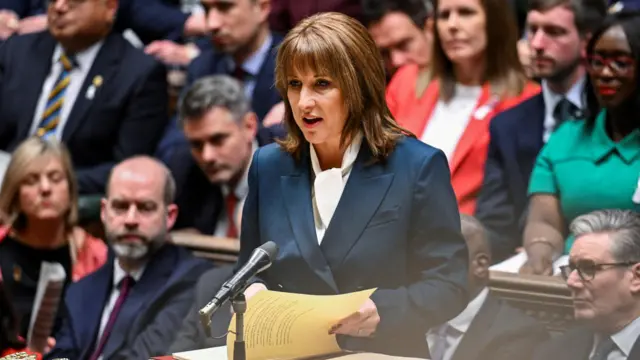
    Rachel Reeves in the CommonsImage source, House of Commons

    It's just over 24 hours since Chancellor Rachel Reeves delivered the Budget, which froze National Insurance and income tax thresholds for an extra three years, dragging more people into higher bands over time.

    It also included scrapping the two-child benefit cap from April, a council tax surcharge or "mansion tax" on properties in England worth over £2m and a new mileage-based tax for electric vehicles and plug-in hybrid cars.

    There's plenty to digest - and over the next hour or so we'll be answering some of your questions.

    In the meantime, you can bring yourself up to speed on Reeves's Budget yesterday, with our at-a-glance guide.

    And if there's something you want answered, you can get in touch here.

    Your Voice banner
  17. BBC Verify

    Reeves behind two of UK’s most tax-raising budgets since 1975published at 14:18 GMT 27 November 2025

    By Phil Leake and Lucy Dady

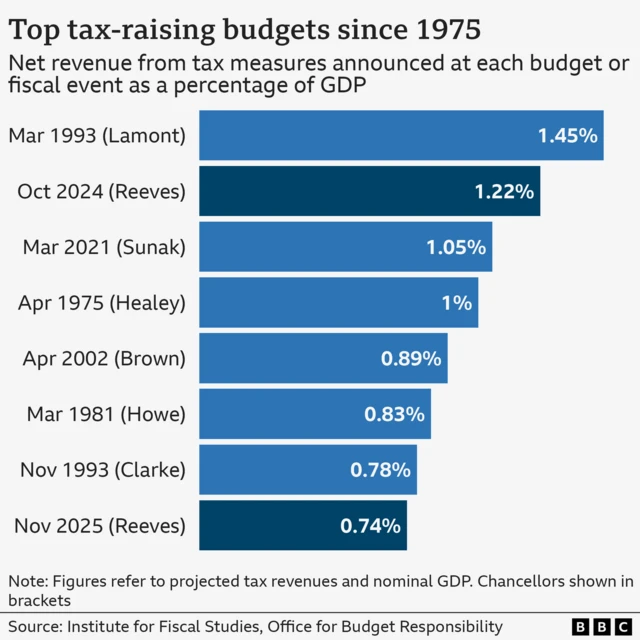
    Rachel Reeves introduced tax measures in yesterday’s Budget that are expected to raise an extra £26.1bn in 2029-30, equivalent to just over 0.7% of the value of the economy measured by GDP.

    The move has earned the chancellor a second entry on the list of the UK’s eight most tax-raising budgets in the last 50 years.

    Former Chancellor Norman Lamont tops the list for his March 1993 Budget, which was delivered after John Major’s surprise general election victory for the Conservatives in 1992 and contained tax rises equal to just over 1.4% of GDP.

    Reeves’ 2024 Budget is actually second on the list, which included tax measures expected to raise £41.5bn by 2029-30, equivalent to around 1.2% of the whole economy, fuelled by an increase in employer National Insurance Contributions.

    The 2021 Spring Budget, delivered during the Covid pandemic by then-Chancellor Rishi Sunak, is the third on the list.

    But Reeves’ latest Budget, which is forecast to raise £26bn in taxes in 2029-30, sees her enter the list again.

    A chart showing net revenue from tax measures announced at each budget or fiscal event as a percentage of GDP, going back to 1975. The top eight tax-raising events are as follows (chancellors in brackets): Mar 1993 (Lamont) 1.45% Oct 2024 (Reeves) 1.22% Mar 2021 (Sunak) 1.05% Apr 1975 (Healey) 1% Apr 2002 (Brown) 0.89% Mar 1981 (Howe) 0.83% Nov 1993 (Clarke) 0.78% Nov 2025 (Reeves) 0.74% Figures refer to projected tax revenues and nominal GDP.
  18. BBC Verify

    Chancellor misquotes Labour’s manifesto tax pledge five timespublished at 14:05 GMT 27 November 2025

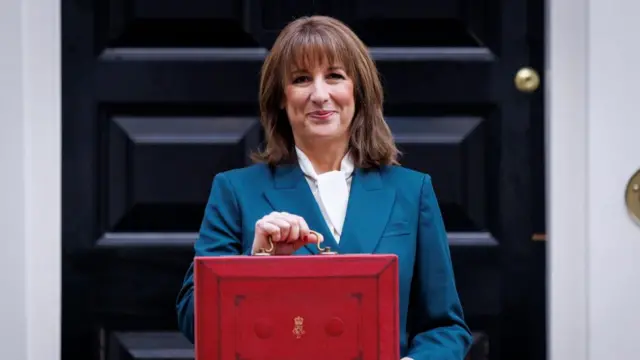
    Reeves holding up red box outside 11 Downing StreetImage source, EPA

    By Gerry Georgieva

    Chancellor Rachel Reeves has been asked repeatedly about National Insurance hikes since delivering her second Budget yesterday.

    In response, she has quoted Labour’s pre-election manifesto as saying that the party would not increase “the rates” of National Insurance, VAT or income tax. She said this yesterday in a post-Budget interview and then repeated it in five of the seven interviews she gave this morning. The problem is that it’s not quite true.

    Labour’s 2024 election manifesto actually pledged that the party "will not increase taxes on working people, which is why we will not increase National Insurance, the basic, higher, or additional rates of income tax, or VAT".

    So for income tax, the party clearly only stated that the rates would not be raised, but its pledge seemed to rule out any increase in National Insurance overall.

    Reeves has now extended a freeze on thresholds - the point at which you start paying National Insurance - which means more people will be paying it as wages rise.

    Helen Miller from the Institute for Fiscal Studies, an economic research group, says this would "break the letter of the manifesto which said no increase in National Insurance".

  19. Tax relief on working from home axed from next yearpublished at 13:47 GMT 27 November 2025

    Woman in black and white striped shirt working on a laptop in home kitchen.Image source, Getty Images

    Tax relief for people working from home will end on 6 April next year, according to documents published alongside the Budget.

    It means that those who work at home will no longer be able to claim money back for domestic expenses such as gas, electricity or business phone calls.

    The decision will affect 300,000 people at a cost of £62 a year for basic-rate taxpayers and £124 for individuals on the higher rate.

    Those who can claim tax relief include people with a job which requires them to live far away from home or if their employer does not have an office.

  20. Scotland's first minister pledges to not increase income tax rates in Scottish Budgetpublished at 13:29 GMT 27 November 2025

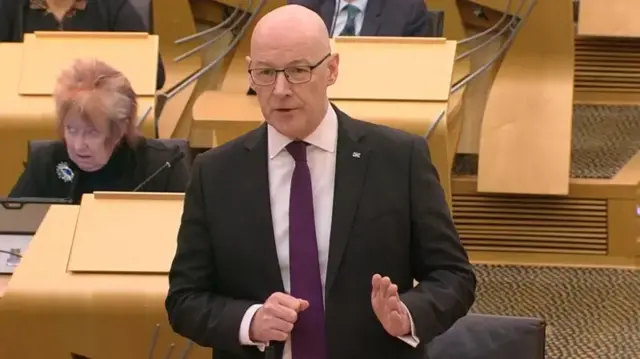
    First Minister John SwinneyImage source, Scottish Parliament
    Image caption,

    First Minister John Swinney pledged to not increase income tax rates or introduce new bands

    The UK Budget dominated First Minister's Questions at Holyrood today, where John Swinney insisted the Scottish government will not increase income tax rates or introduce any new bands.

    The Scottish Conservative leader Russell Findlay accused the first minister of misleading parliament by falsely claiming to have maintained his 2021 manifesto commitment on income tax.

    Swinney hit back saying the manifesto had included a sentence warning the pledge on income tax was predicated on the economic context of the time, which was rocked by the Ukraine war and Liz Truss's Budget.

    He also went on to welcome the forthcoming abolition of the two-child benefit cap claiming it was the SNP that had shamed the Labour government into acting.