Summary

  1. Verifying footage during Iranian digital blackout and monitoring Gaza’s Yellow Linepublished at 18:03 GMT 16 January

    Aisha Sembhi
    BBC Verify journalist

    We're closing the BBC Verify Live page now, so here's a quick recap of what our teams have brought you today.

    We started in Ukraine, confirming footage of a substation fire following reports of an overnight drone strike. We also brought you updates on the energy emergency after thousands of people without regular power, heating or running water in freezing temperatures following Russian attacks.

    Our team also kept across events in Iran, monitoring available video as the country's internet blackout surpasses 180 hours. We brought you footage of an armed convoy driving through the city of Tonkebon, appearing to show Iranian paramilitaries and police. We also provided analysis on the potential of a US attack on Iran amid warnings from Donald Trump. We’ve also examined ICE tactics during ongoing protests in the US.

    We're ending the week with the publication of our large-scale investigation on the post-ceasefire line of control, which has moved deeper in Gaza - you can read the full investigation here. Thanks for joining us this week - BBC Verify Live will be back on Monday with more.

  2. Analysing ICE detention deaths under Trumppublished at 17:51 GMT 16 January

    Lucy Gilder
    BBC Verify senior journalist

    Earlier this month ICE revealed Geraldo Lunas Campos, a 55-year-old Honduran man who was being held in a detention centre in Texas, died while in their custody. Now The Washington Post, external has reported that Campos’ death will likely be classified as homicide by the local medical examiner.

    Campos’ death was announced in a government press release, external on 9 January which said he died after experiencing medical distress, and that his cause of death is “under investigation”.

    Campos is among more than 30 people known to have died in ICE custody since Trump’s inauguration last January, according to reports published by the US government.

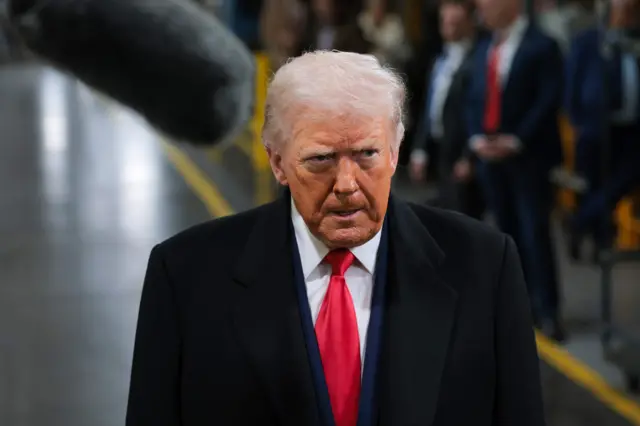
    Donald Trump wears a black coat and red tieImage source, Getty Images

    BBC Verify’s analysis of “detainee death notifications” dating back to January 2025 shows 36 listed incidents. This includes 15 detainee deaths recorded by ICE in the same period, external.

    The figure of 36 is already higher than the total number of deaths in ICE custody recorded during the Biden administration. According to campaign group Detention Watch Network, the estimated total number of deaths was 26 during Biden’s four year term.

    The number of people detained by ICE under President Trump is at a record high, with about 73,000 people held as of Thursday, CBS News has reported. , external

  3. BBC Verify

    WATCH: Israel moves post-ceasefire line of control into Gaza, satellite images showpublished at 17:44 GMT 16 January

    Earlier, we gave you an insight into the BBC Verify investigation which has found Israel pushing deeper into Gazan territory it agreed not to enter as part of its ceasefire agreement with Hamas.

    BBC Verify’s correspondent Merlyn Thomas talked us through how the line has changed and what this means for the neighbourhoods it affects in greater detail.

    Media caption,

    Watch: Israel moves post-ceasefire line of control into Gaza, satellite images show

  4. Tear gas and pepper spray from ICE should be ‘last resort’published at 17:42 GMT 16 January

    Jake Horton
    BBC Verify

    We’ve spent a lot of time looking at Iran today, we’ve also been tracking the ongoing protests in the US following the fatal shooting of Renee Good in Minnesota by an ICE agent.

    Yesterday US President Donald Trump threatened to invoke the rarely used Insurrection Act in response to the ongoing demonstrations over his deployment of immigration enforcement in Minneapolis. This would allow active-duty military personnel to be deployed for law enforcement duties there.

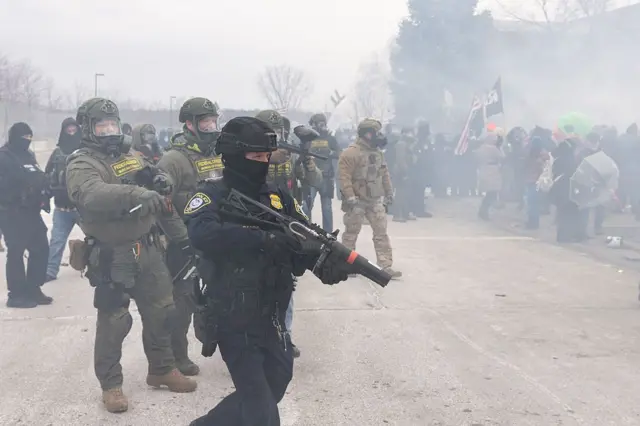
    Multiple videos we’ve verified from Minneapolis this week shows agent using tear gas, pepper spray and smoke grenades on people protesting.

    Federal agents clash with protestors outside an ICE facility in Minneapolis, Minnesota.Image source, Getty Images

    But these actions should be a last resort and only used when there is “an imminent threat”, experts told BBC Verify.

    “Use of force should only be authorized when there is an imminent threat to public safety, and when other forms of tension mitigation have been attempted and not worked,” said Dr Rohini Haar, a crowd control expert who specialises in non-lethal chemical weapons.

    “Productive communication with the protestors, evacuation from the scene could and should have been used first,” she said.

  5. WATCH: Armed police and paramilitaries travel in convoypublished at 16:54 GMT 16 January

    Farida Elsebai, Ghoncheh Habibiazad and Richard Irvine-Brown
    BBC Arabic, BBC Persian, BBC Verify

    The convoy travels slowly along Shirudi Boulevard, the main road through the coastal city. Amid a wave of sirens we see a couple of dozen motorcycles, each with two riders, some in riot helmets.

    A Toyota Land Cruiser with an armoured cab follows in the convoy, with five men in balaclavas on the roof, at least three of whom are armed with long-barrelled guns.

    Media caption,

    Paramilitary and police armed convoy patrols in Iran

    There is another Land Cruiser carrying seven men, at least two of whom are armed with assault rifles. Their uniforms match the camouflage pattern and beige helmets worn by Iran’s Basij paramilitary unit, a militia under the command of the Islamic Revolutionary Guard Corps.

    Two more open-bed police trucks carrying nine men in what look like riot police clothing and helmets are also seen in the footage some carrying guns.

  6. Armed convoy drives through Iran citypublished at 16:45 GMT 16 January

    Farida Elsebai, Ghoncheh Habibiazad and Richard Irvine-Brown
    BBC Arabic, BBC Persian, BBC Verify

    BBC Verify has been reporting on the protests in Iran since late December and the team verified footage which shows how the government is using heavy force to patrol the streets of one city.

    Despite the internet blackout the video was first posted yesterday from Tonkebon in northern Iran.

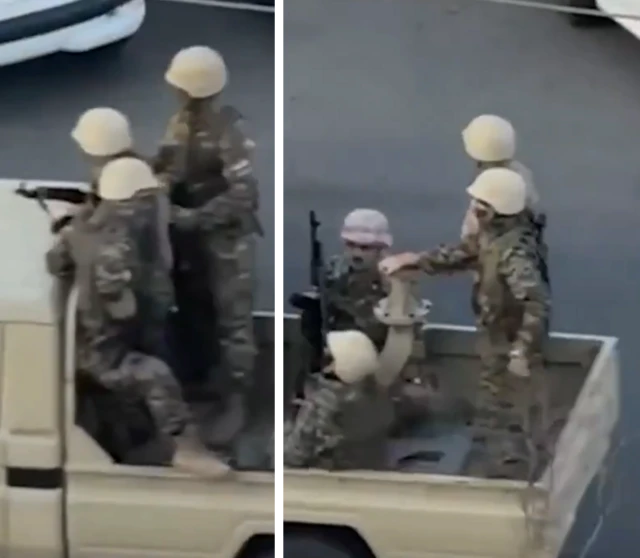
    It shows a convoy of armoured cars, motorcycles and pick-up trucks, carrying what appear to be Iranian paramilitaries and police through the city.

    Although the video first surfaced yesterday morning we don’t know when exactly it was filmed - although the sun is low and to the west, meaning it must have been taken one evening.

    Two separate screenshots of a truck with paramilities wearing camouflage outfits, helmets and carrying gunsImage source, Instagram
    Image caption,

    Two separate screenshots of a truck with paramilities carrying guns

  7. Fact-checking Jenrick’s claims on immigrationpublished at 16:26 GMT 16 January

    Tom Edgington
    BBC Verify, senior journalist

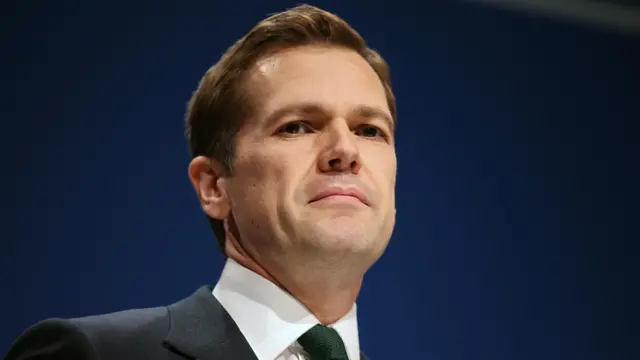
    Our fact-checking team has looked further at Robert Jenrick's claims in his Telegraph article. On immigration he says “one in five people in Britain today were not born here. Just one in 20 of 2022’s migrants were net contributors”.

    The first claim is correct. There were around 11.4 million non-UK-born residents in England and Wales in June 2023, according to the latest data from the Office for National Statistics, external - equivalent to about 19% of the population, or just under one in five.

    On Jenrick’s second claim regarding the economic contribution of migrants who arrived in 2022, it is not clear where these figures came from.

    Close up of Reform UK politician Robert JenrickImage source, EPA/Shutterstock

    We put the claim to Dr Ben Bridle from the independent Migration Observatory at the University of Oxford.

    He told us that, according to HMRC data, around 240,000 migrants entered work in 2022 and were still employed in 2024 and earned over £30,000 - a level likely to be a positive contribution to the economy.

    He estimated that they represented about a quarter of the 2022 migrants who still held valid work visas at the end of 2024.

    However, Bridle cautioned that it was still too early to make a reliable assessment.

    Whether a migrant makes a positive economic contribution depends on a range of factors, he explained.

    This includes their earnings, their use of public services, and how long they stay in the UK. “For example, many migrants have a positive impact on public finances when they are young and can’t claim benefits, but a negative impact later as they age, use the NHS more, and get access to benefits”, he said.

  8. Verified video shows RSF fighters inside Sudan’s border townpublished at 16:05 GMT 16 January

    Peter Mwai
    BBC Verify senior journalist

    As well as monitoring the unrest in Iran, BBC Verify’s team based in Nairobi has been analysing videos from Sudan.

    The latest footage shows fighters of the paramilitary Rapid Support Forces (RSF) inside the town of Girgira in North Darfur, near the western border with Chad.

    It follows days of heavy fighting during which both the RSF and fighters from groups allied to the Sudanese army have claimed to be in control of the town.

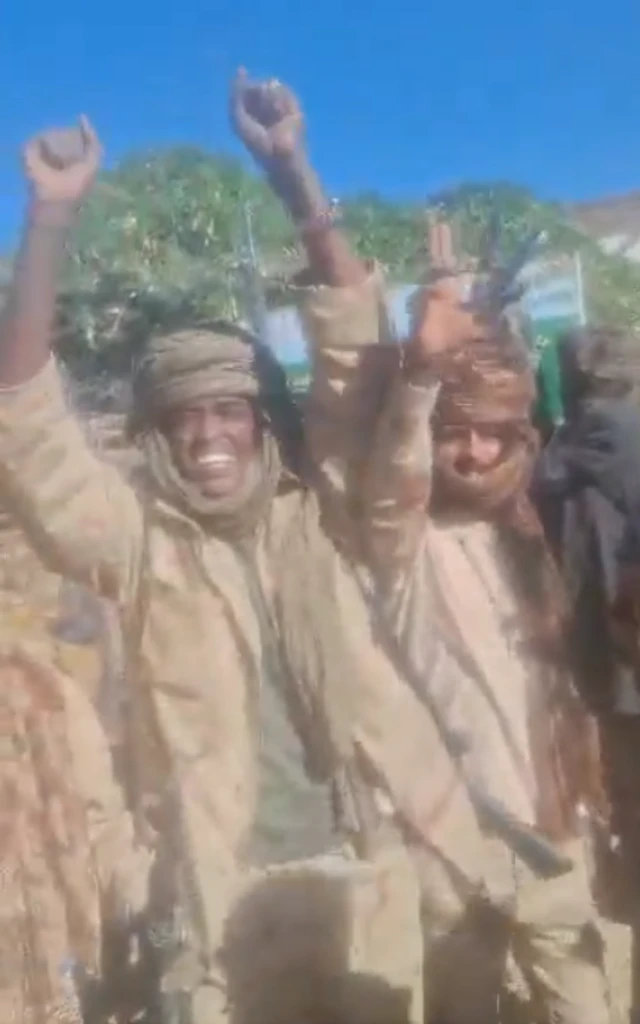
    We’ve now verified the latest footage to emerge showing RSF fighters celebrating in the town.

    We’ve confirmed the location by comparing the buildings and trees to satellite imagery and previous verified footage. One of the fighters, wearing camouflage fatigues in the style of the RSF, speaks to the camera and mentions the day and date, indicating it was filmed yesterday (Thursday).

    A screengrab showing Rapid Support Forces (RSF) fighters celebrating in SudanImage source, X
    Image caption,

    Rapid Support Forces (RSF) fighters celebrated in Sudan following days of fighting

    Following the fall of El-Fasher, the capital of North Darfur, in late October last year, the RSF has been battling to take control of the last remaining parts of Darfur still in the hands of the Sudanese army.

  9. Watch: Is the US preparing to attack Iran?published at 15:41 GMT 16 January

    Olga Robinson
    BBC Verify assistant editor

    Amid deadly nationwide anti-government protests in Iran, US President Donald Trump has repeatedly warned that intervention from Washington is imminent. At the start of the year, he said he would come to the "rescue" of protestors, and earlier this week he repeated this sentiment, claiming that "help is on the way".

    But just how likely is a US attack on Iran? Our team has been keeping across the situation, tracking the locations of US aircraft carriers using satellite imagery and monitoring airspace over Iran, to figure out whether Trump's promise of intervention will become a reality.

    We talk through the team's findings below.

    Media caption,

    Watch: Is the US preparing to attack Iran?

  10. Iran passes 180-hour mark without internetpublished at 15:39 GMT 16 January

    Aisha Sembhi
    BBC Verify journalist

    Our verification team are monitoring the limited number of videos still emerging from Iran, where a nationwide internet blackout has been imposed amid a deadly crackdown on anti-government protestors by Iranian security forces.

    Iran has now been without internet for just over a week, amounting tomore than 180 hours, according to internet monitoring organisation NetBlocks, external - surpassing the duration of a similar shutdown in 2019.

    A graph from the internet monitoring organisation NetBlocks, showing network connectivity in Iran between January 2 and January 16. It shows a big dip on 8 January - when an internet blackout was imposed across IranImage source, NetBlocks
    Image caption,

    Internet monitoring organisation NetBlocks reports that the state-imposed internet outage in Iran has surpassed one week

    The internet blackout has left more than 90 million people almost completely cut off from the outside world and severely restricted the flow of information out of the country. We're able to gain insights into the situation on the ground by verifying videos appearing on social media, which often emerge days after they're recorded.

    Some people have travelled hundreds of miles to find internet connections to be able to upload videos to share with the outside world.

  11. What is Robert Jenrick’s record on asylum hotels?published at 14:51 GMT 16 January

    Tamara Kovacevic
    BBC Verify senior journalist

    Jenrick, the MP for Newark, was until yesterday a member of Kemi Badenoch’s Conservative shadow cabinet. After his dramatic exit from the party, he appeared at a press conference where he was revealed as the latest member of Nigel Farage’s Reform UK party.

    Farage was asked at the press conference whether Reform’s members “would accept the man who opened the asylum hotels”., external Jenrick said: "I was the man who closed 100 asylum hotels.”

    The Conservative government introduced the original policy to repurpose existing hotels to accommodate asylum seekers in the UK.

    So, what happened under Jenrick’s watch?

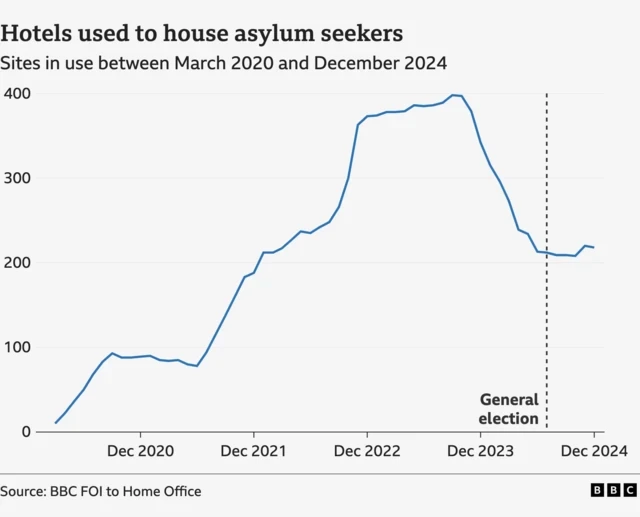
    The number of asylum hotels increased sharply but he also announced plans to start closing them in his last months in the job.

    A graph showing the number of hotels used to house asylum seekers between March 2020 and December 2024
    Image caption,

    The number of hotels used to house asylum seekers between March 2020 and December 2024

    When Jenrick became immigration minister in October 2022 there were 300 asylum hotels in operation, according to data obtained by the BBC through a Freedom of Information (FOI) request. This number rose by almost 100 over the next year, peaking at 398 in September 2023.

    A month later, Jenrick told the Commons that the government would start “exiting” asylum hotel contracts, starting with 50 of them. By the time he left his post in December 2023, there were 342 hotels.

    Numbers dropped to 296 in February 2024 - just over 100 down from the peak - leaving the number roughly the same as when Jenrick became immigration minister.

  12. Israel moves Yellow Line deeper into Gaza, satellite images showpublished at 14:28 GMT 16 January

    Benedict Garman, Emma Pengelly and Matt Murphy
    BBC Verify

    BBC Verify has also been monitoring the situation around the Yellow Line in Gaza for three months.

    Under the terms of the US-brokered deal with Hamas, Israel agreed to withdraw troops beyond a line marked in yellow on Israeli military map.

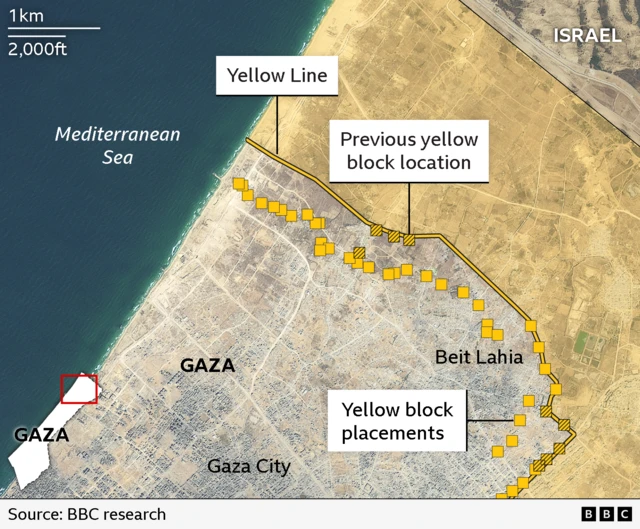
    But our investigation found that Israel has moved the blocks that mark its post-ceasefire line of control in Gaza further into the strip in several places, sowing confusion among Palestinians.

    Satellite images we reviewed show that in at least three places where Israel placed the blocks its soldiers had later returned and moved the positions further into the Strip.

    Map of Gaza showing yellow line and row of blocks placed inside by Israeli forces

    As well as the blocks that have been moved, BBC Verify mapped 205 other markers. More than half of those have been placed significantly deeper inside the Strip than the line marked on maps.

    Defence Minister Israel Katz warned in October that anyone crossing the Yellow Line would be met with fire.

    Since then there have been a series of deadly incidents around the line.

    In a statement to BBC Verify, the IDF rejected "all claims that the Yellow Line has been moved or its crossing by IDF troops".

    You can read our full story here.

  13. Is Jenrick right about unsolved crime?published at 13:34 GMT 16 January

    Tom Edgington
    BBC Verify senior journalist

    Away from Ukraine, the fact-checking team has been looking into claims made by Robert Jenrick in today’s Telegraph justifying his reasons for joining Reform UK.

    In an op ed written by the MP, Jenrick says that “Britain has been in decline for decades and we’re now in peril,“ citing issues with high tax rates, A&E wait times, and that “93 per cent of crime is going unsolved”.

    But is this crime figure correct? The answer is not quite.

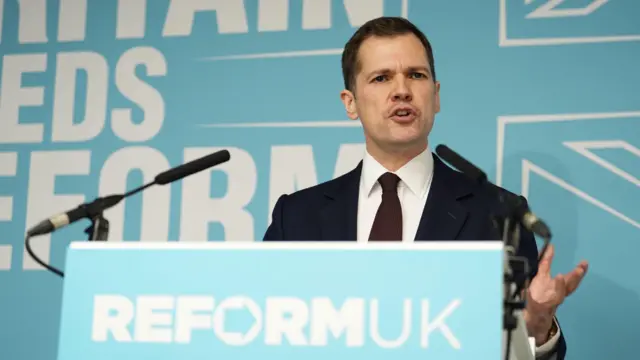
    Robert Jenrick speaks from a Reform UK podium at a press conference in London.Image source, PA

    The latest criminal outcome statistics for England and Wales published by the Home Office, external show there were 5.3 million police recorded offences in the year to June 2025. Of these, only 7.6% of offences resulted in a charge or court summons, which leaves 92.4% offences recorded by police with a different outcome.

    But that doesn’t mean those offences went “unsolved”.

    A charge or a summons is just one type of outcome recorded in this data, which means that a court case has been initiated.

    However, there are multiple other factors recorded here too. For example, nearly 25% of cases were closed because a victim did not support further action. A total of 8.4% of the offences recorded had not yet been assigned an outcome and were ongoing while around 4% resulted in an out-of-court action, and a small number were assigned to a different agency or body.

  14. Verified image shows ‘done strike’ damage to multi-story building in Russian citypublished at 13:10 GMT 16 January

    Jake Horton and Fridon Kiria
    BBC Verify

    We’ve confirmed the location of a multi-story building in the Russian city of Ryazan which was damaged overnight in a reported drone attack.

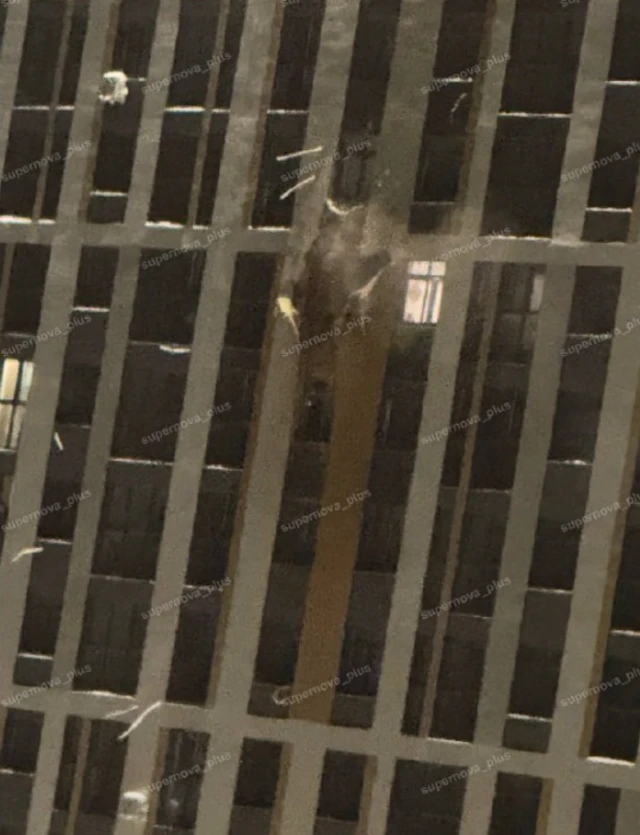
    An image posted on Telegram shows a hole in the side of a residential block in the south of the city, which is about 200km (120 miles) by road from Moscow.

    Pavel Malkov, the Ryazan region’s governor, has said two multi-storey buildings were damaged overnight leaving two people injured.

    A zoomed in image of a multi-story building in the Russian city of Ryazan, which was damaged overnight in a reported drone attack.Image source, Telegram
    Image caption,

    An image of a building in Ryazan, reportedly damaged overnight in a drone attack.

  15. Ukraine declares energy emergency following ongoing strikespublished at 11:47 GMT 16 January

    Jake Horton
    BBC Verify

    Ukranian president Volodymyr Zelensky declared an energy emergency this week following a series of Russian attacks on the country’s infrastructure, where there has been a particular focus on Kyiv.

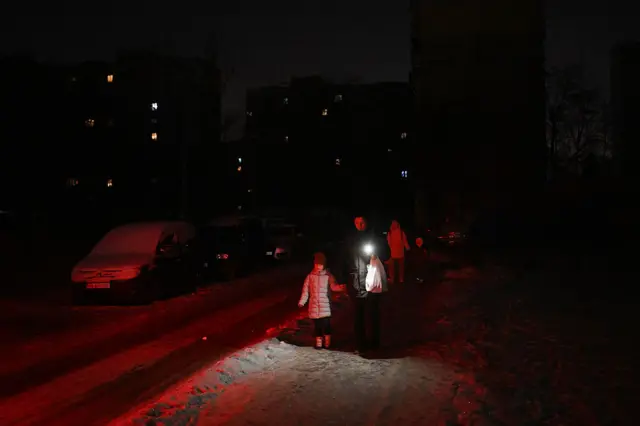
    Russian attacks on the capital have left thousands of people without regular power, heating or running water in recent weeks as overnight temperatures have dropped to around -15C.

    People walk along a dark street during a power outage in Kyiv holding up a phone for lightImage source, Getty Images
    Image caption,

    People walk along a street during a power outage in Kyiv

    Russia’s strikes have not been limited to the capital. Ukrainian officials said last week that more than one million people in south-eastern Ukraine spent many hours without heating and water supplies as a result of Russian air strikes.

    As Vladimir Putin’s full-scale invasion approaches its fourth anniversary, Zelensky has accused Moscow of deliberately exploiting the harsh winter conditions as part of its war strategy.

    Ukraine has also hit a number of oil refineries in Russia as part of its own war effort and in some cases have caused temporary blackouts.

  16. Three areas in occupied Ukraine without power following substation firepublished at 11:41 GMT 16 January

    Sherie Ryder and Fridon Kiria
    BBC Verify

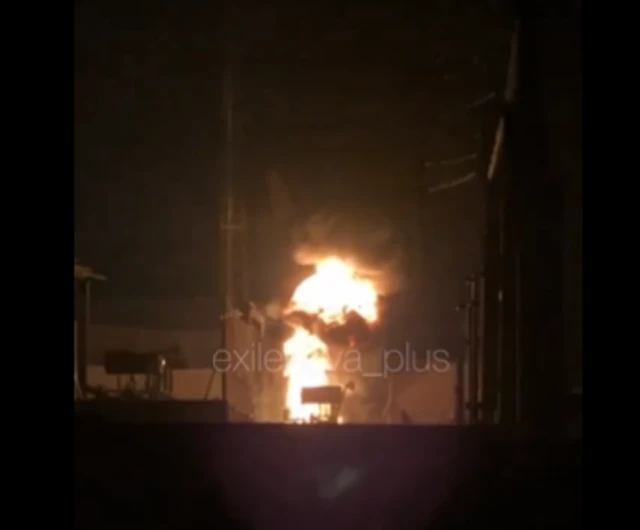
    We’re verifying footage of a fire at a substation in the occupied city of Berdyansk, which officials in the Zaporizhzhia region say has caused a widespread outage overnight.

    Videos circulating on social media show a fire burning at the Morozovskaya substation in the city. Another clip shows fire burning and smoke rising in the distance as residential blocks appear dark.

    There are reports the fire was caused by an overnight drone strike though the origin remains unclear.

    Yevgeny Balitsky, the Kremlin-installed governor of Zaporizhzhia, said the cities of Berdyansk, Vasylivka and the town of Prymorsk remain without electricity.

    Fire seen rising from building at nightImage source, Telegram
    Image caption,

    Fire erupts at a substation in Berdyansk, occupied Ukraine

  17. Friday on BBC Verify Livepublished at 11:04 GMT 16 January

    Lucy Gilder
    BBC Verify senior journalist

    Good morning and welcome to BBC Verify Live.

    Today we’re verifying footage of the aftermath of what appears to be a overnight strike on an energy substation in the occupied city of Berdyansk, Ukraine, which has left it without power. It marks the latest in a series of power outages in the country - residents in Kyiv have been without heating as overnight temperatures have dropped to as low as -15C in recent weeks.

    In the UK we‘re looking at claims made by Robert Jenrick MP on crime and immigration following his dramatic exit from the Tory party yesterday and subsequent defection to Reform UK.

    And later on we’ll be analysing more footage that has emerged from US protests against Immigration and Customs Enforcement (ICE) in Minneapolis, as well as gathering data on deaths in ICE custody under the current Trump administration.