Summary

  • Donald Trump says Iran's leaders are "afraid" to admit they are negotiating with the US

  • The US president was speaking after Iranian Foreign Minister Abbas Araghchi told state media Iran had "no intention of negotiating for now" and the country will keep "defending" itself

  • Trump's mixed messaging suggests he's still undecided about what exit strategy would work best, our Washington correspondent writes

  • Earlier, the White House said the US was "very close" to meeting its objectives in Iran, adding that Iran's regime was looking for an "exit ramp"

  • Iran earlier issued five conditions to end the war, an Iranian official told state media, including a conclusion to the conflict "across all fronts" and payment of reparations

  • It came after Iran reportedly received a 15-point plan from the US - Tehran initially rejected the plan but Araghchi later said "if a position needs to be taken, it will certainly be determined"

  1. 'This regime has inflicted so much pain on us'published at 02:45 GMT

    Fergal Keane
    BBC News

    The BBC has spoken to Iranians across Tehran, but has had to change their names to protect them from official retaliation.

    One of those people is Zahra*, a grandmother who has struggled to maintain contact with her family due to internet blackouts imposed by Iran’s government.

    "My children are restless. Not being able to hear their voices is driving me insane. This is truly the height of cruelty and oppression for a mother," she told the BBC.

    Outside her home, the residue of "black rain" left after US and Israeli strikes on oil depots covers the ground.

    When asked if she wants a ceasefire, Zahra is scornful.

    "This regime has inflicted so much pain on us over the past 47 years leaving countless mothers without their children, more than even the war itself did. So, I prefer that there be no ceasefire until this entire regime is gone."

    You can read more from Zahra here.
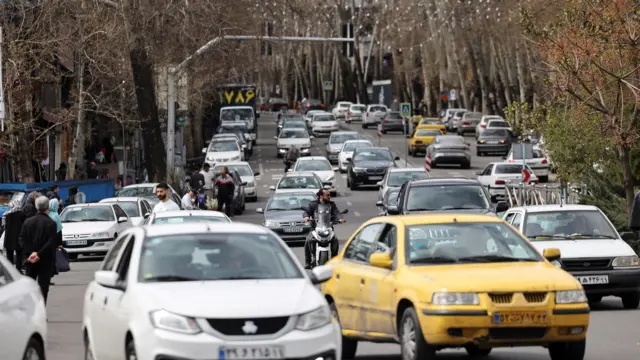
    Motorists on a street, amid the U.S.-Israeli conflict with Iran, in Tehran, Iran, March 24, 2026.Image source, Reuters
  2. Watch: 'No intention of negotiating' with US, says Iran's foreign ministerpublished at 02:13 GMT

    Footage has come through now on the remarks from Iranian Foreign Minister Abba Araghchi, which are in stark contrast to Donald Trump's latest address.

  3. Is Trump any closer to an Iran exit strategy?published at 01:42 GMT

    Daniel Bush
    Washington correspondent

    Trump appears increasingly interested in finding an off-ramp with Iran, or what he calls "winding down" the war.

    But his exit strategy is unclear - and the US president's mixed messaging suggests he's still undecided about what would work best: ramping up the conflict to try to end it as quickly as possible, or pushing for a negotiated settlement with Tehran.

    On Tuesday, Trump signalled the US may pursue both strategies at once. In a matter of hours, the Pentagon ordered ground troops to Iran, and US negotiators sent the Iranian regime a new 15-point peace plan.

    By Wednesday, the White House was urging Iran to accept the deal while threatening to hit the country harder than ever if it didn't, stoking further confusion about Trump's intentions.

    "President Trump does not bluff, and he is prepared to unleash hell," Karoline Leavitt, the White House press secretary, told reporters. "Iran should not miscalculate again."

    Read Daniel Bush's analysis on Trump's mixed messaging.

  4. Iran's rejection of US talks reflects deep mistrustpublished at 01:18 GMT

    Amir Azimi
    Editor, BBC Persian

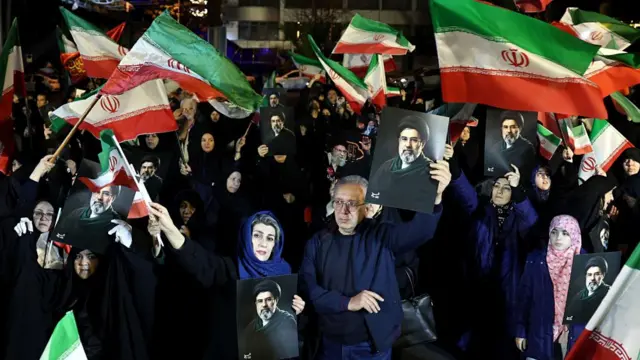
    Iranian people chant, wave flags and hold posters of the new Iranian supreme leader Mojtaba Khamenei during a rally in support for the military, in TehranImage source, Reuters

    While Washington talks about progress with Tehran, Iran rejects it outright.

    That disagreement reflects a deep mistrust that stems from previous talks between the two sides.

    They have twice raised hopes of easing tensions.

    Both times, they were followed by Israeli and US military strikes on Iran.

    From Iran's point of view, talks have not reduced the possibility of war; they have come just before it. That is why Trump's claims are being treated with suspicion.

    But Iran's denial does not necessarily mean it is against talks. There is more going on.

    Even officials who support diplomacy are under pressure. Trying negotiations again would be risky. There is no clear sign that this time would be different, which helps explain the tough tone from Foreign Minister Abbas Araghchi and other officials.

    More: Iran's rejection of US talks reflects deep mistrust

  5. Iran's foreign minister dismisses reports of talkspublished at 01:17 GMT

    Ghoncheh Habibiazad
    Senior reporter, BBC Persian

    As we reported earlier, Iranian Foreign Minister Abbas Araghchi has said in a televised interview on Iran’s state TV news channel that for “several days” the US has "begun sending various messages through different intermediaries”.

    But he says that the fact these messages were “conveyed via friendly countries”, and that Iran was responding by stating their “positions and issuing warnings”, is “neither dialogue nor negotiation, nor anything of the sort”.

    Araghchi also says that Iran’s policy for now is to continue “defending”, and they have “no intention of negotiating for now”.

    He adds that, “This is Israel’s war and people of the region and people of the US are paying the price for it”.

  6. What are the latest developments on talks between the US and Iran?published at 01:16 GMT

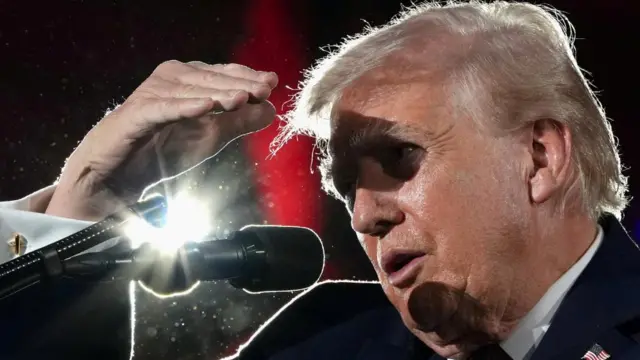
    Trump shields his eyes with his hand as he speaksImage source, Reuters

    Our live coverage of the Iran war continues amid conflicting reports about negotiations between Washington and Tehran. Here are the latest developments:

    • Speaking on Wednesday, White House Press Secretary Karoline Leavitt said President Trump has been engaged over the last three days in "productive conversations" with Iran
    • She also said the operation was "ahead of schedule" and the Iranian regime was looking for an "exit ramp"
    • That message is in stark contrast to the tone of Iranian Foreign Minister Abbas Araghchi, who said later that Iran has “no intention of negotiatingfor now
    • He said messages had been “conveyed via friendly countries”, but these exchanges is “neither dialogue nor negotiation, nor anything of the sort”
    • Undeterred, Trump insists that Iran "are negotiating", saying "they're afraid to say it because they figure they'll be killed by their own people". He added: "They're also afraid they'll be killed by us"
    • There has also been conflicting reports about proposals to end the war. On Wednesday, there were reports that Iran had received a 15-point plan from the US for reaching a ceasefire
    • For its part, an Iranian “senior political-security official” was quoted by state broadcaster Press TV as saying they had five conditions to end the war, including payment of "war damages and reparations" and the end of the war across all fronts
    • Meanwhile, the fighting continues - smoke was seen billowing from an Israeli power station after a reported Iranian missile attack, while Iranian air defence systems have been heard in Tehran

    Stay with us for the latest updates and analysis.