Summary

  1. Alcohol-free beer, houmous and pet grooming - the new additions for measuring inflationpublished at 08:09 GMT

    The prices of hundreds of everyday items, including food and fuel, are tracked by the Office for National Statistics (ONS).

    This virtual "basket of goods" is regularly updated to reflect shopping trends, with alcohol-free beer, houmous and pet grooming added this year.

    The ONS monitors price changes over the previous 12 months to calculate inflation.

    The main inflation measure is called the Consumer Prices Index (CPI), and the latest figures are published every month.
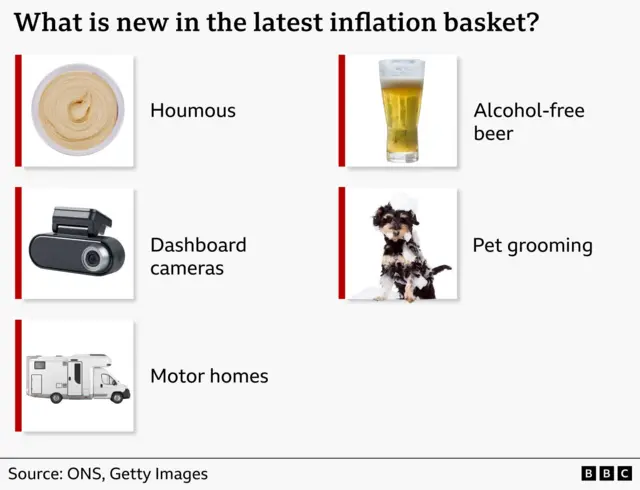
    image of dashboard cameras, motorhomes to illustrate what was added
  2. First inflation figures to use data from the supermarket tillspublished at 08:04 GMT

    Robert Cuffe
    Head of statistics

    Today’s figures are the first to use prices from supermarket scanners.

    Normally, the ONS collects information by sending people to shops to review the prices on shelves for items in the "basket of goods" that they use to keep track of prices.

    But now they have access to anonymised data on billions of real shopping baskets: how much we pay and how much we buy.

    It doesn’t make much difference to the headline figure. But, under the hood, this data can tell us more about changes in the cost of living.

    Real-life data on what we actually buy tells you, for example, how quickly we start to swap in cheaper products when prices rise.

  3. Analysis

    Economists expect inflation to rise, although by less than in 2022. But it all depends on energy pricespublished at 07:54 GMT

    Dharshini David
    Deputy economics editor

    Price pressures from spring clothing ranges and furniture offset weaker petrol prices ahead of the Iran conflict to leave inflation unchanged, but still above the official 2% target in February.

    And that drop in fuel prices has more than reversed since those figures were collected - the war in the Middle East is expected to derail a hoped-for drop in inflation in the coming months.

    Any rise in domestic energy bills later on in the summer would add to that too.

    And while fuel and home energy are a relatively small part of the basket of goods and services that official statisticians use to calculate inflation, energy price pressures are likely to spread to other areas - such as food and leisure costs.

    Economists currently think inflation could end the year at around 3.5%.

    That’s a fraction of the soaring inflation rates seen just a few years ago, in the aftermath of the Russian invasion of Ukraine - but still unhelpful after a bruising few years of relentless rises in the cost of living.

    But everything depends on the path of oil and gas markets - and any further help the government delivers.

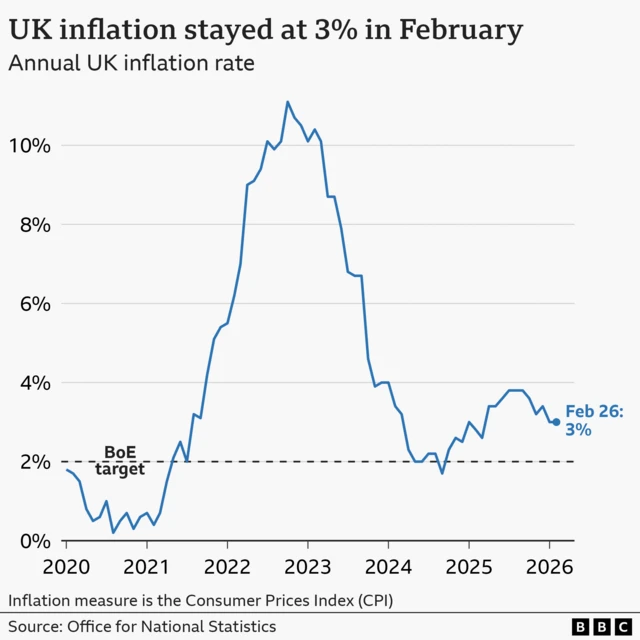
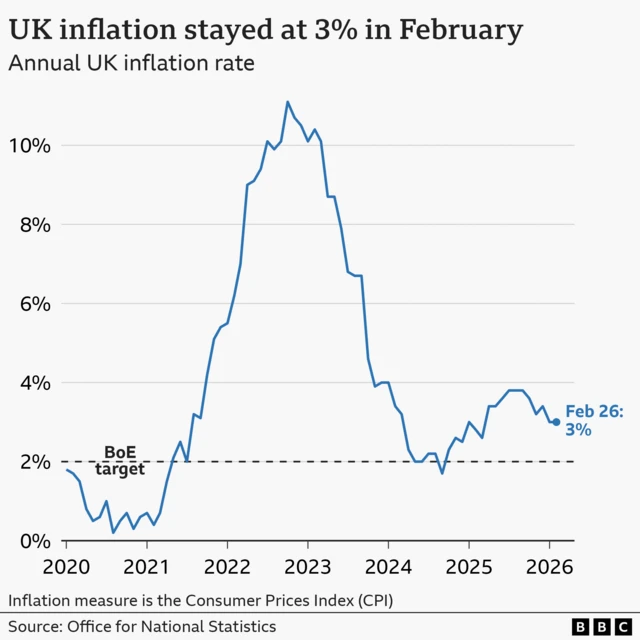
    A line chart titled 'UK inflation stayed at 3% in February', showing the UK Consumer Price Index annual inflation rate, from January 2020 to February 2026. In the year to January 2020, inflation was 1.8%. It then fell close to 0% in late-2020 before rising sharply, hitting a high of 11.1% in October 2022. It then fell to a low of 1.7% in September 2024 before rising again. In the year to February 2026, prices rose 3%, in line with 3% the previous month.
  4. Lib Dems say government needs a 'serious plan' to help with energy costspublished at 07:45 GMT

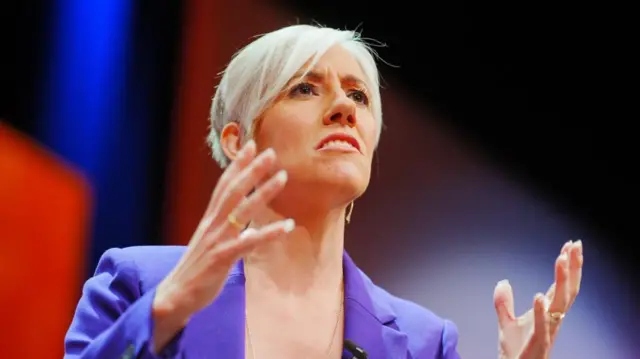
    A file photo of Daisy Cooper on stage, speaking to a crowdImage source, PA Media

    Responding to today's figures, Liberal Democrat Treasury spokesperson Daisy Cooper says: "Stubbornly high inflation will do absolutely nothing to calm the nerves of Brits across the country, already grappling with an endless cost-of-living crisis."

    "Trumpflation is looming on the horizon, set to squeeze budgets even further," she says, adding: "The government can't turn its back on people as the cost of living spirals.

    "Ministers must put in place a serious plan to help families and small businesses bring down their energy costs, and make sure vulnerable and high energy households aren't pushed over the edge by crippling energy bill rises."

  5. Bus company anticipates 'difficult decisions' as the Iran war raises fuel pricespublished at 07:40 GMT

    Adam Woods
    Economics producer

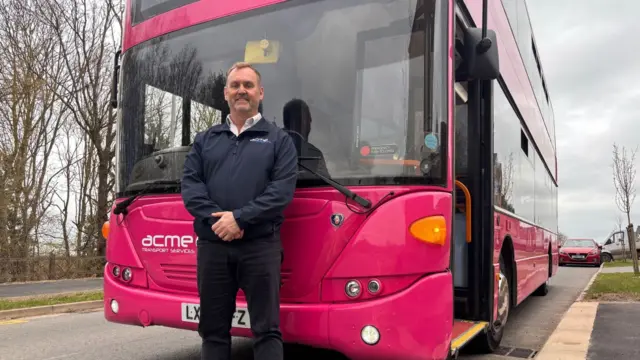
    A man stands in front of a pink bus

    James Palmer runs the Acme Bus Company in Saffron Walden.

    Every day, hundreds of school children in Essex and Hertfordshire rely on his buses to get them to and from school.

    But rising fuel prices since the start of the Iran war are already having an impact on the business.

    "It can be very stressful at times," says James. "It’s the unpredictability of not knowing what the price is going to be tomorrow and maybe that you’re not going to be able to order fuel."

    Three weeks ago, the company, which buys fuel in bulk, paid around £1.21 per litre.

    "We’re now paying roughly £1.86 per litre."

    James says that combined with increased staff costs of 30% over the last few years, "difficult decisions" will have to be made to keep the buses on the road.

    He says price rises are "inevitable".

    "We don’t want to be letting parents down, because we’re providing a main source of transport for them. So it’s quite worrying."

  6. Lower fuel prices helped keep inflation down - but the Iran war is expected to change thatpublished at 07:38 GMT

    Lucy Hooker
    Business reporter

    Before the conflict in the Middle East the price of motor fuels had fallen month-on-month between January and February.

    The ONS says the average price of a litre of petrol was 131.6p per litre in Feburary, the lowest since June 2021, which was before Russia's invasion of Ukraine.

    Diesel was at 141.1p per litre in February.

    That was the biggest element holding down the overall inflation rate. But of course when it comes to next month's inflation, that will all look very different.

  7. Clothing, alcohol and fuel - a closer look at the figurespublished at 07:36 GMT

    Lucy Hooker
    Business reporter

    While the overall rate of inflation remained steady, within that the prices of some things have risen more quickly, some more slowly.

    If you are planning to buy a new spring outfit, or if you are considering a home makeover, you’ll be bearing the brunt of the latest price rises. The price of clothing and footwear rose more than other things in the last year, bolstering today’s 3% inflation figure.

    Clothing and footwear were up 0.9% in the year to February, whereas this time last year they had been falling.

    When it comes to alcohol and tobacco, they rose by 3.6% in the year to February, but those prices weren’t rising as fast as in January. Compared to a year ago there were price falls across spirits, wines and beers as a result of price discounting, the ONS says.

    The biggest downward impact on price rises came from motor fuels – but that was before the conflict in the Middle East began.

  8. Tories say UK is entering energy crisis with inflation already high under Labourpublished at 07:20 GMT

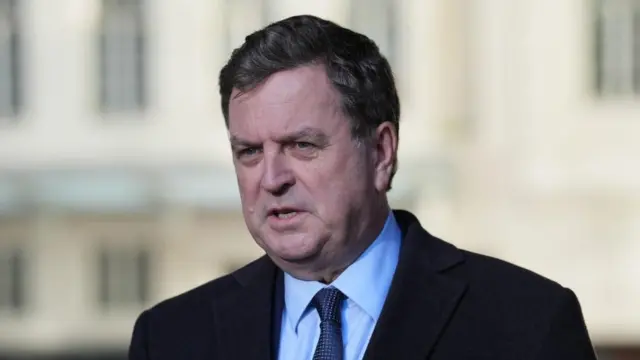
    A file photo of Mel Stride speaking outsideImage source, PA Media

    Shadow chancellor Mel Stride says "thanks to Labour’s mismanagement" the UK is "entering this latest energy crisis with the highest inflation in the G7".

    In a post on social media, he says: "Under Rachel Reeves our economy is weaker and more vulnerable to external shocks. Today’s figures show the cost of living was already rising too fast for families who will now be bracing for the impact of events in the Middle East on their bills.

    "The chancellor’s irresponsible decision to ramp up borrowing and spending while hiking taxes on businesses has fuelled inflation."

    He also says "net zero dogma means we are reliant on imports instead of taking advantage of our own resources in the North Sea", and says only his party has "the plan and the leadership to get costs, bills and debt down".

  9. 'We have the right economic plan' - Reevespublished at 07:14 GMT

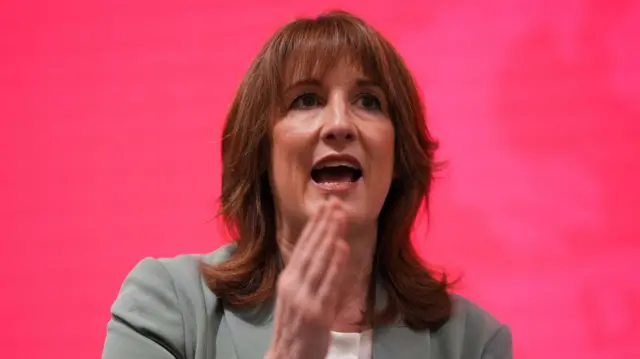
    A file photo of Rachel Reeves speaking on stageImage source, PA Media

    Chancellor Rachel Reeves has issued a statement responding to this morning's inflation figures.

    She says: "In an uncertain world we have the right economic plan, taking a responsive and responsible approach to supporting working people in the national interest.

    "We’re taking £150 off energy bills and providing targeted support for those facing higher heating oil costs.

    "We’re also acting to protect people from unfair price rises if they occur, bring down food prices at the till, and cut red tape to boost long-term energy security - building a stronger, more secure economy."

  10. Clothing was largest driver of inflation, offset by lower petrol prices before the Iran war - ONSpublished at 07:08 GMT

    Chief economist for the Office for National Statistics, Grant Fitzner, says in a message posted on social media: "After last month's slowdown, annual inflation was unchanged.

    "The largest upwards driver was the price of clothing, which rose this month but fell a year ago.

    "This was offset by falls in petrol costs, with prices collected before the start of the conflict in the Middle East and subsequent rise in crude oil prices.

    "A fall in the cost of alcoholic drinks due to promotion activity, compared with a rise last year, was also a downward driver, while little change in food prices, again compared with a small rise this time last year, added further downward pressure."

  11. No surprise as inflation figure is same as forecast 3%published at 07:03 GMT

    Lucy Hooker
    Business reporter

    The 3% inflation rate for the year to February is exactly what was forecast.

    It is the same as January’s figure and the lowest inflation we have seen since March last year.

    But it doesn’t tell us much about the future direction of prices or interest rates, given the likely impact of the conflict in the Middle East.

  12. Inflation remains unchanged at 3% - ONSpublished at 07:00 GMT
    Breaking

    The UK inflation rate remained at 3% in the year to February, the Office for National Statistics says.

    A line chart titled 'UK inflation stayed at 3% in February', showing the UK Consumer Price Index annual inflation rate, from January 2020 to February 2026. In the year to January 2020, inflation was 1.8%. It then fell close to 0% in late-2020 before rising sharply, hitting a high of 11.1% in October 2022. It then fell to a low of 1.7% in September 2024 before rising again. In the year to February 2026, prices rose 3%, in line with 3% the previous month.
  13. What is inflation?published at 06:44 GMT

    Inflation is the increase in the price of something over time.

    For example, if a bottle of milk costs £1 but is £1.05 a year later, then annual milk inflation is 5%.

    The Office for National Statistics (ONS) collects the costs of 760 products and services across different retailers and monitors price changes over the previous 12 months to calculate inflation.

    The main inflation measure is called the Consumer Prices Index (CPI), and the latest figure is published every month.

    Benefits, pensions, and interest rate decisions by the Bank of England are all affected by inflation.

    The government has set a 2% target for the CPI measure of inflation.

  14. Analysis

    Iran war is expected to keep inflation above target going forwardpublished at 06:32 GMT

    Dharshini David
    Deputy economics editor

    Today's inflation figures were collected before the war in Iran began. But they'll be a reminder that price pressures were lingering then.

    Inflation overall is expected to have remained around 3% in February, as services such as restaurant meals saw more persistent rises.

    And the figures we get in the next few months are likely to show a hoped-for drop in inflation to the 2% target has been derailed.

    The rise in petrol, diesel and heating oil will nudge up the rate, and any rise in home energy bills will add to that, come the summer.

    Those items actually make up a small proportion of the basket of goods and services we buy that official statisticians use to calculate inflation.

    But higher energy costs may also impact the prices of other items, such as food.

    At present, economists reckon inflation could end the year around 3.5% - unwelcome, but not near the levels we saw at the start of the war in Ukraine.

    But much, in such a volatile environment, could change - in either direction.

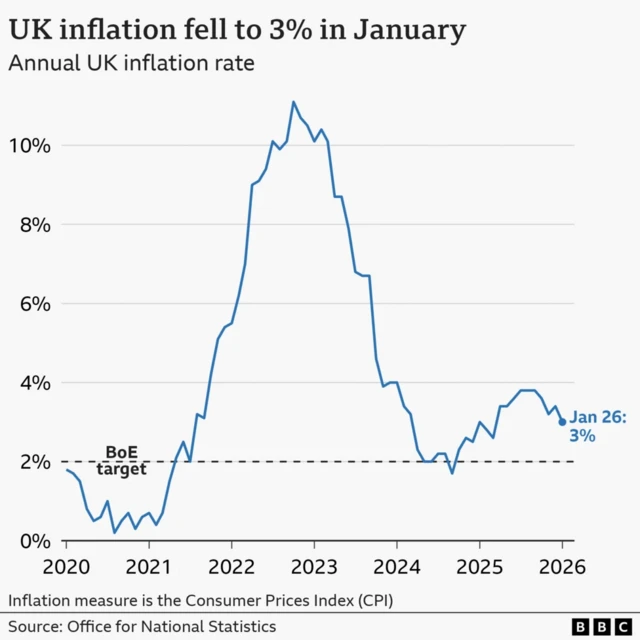
    A chart showing inflation going back to 2020. It rises well above the Bank's target, before dropping just below it in 2024. In Jan 26 it was 3%
  15. What will we find out today?published at 06:28 GMT

    Lucy Hooker
    Business reporter

    We’ll find out how fast prices were rising in the year to February – so before the US-Israeli attacks on Iran.

    In February there was talk of prices rising more slowly, even getting it back to the Bank of England’s 2% target by sometime in the spring.

    Then on the last day of the month came the conflict, sending energy prices soaring and turning any previous projections on their head.

    What we won’t find out today is where inflation is now, or how much of an effect the war is going to have, though it’s almost certainty on the rise again.

  16. Figures for inflation until February to be releasedpublished at 06:21 GMT

    Lucy Hooker
    Business reporter

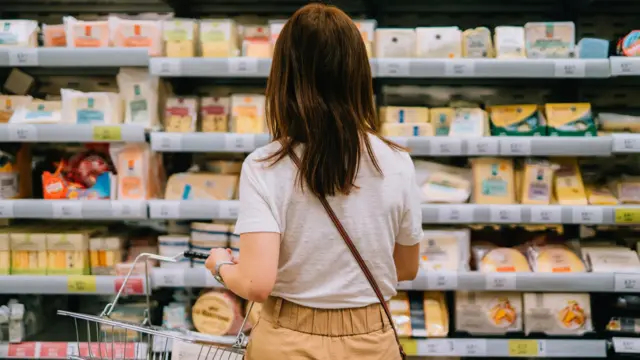
    A file photo of a woman in a shop holding a basketImage source, Getty Images

    The latest UK inflation figures are due to be published this morning - they will tell us whether prices are rising more slowly or more quickly.

    Prices in the UK rose by 3% in the year to January, down from 3.4% in December. It means that inflation remains above the Bank of England's 2% target.

    We’ll get February’s figure at 07:00 GMT - we’ll bring you updates and analysis from our experts, including on what it means for you.