Summary

  1. IEA approves release of 400m barrels of oilpublished at 14:11 GMT
    Breaking

    The International Energy Agency will approve the release of 400m barrels of oil to offset the supply lost through the "effective closure" of the Strait of Hormuz, its executive director Fatih Birol has announced.

    He says IEA countries voted "unanimously" to launch the "largest ever release of emergency oil stocks in our agency's history".


  2. International Energy Agency to give statement on oil reserves shortlypublished at 14:02 GMT

    The International Energy Agency is about to deliver a statement on plans surrounding the release of oil reserves in the face of volatility following the Iran conflict.

    We'll be listening and will bring you any key updates. Earlier, our business editor Simon Jack explained what releasing oil reserves can achieve - and why it may not lead to lower oil prices.

  3. These bombs are different, Beirut restaurant owner tells BBCpublished at 13:54 GMT

    Ahmed Adan
    BBC News

    Restaurant owner Aline Karnakian pictured wearing a chef's shirt.Image source, Aline Karnakian

    Aline Kamakian, a restaurant owner in Beirut, Lebanon, tells the BBC she was born and raised in wars, but "these bombs are different".

    "They are louder and you feel it deep in your heart,” Aline says.

    “I'm Lebanese; we cannot close and move. Where should I move?

    Aline says so far she has avoided having to close her restaurant.

    “We're refusing to close because if I close, by the time you reopen, it's another challenge. And I don’t want my employees to get depressed. So, we're coming and we're sitting together, eating together at least to keep this momentum. Maybe we're hoping that this will be over soon and we can come back to our normal life.”

    Aline says it is hard to make ends meet.

    “I have literally no one entering. We do like three or four deliveries, which are nothing. I cannot hold it for a long time. I can hold it for one week, two weeks, three weeks, maybe. But afterwards, I cannot.”

  4. BBC Verify

    Satellite image shows aircraft damaged at Iran military basepublished at 13:41 GMT

    By Paul Brown

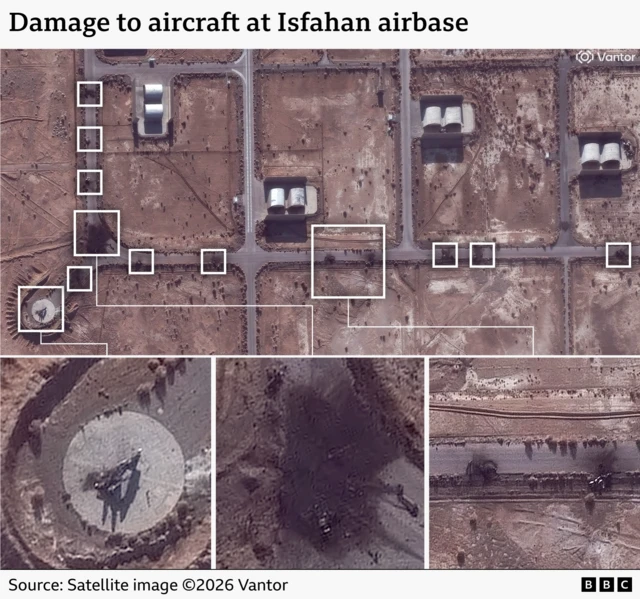
    Recent satellite imagery analysed by BBC Verify shows extensive damage to at least 13 aircraft at a military air base near the city of Isfahan in central Iran.

    The image of Eighth Shekari Air Base, captured on Monday by US-based intelligence company Vantor, show some of the aircraft appear to have completely burned out, leaving only scorch marks.

    For others there is still debris visible on the tarmac.

    Images captured on 22 February show F-14 and F-7 fighter jets at the same locations, but it is not possible to confirm from the images exactly which aircraft have been damaged or destroyed.

    There is also visible damage to aircraft shelters and other structures at the base, which is linked to Isfahan International Airport.

    BBC Verify has observed damaged aircraft at four Iranian air bases so far, as well as damaged buildings at six others.

    Satellite image showing 13 damage aircraft, some of which have left debris and others are just scorch marks
  5. Iran says it won't allow 'a single litre of oil' to pass through Strait of Hormuzpublished at 13:17 GMT

    Iran says its policy for reciprocal strikes "has ended", a spokesman for Tehran's Khatam al-Anbiya military command headquarters says in a statement.

    Tehran's policy now will be "strike upon strike," spokesman Ebrahim Zolfaqari says.

    Tehran will "not allow even a single litre of oil" to pass through the Strait of Hormuz to reach the US, Israel and their partners, Zolfaqari adds. "Any vessel or tanker bound to them will be a legitimate target."

    "Get ready for the oil barrel to be at $200 because the oil price depends on the regional security which you have destabilised," the spokesman adds.

    Why is the Strait of Hormuz so important?

  6. Countries plan to release oil reserves in effort to calm marketspublished at 13:07 GMT

    Jonathan Josephs
    Business reporter

    Germany’s economy minister appears to have confirmed plans for the International Energy Agency (IEA) to make the biggest release of oil reserves in its history.

    She said the 32 members have been asked to release 400m barrels collectively. That’s a significant chunk because it's about a third of the total these governments hold.

    Katherina Reiche said her country would contribute to what she called “an instrument for dealing with supply shortages” and that it was “clear that there must be a visible signal to the market to curb high risk premiums and speculative gains with such a significant step”.

    This global effort to calm energy markets comes after oil prices have been particularly volatile in recent days, sending shockwaves through the global economy.

    They remain significantly ahead of where they were before the Iran war started - as I write this, a barrel of benchmark Brent Crude is trading at over $91 (£68).

    Earlier, Japan, which has one of the biggest reserves, said it was planning to release 15 days' worth of private-sector oil reserves and one month's worth of state oil reserves, according to Prime Minister Sanae Takaichi.

    She said “rather than wait for formal IEA approval of a coordinated international reserve release, Japan will act first to ease global energy market supply and demand, releasing reserves as early as the 16th of this month”.

    Meanwhile Austria’s energy minister says they “will support a decision in principle”.

    All are members of the IEA which is reported to be announcing a decision on a release in the coming hours but hasn’t responded to my enquiries.

  7. Cargo ship on fire in Strait of Hormuz and strikes reported in Gulf statespublished at 12:55 GMT

    Jacob Phillips
    Live reporter

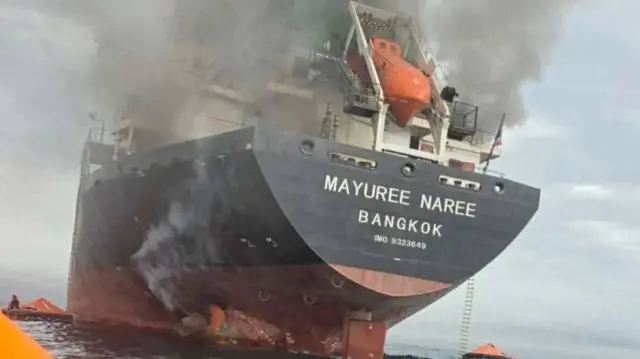
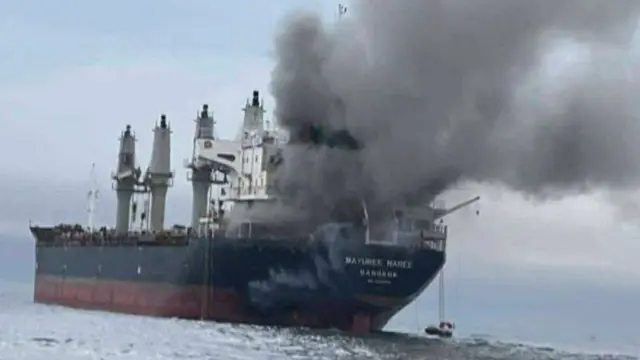
    he Thailand-flagged cargo ship Mayuree Naree engulfed in black smoke in the Strait of Hormuz, March 11, 2026Image source, Reuters

    Israel has announced a "wide-scale wave" of attacks against Iran and further attacks against Beirut while Iran continues to strike neighbouring countries in the Gulf region.

    Strait of Hormuz

    • Thailand's navy says it is assisting after a Thai-flagged cargo ship was attacked in the Strait of Hormuz, with 20 of the 23 crew members already rescued by Oman's navy
    • The UK Maritime Trade Operations (UKMTO) has reports that, in total, three cargo vessels have been hit by unknown projectiles in the strait today
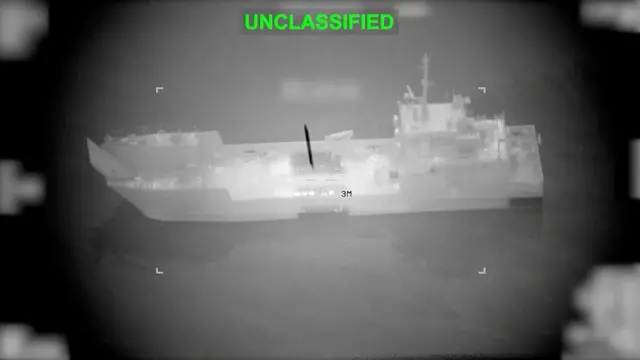
    • Overnight the US military said it destroyed 16 mine-laying Iranian ships in the strait

    Continued airstrikes

    Oil prices

    A boat is seen in a target in black and white with the words 'unclassified' written above in greenImage source, CentCom/Reuters
    Image caption,

    The US military says it struck Iranian targets near the Strait of Hormuz

  8. Starmer defends decision to keep UK out of Iran warpublished at 12:25 GMT

    In the UK, Prime Minister's Questions is under way and the focus is on the war in Iran, with Keir Starmer asked about the knock-on impact on the British public and whether British troops will get involved.

    Starmer defends his decision not to join the war, and says: "Our armed forces are working day and night to protect British lives and British interests in the Middle East.

    "The RAF have flown over 230 hours of defensive operations over multiple countries, shooting down multiple drones, protecting British lives and our allies," he says.

    Starmer says fuel duty will "remain frozen until September", and the government will keep the situation under review in light of events in Iran.

    You can follow our live coverage of the House of Commons right now.

  9. KLM cancels all flights to Dubai until 28 Marchpublished at 12:17 GMT

    The Dutch airline KLM has cancelled all flights to Dubai until 28 March due to "the ongoing geopolitical unrest in the Middle East", it says.

    Earlier, officials in Dubai said two drones “fell in the vicinity” of Dubai International Airport this morning, and four people were injured.

    "KLM remains available for the repatriation of stranded travellers," the airline says in a statement on its website, adding that the Dutch Ministry of Foreign Affairs is coordinating this.

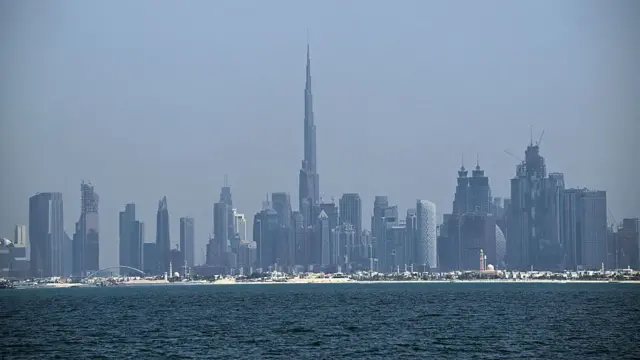
    The Dubai skyline, seen earlier todayImage source, Getty Images
    Image caption,

    The Dubai skyline, seen earlier today

  10. UK petrol and diesel prices continue to risepublished at 12:11 GMT

    Jennifer Meierhans
    Business reporter

    Drivers in the UK are continuing to see the impact of conflict in the Middle East at the fuel pump.

    Every $10 increase in the oil price pushes up petrol prices by roughly 7p a litre, analysts say.

    These changes take about a fortnight to hit but some fuel companies are already starting to put up prices to pre-empt the expected rise in costs.

    Unleaded petrol has gone up another penny in the last 24 hours to 139p a litre. And diesel is up another 2p to 155.1p, says the RAC's Simon Williams.

    Diesel has gone up by nearly 13p, or 9%, since the war started and is at its highest price since May 2024, he says.

    Brent crude, the global benchmark for oil prices, is trading at $89.44 a barrel - more than 20% higher than before the war.

    If oil settles at around $90 a barrel and the pound and US dollar stay where they are, average petrol prices could reach around 140p a litre, and diesel around 167p a litre, says the RAC.

  11. UK ready to support release of oil reserves, sources tell BBCpublished at 12:05 GMT

    Jonathan Josephs
    Business reporter

    The UK is prepared to support a coordinated release of collective International Energy Agency (IEA) oil reserves, I understand from government sources.

    However, any announcement will be left to the IEA.

    This Flourish post cannot be displayed in your browser. Please enable Javascript or try a different browser.

  12. BBC Verify

    Three ships hit near Strait of Hormuz namedpublished at 12:00 GMT

    By Thomas Copeland and Joshua Cheetham

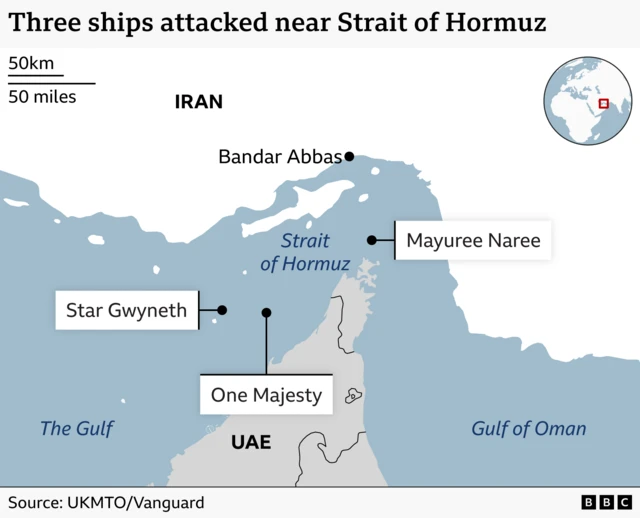
    Following confirmation that Thai-flagged container ship Mayuree Naree has been attacked, BBC Verify has learned details from maritime security firm Vanguard about all three vessels hit by unknown projectiles today.

    A Japan-flagged container ship called One Majesty has been left with a 10cm (4in) hole after an attack about 29 miles (47km) north of the UAE’s port city of Ras Al Khaimah and is now heading for safe harbour.

    The second vessel, a Marshall Islands-flagged bulk carrier called Star Gwyneth, has reported that its crew are all safe after a strike from an unknown source damaged the ship’s hull about 57 miles (92km) north of Dubai.

    Vanguard also confirmed Mayuree Naree was about 12 miles (19km) north of Oman when it was struck, causing a fire on board.

    Here’s a map of the approximate locations of the incidents, which BBC Verify made by matching details provided by both Vanguard and the UK Maritime Trade Operations (UKMTO) security authority:

    Map of the three attacks. Star Gwyneth and One Majesty are marked to the north-west of the Strait of Hormuz inside the Gulf between UAE and Iran. Mayuree Naree is marked to the north of Oman inside the strait.
  13. Shock in central Beirut as strike hits apartment buildingpublished at 11:53 GMT

    Carine Torbey
    Arabic correspondent, in Beirut

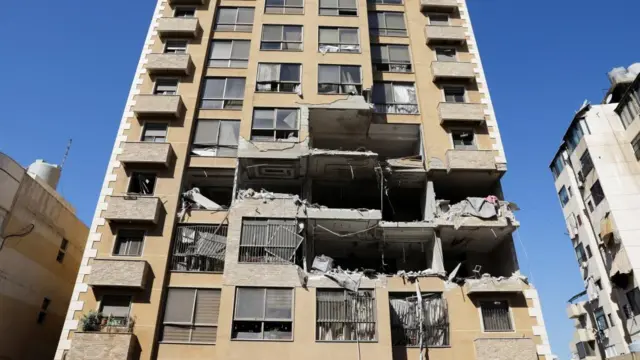
    A damaged apartment building in the aftermath of an Israeli strike in BeirutImage source, Reuters

    People are in absolute shock after an apartment building was struck in the heart of Beirut in the early hours of this morning.

    This is a popular neighbourhood where people thought they were safe.

    Residents I have spoken to never thought this area would be in danger or targeted in any strikes.

    But this is the second time it has happened in less than a week.

    Four Iranian diplomats were killed when they were staying in a famous hotel in Beirut and now this apartment here.

    There are serious fears and concerns about what comes next and this is just one example of what is happening around Lebanon.

    There are large parts of country, in the south and southern suburbs of Beirut, that are relentlessly hit by strikes every single day.

    Over 700,000 people have been displaced from their homes by Israeli evacuation orders and are searching for a place to stay.

    Media caption,

    'This is a nightmare': BBC reports from site of Beirut strike

  14. Countries may release 'reserve' oil supplies - what does that mean?published at 11:32 GMT

    Simon Jack
    Business editor

    G7 nations have said they support releasing "strategic reserves" of oil as price volatility continues because of the Iran war.

    But where and what is the UK's strategic oil reserve and what difference would releasing it make?

    All countries that are members of the International Energy Association (IEA) are required to keep reserves of oil in case of global disruptions - roughly 90 days' worth of supplies.

    The oil itself is not in a single geographic location. Producers like Shell and BP keep stocks at terminals and refineries around the UK and can earmark stocks held elsewhere as counting towards their reserves.

    When it is released, it does not mean a sudden flood of new oil starts moving, rather producers will make more available in the market for refineries to order.

    However, energy analysts have told the BBC that given there is a shortage of refining capacity, the release is not a magic switch to increase the flow of refined products like petrol and jet fuel.

    And with roughly 1.2bn barrels in reserve, releasing hundreds of millions is not a card you can play very often.

    Saying that you "stand ready" or "agree in principle" to releasing it is a way of generating some assurance in the market without actually using up one of your potential levers.

    The releasing of the reserves is more of a confidence or sentiment-boosting signal to reassure markets that governments have recognised the threats and are acting in co-ordination to address them.

    In short, it may not see oil prices fall but it may stop them climbing much higher.

  15. Iran war causes turbulence for UK mortgagespublished at 11:29 GMT

    Kevin Peachey
    Cost of living correspondent

    Woman looking in the window at properties advertised in the window of an estate agent on 29th May 2024 in Macclesfield, United Kingdom.Image source, Getty Images

    At times of turmoil lenders often pull mortgage products from sale, unsure of how to price them amid the uncertainty.

    The Iran war - and its global economic impact - means the cost of borrowing in the UK is likely to be much higher over the coming monthsthan previously expected.

    The financial information service Moneyfacts says nearly 500 mortgage deals have been pulled off the shelves in the last two days - the equivalent of 6.5% of the market.

    It says this is the most turbulent time for the UK mortgage market since the 2022 mini-budget during the premiership of Liz Truss.

    Those people in the UK renewing their mortgage, or shopping around for a new deal, now face average interest rates of more than 5% on both two and five-year deals.

  16. Why is the Strait of Hormuz so important?published at 11:09 GMT

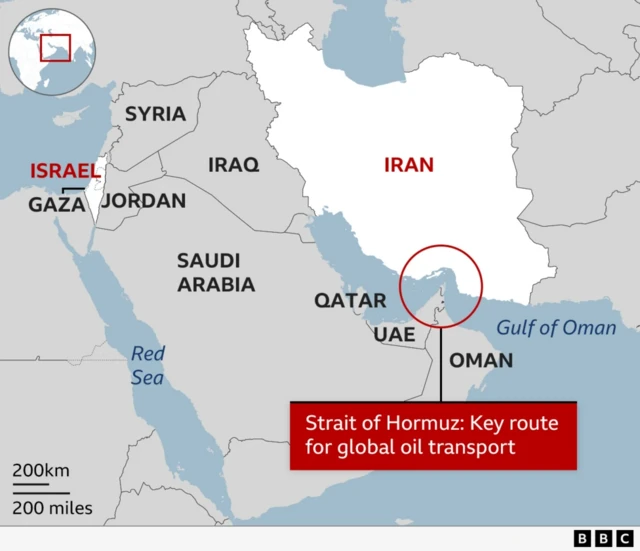
    Around 3,000 ships a month would normally pass through the Strait of Hormuz in the Middle East.

    It's the world's busiest oil shipping channel - about 20% of the world’s oil is carried through it.

    It is deep enough for the biggest crude oil tankers and used by the Middle East’s major oil and gas producers - Iran, Iraq, Kuwait, Qatar, Saudi Arabia and the UAE.

    But the war has severely reduced sea traffic through the area, with UK Maritime Trade Operations saying there have been reports of 13 ships attacked since the conflict began.

    Oil surged past $100 a barrel on Monday, before Trump said the war was "very complete, pretty much", leading to a fall in the oil price, which is now closer to $90 a barrel - still well above pre-war levels.

    The slowdown in movement through the strait has raised concerns because the cost of oil can push up prices for energy, transport and manufacturing.

    Read more: Why the price of oil matters more than you might think

    Map of Strait of Hormuz, with a red circle pointing out the strait amidst the countries of the middle east including UAE, Qatar, Oman, Saudi Arabia and Iran
  17. BBC reports from scene of strike in southern Lebanonpublished at 10:52 GMT

    Alice Cuddy
    Reporting from southern Lebanon

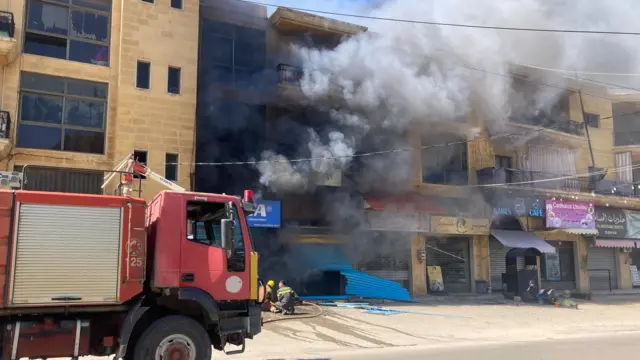
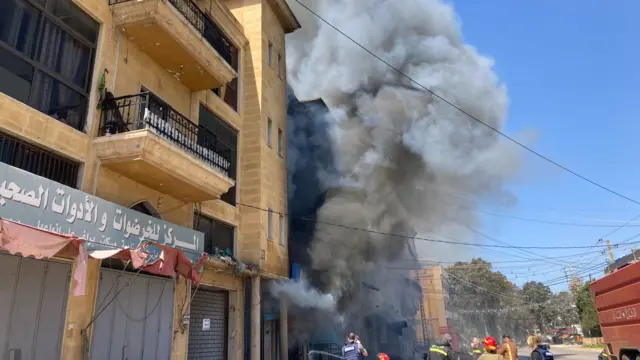
    Thick black smoke comes from a building with a fire engine in the foreground. The building hit appears to have ships and a cafe on the ground floor

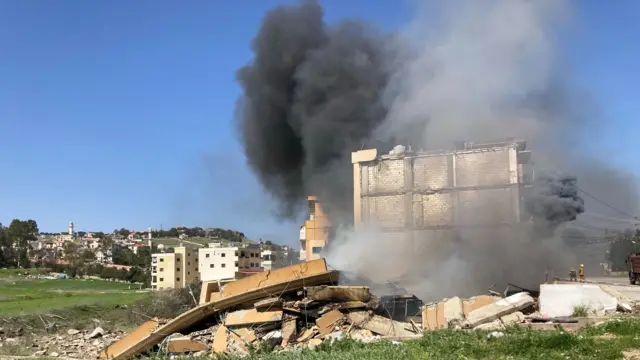
    I’m at the scene of an Israeli strike in southern Lebanon, where firefighters are still working to put out a major fire after an explosion.

    It comes as the Lebanese health ministry has announced that 570 people have been killed in Lebanon since strikes began on 2 March.

    Officials here in Nabatieh el-Faouqa tell me the strike happened at about 09:00 local time (07:00 GMT).

    There are no deaths or injuries, with most people from the local community having fled the area following evacuation orders for villages nearby. But officials here said this specific area was not covered by the orders.

    A four-storey building was hit, with shops on the ground floor, they say. A supermarket sign can be seen beyond the smoke.

    Hussein Fakih, the regional head of civil defence here in Nabatieh, tells me he is currently dealing with "30 to 40 missions a day", including putting out fires and rescuing people trapped under rubble.

    Since I’ve been here, I’ve heard the bang of what rescuers say was a drone strike nearby.

    One local resident who works as a rescuer, so hasn’t left the area, tells me he "heard the war planes" before the explosion this morning. He adds that he is not afraid even though he believes "things will get worse" here. He says he supports Hezbollah in its war with Israel.

    Israel says its air strikes are targeting Hezbollah infrastructure in Lebanon.

    Smoke comes out of the side of a building while firefighters stand nearby
    Burning building following strike on southern Lebanon
  18. Israel launches further wave of strikes against Beirut and Iranpublished at 10:41 GMT

    Israel has announced it has begun a "wide-scale wave" of strikes against Iran while simultaneously launching attacks against Beirut.

    The Israel Defense Forces (IDF) says it is targeting infrastructure belonging to Hezbollah and the Iranian regime.

  19. Crew of Thai cargo ship being rescued after strike near Strait of Hormuz - Thai Navypublished at 10:37 GMT
    Breaking

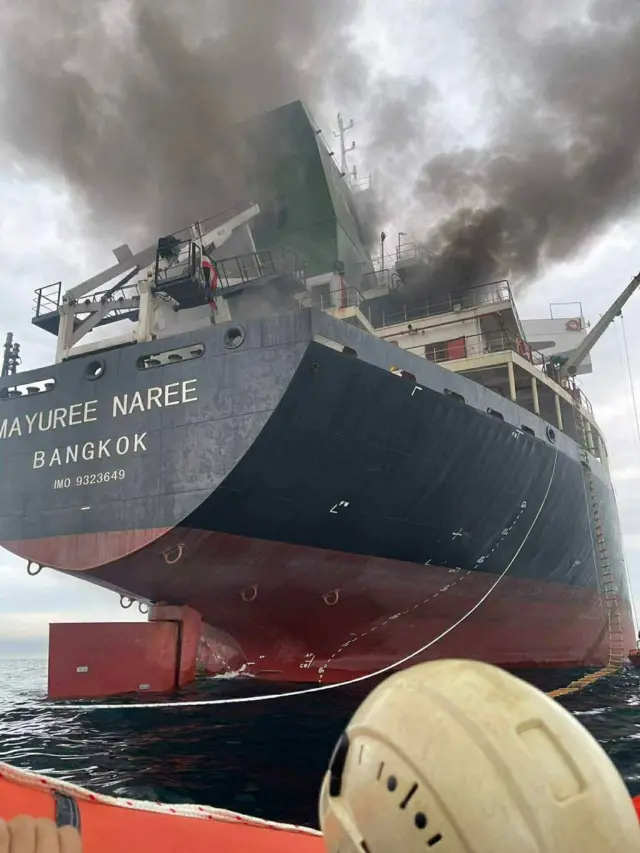
    Thai cargo ship pictured with smoke coming out of it while at sea. The picture is taken from a rescue boatImage source, Royal Thai Navy

    Thailand's navy says it is providing urgent assistance after a Thai-flagged cargo ship was attacked while sailing through the Strait of Hormuz.

    In a statement, the Royal Thai Navy says 23 Thai crew members were aboard.

    Oman's navy has rescued 20 crew members and is "in the process of rescuing" the remaining three, the Thai authorities say.

    The Thai navy says officials received an initial report of the incident at approximately 11:00, but does not specify the time zone. It says the ship was attacked after departing from Khalifa Port, United Arab Emirates, several hours earlier.

    The cause of the attack is still under investigation, the statement says.

    Thai cargo ship pictured with smoke and steam coming out of itImage source, Royal Thai Navy
  20. Thirteen ships attacked in Middle East region since conflict began - UKMTOpublished at 10:11 GMT

    UK Maritime Trade Operations says it has received reports of 13 ships being attacked in the Middle East since the start of the conflict.

    It says there have also been four reports of suspicious activity, bringing the total number of incidents affecting ships operating in and around the Arabian Gulf, Strait of Hormuz and Gulf of Oman to 17.

    The update comes after reports of three commercial vessels being hit by "unknown projectiles" in the area in separate incidents this morning, with the crew of one ship forced to evacuate after the vessel was struck north of Oman.