Bird boxes installed after fire destroys habitat

 Carla Fowler/BBC
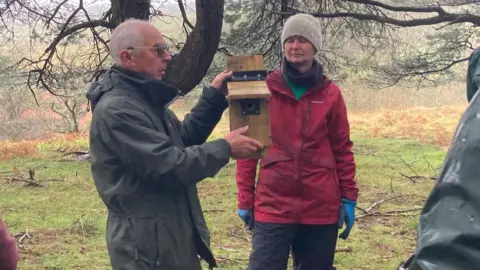
Bird and bat boxes have been installed across a landscape ravaged by wildfire as part of efforts to bring wildlife back.
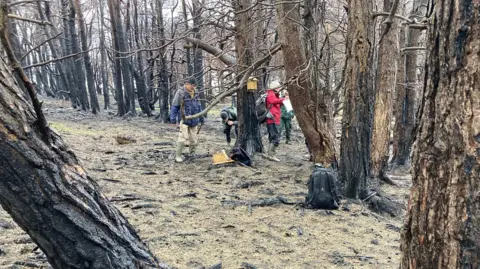
The blaze at Langdale Moor in the North York Moors National Park started on 11 August and burned for more than 40 days, covering nearly 10 sq miles (25 sq km) at its height.
The moorland was home to species including redstarts and cuckoos, but nesting spots were destroyed in the fire.
Whitby Naturalists Club built 25 custom-made nesting boxes, which they have installed on part of the affected moorland, and a spokesperson said: "The fire was devastating, it was really nasty to see, so it's important for migrating birds to find a suitable home quickly."
The blaze was likely to have been caused by someone cooking using a campfire or gas burner, an investigation found.
As well as destroying habitats, the fire also damaged existing bird and bat boxes and killed off vital food sources for predators such as kestrels, merlin falcons and owls.
The birdboxes and seven bat boxes recently installed are located in Crow Wood, which was burnt out in the fire, and nearby Soulsgrave Wood.
Volunteers from the club said they would now "wait and see" if the wildlife could be encouraged to return to those areas.
 Carla Fowler/BBC
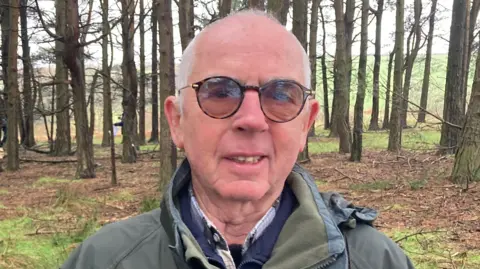
John McEachen, ornithology recorder for the group, said: "We've got 20 years of information about the nesting in previous bird boxes but we lost about 20 boxes in Crow Wood, which were scorched and burned."
He said one of the only positives was that the fire happened after the main breeding season, so he did not believe many baby birds had been killed in their nests.
"With the loss of the woodland though, there are fewer natural nesting sites, which is why we need to put up these boxes," McEachen added.
 Carla Fowler/BBC
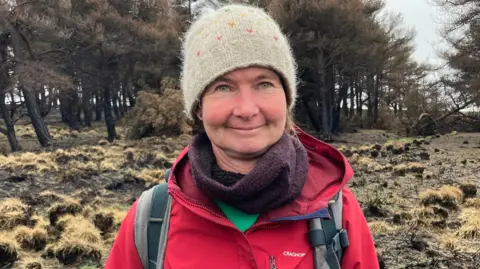
Though existing bat boxes were destroyed in the fire, the area is still a viable feeding ground for them because of the insects the water attracts, said Wendy English, from the club.
"We wanted to be sure if the bats do come back there was a place for them to roost," she added.
 Carla Fowler/BBC
The project was organised in partnership with the Fylingdales Moor Stewardship Scheme, Natural England and volunteer group The Hoots from the North York Moors National Park.
The boxes were made by Baythorpe Shed in Robin Hoods Bay and the volunteers working on the initiative included birders, botanists and carpenters.
Tanya Eyre, the Fylingdales Moor Stewardship Scheme education officer, said: "Crow Wood used to be a lovely sheltered wood, there used to be plenty of small mammals here, adders, common lizards, wood mice, even harvest mice and bank voles.
"Their habitat has been destroyed in many places and because of the extent of the fire and how hot it burnt - nature is very resilient, but it needs to have a hand, which we're giving it by providing these boxes," she said.
Listen to highlights from North Yorkshire on BBC Sounds, catch up with the latest episode of Look North.
