Wildlife surprises 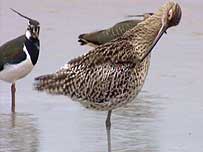 | Druridge Bay is one of the most impressive stretches of beach backed by sand dunes on Britain's north east coast. The bay can be windy and exposed in winter so why not head slightly inland where it is more sheltered? | | Northumberland's ponds are rich in winter birds |
Druridge's mosaic of freshwater pools are some of the very best places to go on a winter duck safari.
There's also some other good winter wildlife locations nearby, just north of Newcastle and on the River Coquet near Rothbury. A short drive down the road will take wildlife watchers to Big Waters where the chances of seeing an Otter are especially high. Wildlife wonderland  Back in the 20th Century the landscape surrounding Druridge Bay was dominated by open cast coal mines. Back in the 20th Century the landscape surrounding Druridge Bay was dominated by open cast coal mines.
About 235 acres of the site has now been restored as wildlife areas with lakes, reed beds and woodland. Many of the lakes and wildlife sites in the area, notably Hauxley, East Chevington and Druridge Pools, were formed following restoration schemes of various open cast workings. But Cresswell Pond, located behind the bay, was created by the collapse of coal mines. This winter wildlife wonderland boasts over a dozen species of duck including Pochards, Goldeneyes, Shovelers, and Teal which come from Russia and Northern Europe for their winter holidays. The ponds provide a dynamic environment which ducks love. Watch out for diving birds like the distinctive Goldeneye - the male has black and white plumage with a yellow eye, whilst the female has a dark brown head and grey-brown plumage. These birds love to eat mussels and can dive down four metres, staying submerged for up to 30 seconds. Some sea ducks also come inland in winter and they like to winter in the freshwater pools. Northumberland is one of the only counties of England where you'll see this sort of duck. The Druridge reserve is especially popular for Teal, Britain's smallest duck - the male is easily identified by its orange-brown head and grey plumage. These small ducks are often found at the edges of the water because their short necks don't allow them to dabble in the deeper water. They can often be seen feeding on grass seeds and floating vegetation. The 'Cuddy Duck'  The Eider Duck is a sea-duck that stays firmly on the coast. The Eider Duck is a sea-duck that stays firmly on the coast.
Also known as St Cuthbert's Duck, because the patron saint of Northumberland protected them on the Farne islands, you can find these large ducks at Amble. EIDER DUCKS | The Eider is the UK's heaviest duck and our fastest, flying at 60 mph.
Characterised by its large wedge shaped bill.
To be found mostly in rocky coastal areas.
It takes the feathers lining 85 nests to make an Eider Duck duvet. |
The Eider male is black and white with a large wedge-shaped bill whilst the female has mottled brown plumage. Another winter visitor to Druridge is the Shoveler with its enormous, long, flat bill. Also look out for the Curlew, Europe's largest wader which is most frequently spotted in January and February.
The bird is easily identified by its long, downward curving beak, grey-brown, streaky plumage, and haunting cry. Otter watching
 The North East of England is one of the few places where wildlife enthusiasts can watch these secretive creature in daylight. The North East of England is one of the few places where wildlife enthusiasts can watch these secretive creature in daylight. Big Waters, north of Newcastle upon Tyne, is a quiet nature reserve where there's a good chance of seeing Otters. This wetland environment was formed in the 1920s as a result of mining subsidence.
Covering an area of almost 50 hectares, Big Waters comprises a lake, stream, ponds, marshland, woodland and grassland.
Watch out for tell-tale signs of Otter activity including fresh prints, droppings and worried wildlife flapping at the sound of danger. Also look for a change in behaviour if there are Black-Headed Gulls in the area - they will often perform a 'mobbing action' if an Otter is around. Credits Thanks to Alan Gilbertson for addtional information about Druridge Ponds. |