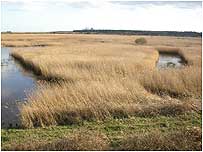
 | Wetlands provide stunning opportunities for wildlife watching. Why not take a few tips from the Nature's Calendar team? Try your hand at bird watching and pond dipping. | | Wetland habitat - great for birds |
Why not visit two of the UK's top wetlands for nature watching this spring?
* Bittern watching at Minsmere in Suffolk.
* Pond dipping at Shapwick Heath in Somerset.
Bittern watching  Minsmere is an excellent place to hear and see Bitterns, one of the rarest and most secretive of British birds. Minsmere is an excellent place to hear and see Bitterns, one of the rarest and most secretive of British birds.
Listen out for its distinctive call or 'boom' which sounds like a fog-horn.
Here are a few top tips for Bittern watching: * Keep very quiet - these birds are very shy.
* When listening out for the birds, cup your hands around your ears like a loudhailer - this will amplify the sound. * Bitterns can be seen flying low over the reed beds so take your binoculars. * Sometimes it's easier to see them from a slightly higher vantage point in a bird hide. Check out the RSPB's Bittern hide.
Pond dipping
 Shapwick Heath in Somerset is a good place for pond dipping during the spring months. Shapwick Heath in Somerset is a good place for pond dipping during the spring months. English Nature's Shapwick leaflet and site map However, many wetland areas also offer dipping fun so here's some top tips on making the most of your visit: * Drop the net into the water gently and make only small movements. Don't create too much disturbance in the water. This will enable a good mix of species to be washed into your net for examination. * Use a fine net with a long pole. Make your own by stretching a pair of tights over an old tennis racquet. Or buy a professional net from an outdoor shop. * Pond dipping is potentially dangerous on slippery wetland areas so take a friend in case you fall in. * Look out for the following wetland residents in your net - Great Pond Snails and the Lesser Silver Diving Beetle. * Don't forget to put the creatures back where you found them once you've studied them. * Why not enrol on the pond dipping course and get expert advice on identifying the local aquatic creepy crawlies.
Photo credits Thanks to the RSPB and c/o Ian Barlthorpe for Minsmere images. |