Game country 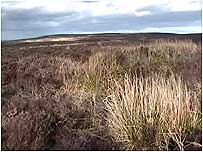 | Ruabon Mountain was once famous for being the Grouse shooting capital of North Wales. Originally woodland covered this landscape, but for centuries it has been managed as heather moor land for shooting game birds. | | Ruabon's moors are a top spot for wildlife |
Ruabon is a great wildlife destination.
In the 20th Century as moors were lost to farmers' fields, many grouse populations died out, but because of the sport shooting, Ruabon remained, ironically, a strong hold for the birds. In its heyday the Grouse was a prized game bird but today there's a different springtime sport to watch - the bizarre mating ritual of this flamboyant show off.
Black Grouse are very scarce across Britain with the biggest populations in Scotland. By the early 1990s the number of Grouse was in serious decline for a variety of reasons and shooting was no longer viable. Wildlife management of the area helped to reintroduce more birds and re-establish them. Grouse hot spot  Today Ruabon is a Black Grouse hot spot where the moor is managed to help the birds flourish. Today Ruabon is a Black Grouse hot spot where the moor is managed to help the birds flourish.
People used to burn the moors to encourage re-growth but the wide open spaces meant that chicks where vulnerable. Current moorland management methods are helping more chicks to survive so the adult population is growing. The place where the male Black Grouse display to attract a female bird is called the Lek. The Lek site is used repeatedly ever year, probably because it has a good 360 degree view so any predators can be spotted from a distance. Reptiles  The history of shooting on this moor has left its mark in the landscape and you can still see the remains of grouse butt which shooters used to hide in to wait for passing birds. The history of shooting on this moor has left its mark in the landscape and you can still see the remains of grouse butt which shooters used to hide in to wait for passing birds.
One of the creatures to be found on the moor in or near these butts is the Common Lizard. Lizards like to bask somewhere hot and the south facing Grouse butts make ideal sheltered sun traps. Adders can be found across Ruabon Moor, and they also enjoy basking on the footpaths, so keep a careful eye out whilst walking. Birds of the moor There are a good selection of bird species list at Ruabon including Peregrines, Stonechats and Skylarks. Hen Harriers are another species that can also be spotted. Listen out for the sound of Skylarks - these birds can rise very high during song, up to 100 metres. The Skylarks don't always fly so high and often rest on plants to allow for a good view across the moor. The birds are easily recognised by their streaky mid brown plumage and distinctive crest. If the male is successful in attracting a mate she will lay her eggs in a small nest on the ground, incubating her eggs quicker than any other British bird in an amazing 11 days. |