Many cities are good places for a twilight safari on the trail of one of our most secretive but common creatures - the Hedgehog.
Even late in the autumn, there may be a few of these prickly animals still around.
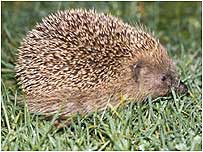
* It's hard to miss the Hedgehog once you've spotted one - it is the only spiny British mammal. The average adult Hedgehog has around 5,000-7,000 spines which are hollow hairs made stiff with keratin.
* Good habitats for Hedgehog hunting include parks, gardens and farmland across Britain. This small mammal prefers woodland edges, hedgerows and suburban habitats where there is a wealth of food.
* Certain habitats are not favoured by Hedgehogs including intensively farmed arable land, moorlands and conifer forests.
* Listen for Hedgehogs - sometimes they can be heard snuffling and grunting.
* Hedgehogs can often be most active at night after heavy rainfall.
* Hibernation starts around November but it is common for Hedgehogs to wake up several times over the winter.
* Be careful not to disturb a Hedgehog in its natural habitat. Hedgehogs may not be trapped without a licence.
* If you want to feed wild Hedgehogs in your garden, the Mammal Society recommends giving them water. Alternatively feed them with pet foods.
* Bear in mind that gardens can be hazardous for Hedgehogs e.g. if you have a pond or sharp garden equipment. These mammals sometimes hibernate under garden bonfire heaps so check for their presence.
* Why not adopt a Hedgehog? Create a wild corner in your garden with bushes, leaves and twigs on the ground to encourage the animals to nest safely.




 Expect the unexpected on your doorstep!