

News: Latest From The Show
Recent News
 01.09.08
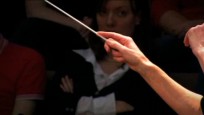
Do Men Hog the Podium?
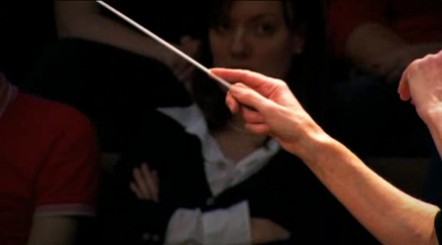
In a recent article in the Independent, conductor Madeleine Lovell, who prepared the BBC Symphony Chorus for the Choral Episode of Maestro, used the series as a springboard for her thoughts on the status of women in the conducting profession.
"Jane Asher, Katie Derham and Sue Perkins may be wielding batons in BBC2's celebrity-conductor show Maestro, but there is only one female conductor at this year's Proms, and apparently no women vying with the Rattles and Gergievs for space on the biggest podiums. Will female conductors ever achieve equality? I think they will.
"I've been conducting since I left university seven years ago, and though I have my own ensemble, the St George's Chamber Orchestra, and am preparing the BBC Symphony Chorus for [a] Proms performance, I've had some odd reactions. After one performance, I was told that a member of the viola section had been fixated on my chest; the more elderly chairmen of groups often like to know what I'll be wearing on the podium. But that's been my experience with a few amateur groups. I've never had any issues with the professionals.
"Out-of-date attitudes linger, though. Wondering about the lack of top-flight female conductors leading professional orchestras, Richard Morrison said in The Times recently that women conductors have to be "10 times more commanding than the men around them". That's a view from an outsider, one that's slightly derogatory towards the players themselves.
"If you have the musical skills, know the score and can do the job, you'll gain the respect of the players. Charisma is also important. But the difficulties I've had as a woman conductor are more to do with the nebulous 'powers that be, the administrators: they often feel it is too risky to break the mould, and that mould is the middle-aged male conductor or the exciting dynamic young man such as Gustavo Dudamel. I have been told, off the record, that one female administrator feels disinclined to engage female conductors because they 'don't know what to do with their hair'.
"It will take time for things to change at the highest level, but I believe female conductors will lead the great orchestras. I'm 29, and it's certainly my ambition to lead a major London orchestra. All the first-rate conductors are in their fifties and sixties, if not older. In this sense, conducting is the last bastion of male dominance in classical music, and it will take at least another generation for the balance to shift. It stems from old-fashioned notions of femininity: not putting yourself forward and avoiding high-profile positions of responsibility.
"This view is based on an old-fashioned idea of the conductor who strikes fear into the hearts of his players. The reality is that, with the mainstream repertoire, any professional orchestra could happily play with little direction. At the highest level the conductor is there to lead, yes, but also to inspire, to shape, to bring enthusiasm and draw out the orchestra's personality.
"Do women conductors have something their male counterparts lack? Well, after a recent performance at St Luke's, in London, a player I'd conducted told me it was a pleasant change to see someone so emotional on the podium. I suppose that's a quality traditionally ascribed to women. It was good to get positive feedback, but one of the interesting questions for a female conductor is, do you try to be as masculine as possible or try to be feminine? The answer, I think, is be yourself. If you're really thinking about the music, you've not time to be self-conscious ...
"... I've been impressed by two female contestants in Maestro, Sue Perkins and Katie Derham. Both have some music training, and you can tell. Goldie, too, has an innate understanding, conducting with his hands and arms as if moving the sound of the music itself - and the best conductors all have that quality. But Maestro is a crash course. The contestants get nowhere near the fundamentals of working with an orchestra. You need decades of musical and academic training for that. The contestants, though, have been humble before, and appreciative of, the orchestras - which is refreshing. Also, the programme has helped to explain the art of conducting to TV audiences.
"I have been preparing the BBC Symphony Chorus for Tuesday's edition of Maestro. Alex James, Bradley Walsh, Goldie, Jane Asher, Sue Perkins and Katie Denham are going to be conducting the chorus in parts of Carl Orff's Carmina Burana (the "Old Spice" music), Verdi's Requiem, Mozart's Requiem and Handel's Zadok the Priest, and other pieces. They'll struggle with Carmina Burana and Zadok: rookie conductors never like it when the tempo changes and they have to bring players and singers in. The Verdi, though - that'll run itself ..."
Recent News
 08.12.08
More Maestro for Christmas
A revealing new documentary, Maestro: The Inside Story, will be shown over Christmas.
 13.09.08
Sue takes Hyde Park by Storm
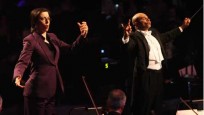
Maestro winner Sue Perkins tonight wowed the 35,000-strong Proms in the Park audience at the Last Night of the Proms.
 10.09.08
Sue's win - first verdicts from the press
Charlotte Higgins, the Guardian’s arts correspondent, was first up with a review of the Maestro Final posted on the Guardian Culture Blog at 9.53 this morning. A Spectator review has also been posted by Henrietta Bredin.
 09.09.08
Congratulations to Sue Perkins!
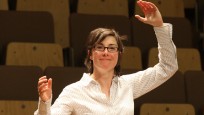
At tonight’s Grand Final, writer and comedienne Sue Perkins emerged from the audience vote to win the BBC’s first ever Maestro competition.
 04.09.08
Vengerov flies in for Final
Virtuoso violinist and conductor Maximum Vengerov will replace Simone Young on the panel of judges for the Maestro Final on Tuesday 9 September.
 02.09.08
Dramatic vote saves Jane and Goldie
The Maestro series reached new levels of tension as four students faced the orchestra vote.
 01.09.08
Opera stars join Maestro
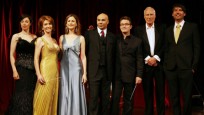
Soprano Rebecca Evans and tenor Alfie Boe will join the Maestro show for Episode 4.
 01.09.08
Do Men Hog the Podium?
Will female conductors ever achieve equality? I think they will, says conductor Madeleine Lovell
 01.09.08
Press on 'posh talent show'
TV talent shows come in many demographically targeted guises - I commend a different event - Maestro.
 26.08.08
Bradley exits the competition
Bradley Walsh did not survive the BBC Concert Orchestra’s vote this week.
 26.08.08
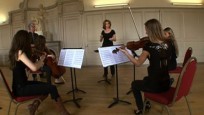
Behind the scenes
Maestro viewers have asked about the various musicians who have helped the students in their preparation.
 22.08.08
What the papers said ...
I watched Maestro (BBC2) mostly because it was there … how wrong could I be because it was riveting.
 22.08.08
Sue's reality check
Maestro student Sue Perkins posted a thoughtful article in the Guardian newspaper. These are her thoughts on what she has learned
 22.08.08
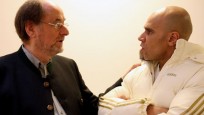
How Goldie got into Classical
Ex-grilfriend Bjork had a hand in Goldie’s conversion to classical …
 22.08.08
The Thoughts of Alex and Brad
Alex: “The first thing you have to learn as a conductor is how to stand up straight.”
 21.08.08
Lessons learned, by David Soul
Rejected student David Soul bares his … about what he learned from the Maestro experience.
 19.08.08
Second student leaves Maestro
Following the BBC Concert Orchestra’s vote, Bradley Walsh was saved and David Soul exited the competition.
 19.08.08
Don't smile at the brass ...
In the run-up to Episode 2, Katie Derham has been finding out how to get an orchestra to do what she wants …
 12.08.08
First student exits Maestro
The BBC Concert Orchestra decides who remains in the competition.
 05.08.08
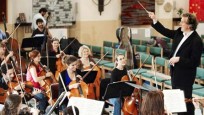
How hard can it be?
Journalist Christopher Middleton visitis the students as they try out their conducting skills on an orchestra of young musicians in a church in London.
BBC iD
BBC iDBBC navigation
BBC links

BBC © 2014The BBC is not responsible for the content of external sites. Read more.
This page is best viewed in an up-to-date web browser with style sheets (CSS) enabled. While you will be able to view the content of this page in your current browser, you will not be able to get the full visual experience. Please consider upgrading your browser software or enabling style sheets (CSS) if you are able to do so.
