

About the Music
What's The Tune?
Maestro students are challenged to conduct some of classical music's best-loved pieces. You can find out more about the music here, and listen to a clip.
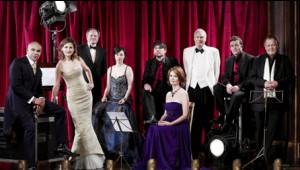 12.08.08
Episode 1: Baton Camp
Eight famous amateurs do battle for the chance to conduct the BBC Concert Orchestra in front of a live audience of 30,000 at BBC Proms in the Park.
Prokofiev: Montagues and Capulets
Prokofiev composed his ballet Romeo and Juliet in 1936: it's a perfect interpretation in music of Shakespeare's play. Montagues and Capulets conveys the haughty posturing of Verona's warring noble families.Grieg: In the Hall of the Mountain King
Norway's national composer, Edvard Grieg, is famous for an enduringly popular piano concerto and the colourful incidental music to Ibsen's play about the adventures of a folk hero, Peer Gynt, including In the Hall of the Mountain King – a huge, accelerating orchestral crescendo.Strauss: The Blue Danube
In 19th-century Vienna, the Strauss family were the kings of light entertainment music. Johann Snr's Radetzky March is still a favourite at the annual New Year's Day concert. Johann Jnr wrote the wildly successful operetta Die Fledermaus and the world's best-known waltz: the Blue Danube.Bizet: Carmen Prelude
French composer Georges Bizet's exciting 1875 opera Carmen features permanently in the Top Ten operas of all time, thanks to its vivid portrayal of extreme human passions – culminating in the heroine's murder – and its brilliantly memorable tunes.
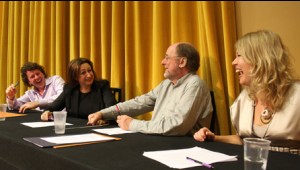 19.08.08
Episode 2: Music for Film and TV
Clive Anderson hosts Maestro’s first live studio challenge.
Bernstein: Mambo (Symphonic Dances from West Side Story)
Leonard Bernstein's West Side Story transposes Romeo and Juliet to 1950s Puerto Rican gangland New York. 'Mambo' is part of the concert suite he made from the dance music. At the BBC Proms last year, the Simon Bolívar Orchestra of Venezuela let rip with its Latin rhythms, wowing the audience.Mascagni: Intermezzo
The luscious orchestral Intermezzo from Mascagni's opera Cavalleria Rusticana is a pleasant interlude in a torrid operatic tale of seduction, betrayal, adultery and murder. In film and TV, the music has been heard in Raging Bull, The Godfather Part III, and The Sopranos.Dukas: The Sorcerer's Apprentice
Paul Dukas's superbly orchestrated The Sorcerer's Apprentice is indelibly associated with its cartoon realisation in the Disney film, Fantasia. Trainee wizard Mickey Mouse's inept spell-casting ̶ to avoid a chore ̶ results in a massive flood caused by endlessly multiplying buckets and brooms.Barber: Adagio for Strings
American composer Samuel Barber swam against the 20th century tide by writing emotionally-charged music in 19th century language. His haunting Adagio for Strings was broadcast at the death of President Roosevelt, and was used in Oliver Stone's Vietnam war movie, Platoon.Elfman: Theme from 'The Simpsons'
Danny Elfman's theme music for the cartoon series The Simpsons is a classic of its type: in only a few bars it encapsulates the madcap character of the stories - bustling, optimistic, quirky, off-the-wall, tragic, funny. The rhythm is reminiscent of 'I like to be in America' from Bernstein's West Side Story.Khachaturian: Adagio from Spartacus
The music British TV viewers know as 'the theme from The Onedin Line' (the Adagio from Spartacus by Armenian composer Aram Khachaturian) evoked a majestic sailing ship. In fact, it's a romantic duet from a ballet about the leader of the legendary slaves' revolt against the Romans.Wagner: The Ride of the Valkyries
In The Ride of the Valkyries (the prelude to Act 3 of Wagner's opera Die Walküre), the God Wotan's warrior-daughters carry dead heroes from the field of battle to glory in Valhalla. The music was used ironically to underscore a massed helicopter attack in Francis Ford Coppola's film, Apocalypse Now.
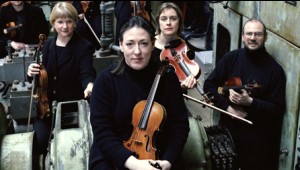 26.08.08
Episode 3: Choral Music
Clive Anderson hosts Maestro’s second studio challenge as six famous amateurs with a passion for classical music do battle with their batons conducting the BBC Concert Orchestra and the BBC Symphony Chorus.
Tippett: Go Down, Moses (from A Child of Our Time)
Michael Tippett modelled his 1944 oratorio A Child of Our Time on the structure of pieces like Handel's Messiah and the Bach Passions. Horrified by the Nazis' 'Kristallnacht' pogrom, Tippett made inspired use of Negro spirituals to evoke a message of hope amid the miseries of social deprivation and war.Handel: Zadok the Priest
Handel's Zadok the Priest was one of the anthems written for the Coronation of King George II in 1727. A long introduction of arpeggiated chords played by the strings builds in volume before the chorus of welcome explodes into sound, proclaiming, in a spiky dance rhythm: 'And all the people rejoice!'Borodin: Polovtsian Dances from 'Prince Igor'
The Polovtsian Dances are a highlight of Borodin's opera, Prince Igor. Set in the encampment of Igor's enemies - the Polovtsi - the choral dances combine the galloping rhythms of warriors crossing the steppes, with soaring, sensual Oriental melodies.Verdi: 'Dies Irae' from the Requiem
Terrifying bass drum crashes punctuate the 'Dies Irae' (Day of Wrath) from Verdi's Requiem, with its swirling orchestral accompaniment and surging chorus. In this most operatic of requiems, Verdi repeats the sequence at various points in the piece as a reminder of inescapable judgment.Mozart: 'Confutatis' from the Requiem
Mozart wrote his Requiem on his deathbed. It was commissioned by a mystery man, revealed as Count Walsegg, who wanted to claim the music as his own. The unfinished score, of surpassing beauty and poignancy (in view of the circumstances) was completed by Mozart's pupil Süssmayr.Orff: Carmina Burana
Carl Orff is best-known for his cantata Carmina Burana, based on medieval texts mixing piety and profanity. Choral societies rarely get to sing lyrics of such unbridled sensuality - what makes the piece memorable is its motor rhythms and liberal use of percussion in the scoring.
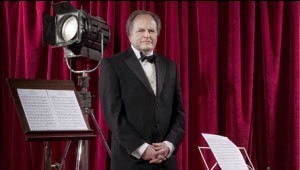 02.09.08
Episode 4: Opera
Clive Anderson hosts Maestro’s third studio challenge as six famous amateurs do battle with their batons conducting opera music with the BBC Concert Orchestra and guest soloists.
Puccini: 'O save fanciulla' from La boheme
'O soave fanciulla' [O lovely girl] is the beautiful love duet which concludes Act 1 of Puccini's La bohème - the tragic story of Rodolfo, a penniless poet and Mimì, a poor seamstress who eke out their lives in a Paris tenement. It is a moment of pure happiness in the discovery of mutual love.Mozart: 'Un moto di gioia' from Le nozze di Figaro
Mozart's 'Un moto di gioia' (An emotion of joy), was a replacement aria inserted into the opera Le nozze di Figaro (The Marriage of Figaro) for a new production in August 1789. Susanna, the prospective bride, feels joy that says 'happiness is coming in spite of my fears'.Puccini: 'O mio babbino caro' from Gianni Schicchi
Embedded in Puccini's one-act comedy, Gianni Schicchi, is a show-stopping set-piece aria: 'O mio babbino caro' (Oh my dear papa). Lauretta Schicchi worries that family tensions over a disputed will are going to prevent marriage to her lover Rinuccio. Her appeal prompts Gianni to devise a daring solution.Gershwin: 'Summertime' from Porgy and Bess
'Summertime' is the best-known number from George and Ira Gershwin's 1935 opera, Porgy and Bess, about the lives and passions of the people who live in Catfish Row, a waterside tenement in Charleston, SC. Serena's lullaby has been endlessly arranged and covered by popular artists.di Capua: 'O sole mio'
Written in 1989, 'O sole mio' (My sun!) is a classic example of the genre of Neapolitan song (usually lover's complaints or serenades). The tune, written by Eduardo di Capua, has been a favourite of tenors from Caruso and Mario Lanza to Pavarotti, Domingo and Carreras.Puccini: 'E lucevan le stelle' from Tosca
'E lucevan le stelle' (And the stars were shining) is a showpiece tenor aria from Puccini's opera, Tosca. At break of dawn, the painter-hero, Mario Cavarqdossi, resigned in anticipation of his imminent execution, eulogises his lover, the opera singer Tosca.
 09.09.08
Episode 5: The Final
The three remaining student conductors must conduct a concerto with world renowned soloists.
Beethoven: Symphony No.5 in C minor
The opening bars of Beethoven's 5th Symphony – dit-dit-dit-dah – gave the world arguably its most famous musical motif, characterised as 'Fate knocking at the door'. The entire symphony is propelled by a strong rhythmic drive heralded by this unusual musical 'announcement'.Strauss: Radetzky March
This popular march is the best known work by Johann Strauss the Elder, patriarch of the Viennese family who came to dominate entertainment music in the Austrian capital, and then exported it to the world. It's a fixture in the programme of the Vienna Philharmonic's annual New Year's Day concert.Rossini: William Tell Overture
Rossini's opera, William Tell, relates the story of the struggles of the man who came to symbolise Swiss nationalism, against the Austrian oppressors. As well as one of the most graphic orchestral storms ever written, the overture also contains a gallop many know as the 'Lone Ranger' music!Brahms: Hungarian Dance No 5
Brahms's Hungarian Dances go hand-in-hand with Dvorak's Slavonic Dances – they are orchestral showpieces which make symphonic use of traditional central European folk melodies.Mozart: Overture, The Marriage of Figaro
The Overture to Mozart's opera begins with almost scurrying, conspiratorial strings, setting the scene for a delicious country-house comedy in which the servant-lovers conspire to outwit their lascivious master, with the connivance of his neglected wife.Stravinsky: The Firebird
Dating from 1909-10, The Firebird (based on a Russian folk-tale), is the first of the three great ballets Igor Stravinsky wrote for the Diaghilev Ballet (the others are Petrushka and The Rite of Spring). The Finale is one of the most exciting pieces in all of classical music.Elgar: 'Nimrod' from the 'Enigma' Variations
The popular 'Enigma' Variations, dating from 1989, is Elgar's portrait of 'my friends, pictured within.' 'Nimrod' (the mighty hunter) is a pun on the name of his great friend, A J Jaeger. The music actually commemorates a moment when the two men discussed slow movements in Beethoven's music.Rachmaninov: Piano Concerto No.2 in C minor
The older generation got to know 'Rach 2' as the soundtrack for the classic weepie, Brief Encounter. Deservedly popular, there is no gainsaying the full-blown romantic lyricism of the concerto's central slow movement, and the sheer virtuosic excitement of the fast outer movements.Elgar: Cello Concerto in E minor
Elgar's 'Pomp and Circumstance' March may be his best-known work, but, along with the 'Enigma Variations', the best-loved is surely the Cello Concerto, introduced to many by Jacqueline Dupré's wistful and forthright performances, and her famous recording conducted by Sir John Barbirolli.Bruch: Violin Concerto No.1 in G minor
'Bruch's Violin Concerto' – a perennial favourite on BBC Radio 2's Your Hundred Best Tunes' – is the first of three violin concertos written by German composer Max Bruch (1838-1920). It's a work of great lyrical beauty and enduring quality, like his other famous work for cello and orchestra, Kol Nidrei.
 13.09.08
Episode 6: Winner's Final Live
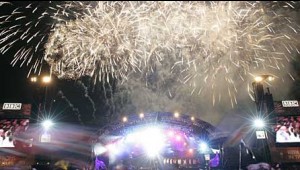
The winning Maestro conducts the BBC Concert Orchestra and soloist Lesley Garrett in London’s Hyde Park in front of a live audience of thousands, with millions more watching at home.
Verdi: Merce, dilette amiche (I Vespri Siciliani)
Verdi's The Sicilian Vespers is set in 13th century Sicily during a period of French occupation. Duchess Helene finds that her fiancée is the illegitimate son of the hated French governor. In this Bolero, she expresses the hope that her forthcoming marriage will help resolve the conflict between the two nations. This extract is sung by Lesley Garrett.Leigh: The Impossible Dream (Man of La Mancha)
Mitch Leigh and Joe Darion's musical is based on the familiar Don Quixote story by the Spanish writer Miguel de Cervantes. In this song, Don Quixote declares that he will pit himself untiringly against all opposition in order to achieve his goal. It's an optimist's anthem, sung here by Lesley Garrett.Elgar: Pomp and Circumstance No.4
The two most popular of Elgar's 'Pomp and Circumstance' Marches are No.1 ('Land of Hope and Glory' - a staple of the Last Night of the Proms) and No.4 in G major. As in No.1, an extended introduction in fast tempo makes way for a superb tune which Elgar marks 'Nobilmente' - which requires no translation!
BBC iD
BBC iDBBC navigation
BBC links

BBC © 2014The BBC is not responsible for the content of external sites. Read more.
This page is best viewed in an up-to-date web browser with style sheets (CSS) enabled. While you will be able to view the content of this page in your current browser, you will not be able to get the full visual experience. Please consider upgrading your browser software or enabling style sheets (CSS) if you are able to do so.
