

Conducting - What's the Score?

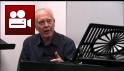

Peter Stark
Will the students sink or swim? Whatever our trainee conductors bring to the party by way of talent and musical knowledge, the mentors are on hand to coach them in the mysteries of technique and interpretation; so that, when they stand up in front of the orchestra, they'll have the confidence and skill to put their ideas about the music across – not just to the musicians, but to the public.
Leading the mentors is Maestro's music adviser Peter Stark. Nothing gets past his steely but sympathetic eye as he and the other mentors coax the students into making it real!
Top Tips From The Mentors
The bigger your gestures get, the slower the orchestra plays.
Ivor Setterfield
Smile always to the musicians. At the end of the day they are the ones who are playing. Not you!!
Natalia Luis-Bassa
Look the orchestra in the eyes even if you feel they are not looking back.
Peter Stark
There are no bad orchestras, only bad conductors.
Christopher Warren-Green
Make sure if you have metal cufflinks that they are secure. I once went on and started conducting furiously, and one of my metal cufflinks flew out towards the cellos. Luckily no one or any instrument was harmed!
Jason Lai
Never be rude, be diplomatic.
Jason Lai
If you have done what you wanted to do in a rehearsal, let the band go. The have an uncanny ability to know when you are wasting their time.
Jason Lai
Never forget, it’s the players who play the notes.
Peter Stark
Really know the music you conduct, in as much depth as you possibly can. The music needs to flow in to you, to take complete possession of you.
Brad Cohen
Interview
Maestro's music advisor Peter Stark reveals the secrets of conducting.
How would you sum up the craft of conducting?
Conducting combines two essential elements: the art of communication and the art of leadership.
How does a conductor communicate
There are three aspects: baton technique, body language and talking.
What's involved in baton technique?
It doesn't matter if you're left- or right-handed – to the players, what you do is a mirror image anyway, so they won't be confused by that. Although most conductors are right-handed, interestingly, three of our Maestro students are left-handed.
Your Questions Answered
Rhianne, Manchester
Question: I’m fourteen and have been intrested in conducting for a while now. The trouble is I have not been playing my instrument for that long, so I’m not too good with the general theory side yet. Is it still possible for me to learn how to conduct? Thankyou.Answer: Hi Rhianne
You are lucky - you have lots of time on your side! Conducting is one of those things that you should learn a little later - as you have to take charge of groups of people you need skills which take rather a long time to develop. That doesn’t mean you shouldn’t start learning now; try and get a little experience (school? youth orchestra? - ask your teachers) and go to lots of concerts. You could get hold of a baton and wave it around a bit - anything that keeps your interest up. I would recommend that ‘proper’ lessons could then start gently when you’re about 16; proper conservatoire study wouldn’t be possible until postgraduate level, when you’re 21 or more. Good luck though - I’ll look out for your name!
Gaz Cambridge
Question: I conduct small orchestras for musicals in the Cambridge area & although I believe I get a good sound from the orchestra and lead them adequately, I would like to improve my technique. I have read a couple of books on conducting, which are very heavy. I wondered if there was a DVD/video you could recommend. I am very much a visual learner and would get much more from watching than trying to read about it.Answer:
Dear Gaz, this is not so straightforward to answer. There are DVDs around (look on the internet to find them) but none really work as well as the available books for me. The development of a conductor should be as individual as possible, and so there is no substitution for lessons; a good teacher will look at you as an individual and adapt their teaching to suit you. The books that are around are, especially if you use a number of them, much better quality than the teaching DVDs, so I would do some training to be able to cope with the weight!
If you still want to learn visually I can recommend watching recordings of the great conductors - ‘The Art of Conducting’ is a very good compilation.
Hazel, Staffordshire
Question: I am a retired clarinet teacher and have done some conducting. but I have found it difficult to be accepted as a conductor. Since watching Maestro I have seen a change to women conductors which is great and to see Sue Perkins conduct at the last night of the proms was fantastic. I know women have the ability to do the job. I am 62 and still hope I can have a chance to conduct a professional orchestra. I love music, it is my life, and I love communicating it. I have studed conducting with the late Harold Gray (Assistant Conductor of the CBSO) and George Hurst at Canford, also Sir Charles Groves. Do I have the experience as a conductor?Answer: One thing I always hold on to is that in conducting you can never be too old! Although in some circles there is a trend towards ‘young and beautiful’ there is no substitute for experience and maturity. As far as female conducting is concerned this is also not a handicap in the way it used to be; things are changing slowly. For what it’s worth my own take is along the lines that any conductor must be both masculine and feminine, and that it is still more difficult for a woman to be masculine in public that the other way round. Having said that you should not let this put you off. Keep performing and learning (plus the inevitable networking!), and who knows what might happen. Your experience will stand you in very good stead. Good luck!
Alex, Bradford
Question: Hi, Peter. I am 15 and and very keen on conducting. I have grade five (ABRSM) in both piano practical and theory. At school this year we are performing oliver! and I am the musical director. This includes conducting the band. I know the basics of beating time e.t.c and was wondering if you could give any advice on how to improve and how to make the show a success.Answer: Hi Alex. This is quite a complicated question, so it’s not easy to answer briefly! Improvement comes with long-term learning and experience, but here are some golden rules:
1) Learn the scores that you’re going to conduct inside out
2) Listen to recordings of other performances to give you a stronger idea of what you want from the music
3) Treat your players and singers with great respect - they’re the ones who make the sound
4) Remember that the most important person in the room is the composer, not you!
Good luck - hope it goes well!
Sarah, Worthing
Question: I am 13 years of age and recently passed my Grade 5 clarinet, since being involved with playing in an orchestra at weekends condudting has always been something I’d like to do as a career when I have finished studying. What qualifications othe than grades would help and how would you ‘get started’ into conducting?Answer: Congratulations on your Grade 5! Conducting is a skill that takes many years to develop, so you needn’t feel you have to be in a hurry. Carry on learning your clarinet, play in as many orchestras as you can, and go to concerts. You can go into conducting from many different angles, so you can study a variety of subjects (both A level and university), but the most important thing is that you get as much experience in life and music as you can. Ask at school if you can conduct something (that’s where I started!) and then possibly with a group of friends. Good luck!
Jay, London
Question: Can you become a conductor without actually having the ability to play an instrument? I’m pretty sure it would be impossible to do so without the ability to reading a note. But as I see it, the conductors role seems similar to that of a film director, he does’nt need the script after deciding what he plans to do, so would it be possible?Answer: Hi Jay, In order to be a conductor it’s essential you learn as much about classical music and musicians as you can, and there’s no better way than by playing an instrument yourself. The psychology of playing in a group is complex, so if you want to be able to relate to the players you’re working with you must understand what makes them tick. Not impossible to do without, but hugely disadvantageous.
Thomson, Glasgow
Question: Dear Peter, I’d describe myself as an experienced organist and a very confident choir trainer; I’ve specialised a bit in training people to sing who can’t read music. I’d like to make the leap into conducting an orchestra. I think I have clear ideas about musical architecture, shape, texture and dynamics, and I don’t have problems reading full score. As a primary school boy I studied violin and clarinet, so I know a bit about string playing and transposing instruments. What puts me off orchestras is the time-delay thing in the beat, and also as a singer myself I’ve been in too many rehearsals in which orchestra members have tried to wrong-foot the conductor; genuine queries are one thing but I fear I would find myself easily flustered in the face of a barrage of technical questions - especially deliberately misplaced ones - at least while I learned the ropes.I guess I have too much respect for the acquired skill and learning of good orchestral players to want to inflict my novice efforts on them, no matter how skilled I am in my own musical fields. What would you advise? Many thanks in advance.Answer: Dear Thomson, This question needs several answers!
1) Playing behind the beat applies more to professionals than to amateurs or young players. A better sound is produced, and the delay allows instruments with a very bright consonant beginning to the sound (e.g. triangle!) to play with those that have much longer beginnings to the note (perhaps tam tam, or double bass)
2) Any knowledge and understanding of string and wind techniques will stand you in good stead, but have confidence in your musical request: players will advise and support you if you don’t pretend you know more than they do about how to play their instruments!
3) Orchestras do not deliberately set out to trip a conductor, and will only do so if they feel he/she hasn’t invested time in learning the score, and about how they work as a group.
4) Don’t worry about being a novice - almost all conductors are less experienced than the players they conduct.
Good luck!
Sophie, Exeter
Question: I’m going to be conducting my university orchestra in october, and am not sure about what pieces to do. The orchestra only has about 30 players, and was wondering if you could suggest any pieces for a relatively competent orchestra! Also any tips for a first time, very nervous conductor would be greatly appreciated! Thanks.Answer: Hi Sophie, it depends of course on the instrumentation you have available (woodwind, brass and percussion especially), and with 30 players the implication is not too many. It’s difficult to answer this without writing a catalogue, but within each ‘size’ or genre the following are good starters; Shostakovich 1, Borodin 2, Sibelius 1, Dvorak 8, Beethoven 4, Mozart 38. Of course these all have their own difficulties, but are a little more straightforward than their siblings! As far as being a nervous first time conductor is concerned just go and enjoy! Your players will support you if you make it clear that you are prepared to learn from them as well. Afraid it doesn’t really get much easier as you become more experienced, but that’s part of the attraction! Good luck.
Asha, Forest of Dean
Question: I’m considering a career in conducting but a friend is advising me against it; he claims that to be a conductor I will have to devote my entire life to conducting and will therefore be unable to study clarinet and piano alongside. Is he correct?Answer: Dear Asha, It is certainly true to say you have to devote your whole life to conducting, but if the bug is strong enough then there’s no alternative! It is not true to say you have to give up the study of clarinet & piano, in fact quite the reverse; to be a sympathetic and knowledgeable conductor you must learn as much as you can of other disciplines and instruments. Playing in an orchestra on your clarinet will teach you so much about the relationship between orchestra and conductor, and playing the piano will help you learn to accompany and find your way through scores. There is so much to learn, you need all the help you can get!
Dave. Telford
Question: Hi, just wondering what’s the best way to try conducting as a willing orchestra is hard to find. Any ideas please? Thank you.Answer: Hi, Dave. It’s perhaps not very helpful for me just simply to say ‘everyone has to start somewhere’. I know many young conductors who are looking for willing orchestra, choirs, bands and who find it very difficult to get those opportunities. The problem is you can’t do all your preparation on your own - you rely on other people to be your instrument, but ‘where there’s a will there’s a way’. Just ask around, and make a nuisance of yourself. Local bands, choirs and groups will all help you if you ask! You can start with very small groups (even only 4/5) so get out there and ask away!
Sonja Creese-Smith, Liphook, Hants
Question: I have a friend who was a concert pianist. Last year he suffered a stroke which has made him paralysed on his right side, which means he can no longer play the piano. I know you need two hands to conduct, but was wondering if there was any way that he could be trained to conduct, where would he apply, and to whom? I hope that you can help with this very frustrating time in his life.Answer: Dear Sonja, Obviously the paralysis would represent a handicap to your friend’s ability to express the necessary multitude of messages, but as a concert pianist much of his communicative skills will already be in place. Communication does not only happen through movement, it also feeds through expressions and body language, so I see no reason why he shouldn’t be able to retain through conducting the contact with music that he must miss so much. Look in the British Music Yearbook or try Google to find courses. I hope this works for him.
David Telford, Salop
Question: Hi, I have always been fasinated by conducting and would like to “try and have a go” as i believe it is the best way to build appreciation for something. Is there any way for absolute beginners to do somthing like this? PS: Great show, more please!!!!!Answer: Hi, David. The way to start is to begin! I know this sounds ridiculous, but try to find an opportunity somewhere, or create one for yourself with friends. If you find that the bug bites, that’s the time to go and have some lessons. Everyone has to begin somewhere!
Graeme Kay, Interactive Producer, Maestro
I’d just like to draw attention to two articles about the veteran composer and conductor Pierre Boulez, published recently in the Guardian newspaper.The first is a fascinating article about Boulez’s conducting masterclasses at the Lucerne Festival Academy; there is an accompanying video: http://www.guardian.co.uk/music/2008/aug/28/classicalmusicandopera2The second is an interview with Nicholas Wroe in which Boulez talks about the composers who inspired him:
http://www.guardian.co.uk/books/2008/apr/26/classicalmusicandopera.music
Robert, Amsterdam
Question: I live in the Netherlands, and watch Maestro with great enjoyment. I’m a composer, and my first conducting experience was in 2004, when I had to lead an orchestra of 25 players. It was a terrifying experience, as I never had any conducting lessons. My question is: I learned to strike the beat, but I have never see an experienced conductor like Gergiev “strike” a beat, or use a standard movement. They each seem to have their own vocabulary of movements. Is this illusion, or are they realy improvising the gestures all the time? How important are these standard gestures from the book in the first place? When to use them, and when not?Answer: Dear Robert, Good question! If you watch all the great conductors you will find that many of them do not “strike the beat”. The communication from conductor to orchestra comes in many forms, but let’s simplify it by saying the gestural elements are baton technique (proactive) and body language (reactive). You can learn basics of the first in a few weeks, but the second takes even a lifetime to develop. So to answer your question as clearly as I can; 1) You must learn, and employ, good baton vocabulary at the beginning of your development, 2) allow your body to react to the music rather than choreograph your response to it and, 3) you should not consider giving up the quest for clarity of gesture for many years. The great conductors have all had to learn technique at the beginning of the process - it is partly BECAUSE they’re great that they can even consider abandoning it.
Ian, Hants
Question: I’m due to conduct my first concert with the orchestra I have formed, and have a few questions. The most important one is how do you get the best out of the orchestra in terms of rehearsals and concert. Also is it possible to become professional without a music degree (I am a grade 8 violinist, so have a good musical background, but no music degree)? If so how would you go about it - any help would be really appreciated, thanks!Answer: Hi Ian, To do your first question justice my answer would have to be the length of a book! However, very simply, I would say 1) do your preparation as thoroughly as possible, 2) make the rehearsals interesting by continually changing tack - sometimes playing through sometimes worrying about details, and 3) make sure the concert is the one and only time you should show your soul! Unlike many other professions it is possible to go into music without a music degree, as long as you work really hard to gain the necessary tuition and experience along the way. Always consider post-graduate study after university.
Callum, Norwich:
Question: I’m starting university in Oxford this October and my ambition is to come out of it with a clear path into a conducting career. Classical music has always been the most important thing in my life and it would mean so much to make it my job. However, there is a slight complication with my educational background, but I have more than enough determination to make it work, if I could just get the advice from someone such as yourself. The problem is that I’m going to be studying English, which may seem strange considering, but I have reasons that could be voiced in a proper discussion; still, the fact is that it doesn’t look good on paper for a musical career. I’m certified Grade 8 in Piano and I also play the flute and clarinet well and have recently taken up the Violin and Cello (with more instruments on the way!) and I’m going to study for an ABRSM diploma. Also, thankfully, the collegiate system of my university should hopefully allow some scope for me to conduct a college or chestra a few times for experience. I’ve taken on board the idea of the looking in the British Music Yearbook for courses, which I shall definitely invest in, but is there any particular guidance you can give to someone without a degree-level qualification in Music in order to have better chances of becoming a conductor?Answer: Dear Callum, To help become a conductor you need the broadest education you can get, so studying English is not a problem in itself - indeed quite the reverse. The musical life in Oxford is extremely strong, so your experience will undoubtedly grow. Just beware that there’ll probably be quite a lot of competition for the conducting posts available!Consider post-graduate study for your conducting. There are good courses in several conservatoires in this country, and abroad is worth investigating, of course. What you need at this stage is as much experience as you can get your hands on so, although possibly daunting, go out and find it!
Michael, Glasgow
Question: I am 17 and am preparing to study music at university and conducting has always interested me. I am aware that conductors are usually valued, accomplished and experienced musicians. I’m planning to use this undergraduate degree to improve my instrumental skills (clarinet, piano, organ and singing) and to give more depth to my musical knowledge. As my preferred course is not the typical B.Music degree and is more academic based, I was planning to audition for a B.Music or post-graduate degree in conducting after this initial undergraduate degree at one of the Schools of Music (once having reached a suitable level of performance). What you could advise me about is what sort of courses within my degree I should consider to help my transition from instrumentalist to conductor, or to give me a more ‘conductor’s view’ of music. Thanks!Answer: Dear Michael, You seem to have everything in place, and a clear understanding of what you need to achieve. Use your time at university to get as much experience as you possibly can; organise concerts for you to conduct, and put yourself forward to conduct your college orchestra. Go to concerts and learn scores and find out how other instruments (strings are missing from your list) work. It doesn’t matter that your course is more academically based, but you should make sure you are still getting good practical experience. Go on one of the conducting courses as well (look in the British Music Yearbook, and ask around) - there are several available that will be able to help you.
Reuben, London
Question: I am thoroughly an amateur at this, but I do have a lot of musical experience and knowledge, including as a conductor. However, when conducting, I can never get my left arm to do anything different from my right arm. I am dispraxic, and so I’m unlikely to overcome this; however, I do achieve an awful lot of emotional communication with my upper body and face, and have been known to ‘bob’ in particularly lively pieces; Do you think this will be a problem when I begin conducting a gospel choir in September? (I bob a lot to gospel music!) If so, do you have any solutions?Answer: Hi Reuben, The communication between conductor and orchestra/choir is all about your gesture, both in baton and body. We should not stop all the movement in our bodies that is the result of our reaction to the effect the music has on us, as we’d look sterilised and dispassionate. You should however control any unnecessary movement and learn to carry your body with authority and confidence. The first thing you should do is learn how to stand up properly! Very few of us do, which is why I think Alexander Technique is so important.
Stephen Rogers, Sunderland
Question: Hi. I am 15 years of age and I am studying GCSE music. I have flute lessons, and have taught myself piano over the past year (my music teacher thinks I am at Grade 5, which i’m proud of). What I want to know is: should I get piano lessons, what qualifications do I need in order to conduct an orchestra?Answer: Dear Stephen, Well done for getting to approx Grade V on your own in a year! Being able to find your way through a score on the piano is really useful, as are piano rehearsals with singers and soloists that you’re going to be working with. Therefore I urge you to become as proficient as possible, so if there’s an opportunity for you to have lessons, take it. You should also find out as much as you can about string playing, and bowing techniques in particular; you don’t have to be able to play a string instrument, but knowing how they work is essential. A conductor doesn’t have to have any specific qualifications as such, but should have as much experience and knowledge as possible.
Delyth, Rhydyfelin, S.Wales
Question: Please could you tell me how people become conductors? Is there a course I can go on or could you recommend any good books to help me learn please. Loved the programme, couldn’t take the smile off my face!Answer: Dear Delyth, Have a look at the answer I wrote to Alex of Birmingham about how to get into conducting, especially about courses. As far as books are concerned there is a very good book for “beginners”’ which I would recommend, called “The Art of Conducting”, by John Lumley and Nigel Springthorpe (pub Rhinegold, ISBN0-94689-026-9) which covers many of the basics. For more advanced reading the “Handbook of Conducting” by Hermann Scherchen is full of gems, although this is a very old book and therefore out of print. Try Amazon, or libraries…? Glad you’re enjoying the programme - so am I!
Chris, Leeds
Question: Can you please tell what is meant by free bowing in an orchestra and does it provide a better sound? I read that a recently deceased conductor of note would encourage his strings to “free bow”.Answer: String players nowadays are always trying very hard to make sure their bowings are coordinated (ask any wind, brass or percussion players who have to spend hours waiting for the strings to sort the bowings out!). About one hundred years ago it was quite normal for strings to bow ‘freely’ - which means not necessarily doing the same as each other. This produces a tremendous freedom in the sound quality, but is quite difficult to achieve as players in the present climate find it quite hard to differ from their desk partners. I love the sound that is created - as the difficulty of “bumping” on the bow change is eradicated - and I think we’ll see a shift (in certain circumstances or passages) back to freedom.
Matt, Wolverhampton
Question: I have always wanted to conduct classical music and I even thought of making it a career. I have ABRSM Practical Grade 5 on the Euphonium and Theory Grade 4 - I am also 14 years of age. So I wondered do you know any places to buy scores for conducting classical music?Answer: Hi Matt! Scores can be very expensive, but you can pick up many cheap second hand ones from book shops or even car boot sales! Just go and ask at any shops you know; you may find that they think sheet music constitutes scores, but if you sift through you can often find some bargains.There are also cheap editions of new scores - Dover being a very good example - where you can find new scores that are very reasonably priced. Ask around - that’s how my collection started. Now I have about 1500 scores, the only problem being where I keep them all. Good luck!
Alex, Birmingham
Question: I have always wanted to get into conducting, but have never found an appropriate avenue. I have a decent musical background; ABRSM grade 8 in both piano and violin, however no conducting experience. Are there any courses for beginner conductors around, or any good ways that you can recommend to get into conducting?Answer: Always the difficulty of ‘getting into’ conducting is that you have to start somewhere - exactly the same for the ‘Maestro’ students! Get some experience with a few friends (bribery always works), or maybe arrange a concert for charity? Choose your programme carefully though…
As far as courses are concerned there are a number around that are happy to take beginners as long as they’re serious and are prepared to put in the work. Look up in the British Music Yearbook, you’ll find them all listed.
The best way to begin is to start!
Good luck.
BBC iD
BBC iDBBC navigation
BBC links

BBC © 2014The BBC is not responsible for the content of external sites. Read more.
This page is best viewed in an up-to-date web browser with style sheets (CSS) enabled. While you will be able to view the content of this page in your current browser, you will not be able to get the full visual experience. Please consider upgrading your browser software or enabling style sheets (CSS) if you are able to do so.

Have your say
Thank you for all your questions. The comments system is now closed, but you can read other people's questions below, along with Peter Stark's responses.