

EPISODE GUIDE: EPISODE 3
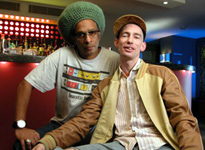
Soul was in a state of flux in the mid-1980's. British pop-soul was certainly growing into a global force: Sade conquered the world's coffee tables and solo George Michael demonstrated a far deeper understanding of R & B than was ever expected from a man last seen in tight shorts...
KEEP ON MOVIN'
But the majority of '80s soul was too slick and all rather "Miami Vice." What happened to the passion, the sugar-sweet rawness? In a classic British move, we looked back to move forwards. At Jazzie B's "Africa Centre," Barrie K Sharpe's "Cat In The Hat" and illegal London warehouse parties, a multi-racial crowd shook to black American funk & soul sounds from the late '60s and early '70s. Similar to Northern Soul a decade earlier, "rare groove" was all about fetishizing vinyl and grooving to undiscovered classics.
Out of this subterranean scene climbed a host of fresh UK talent. Principally, it was Soul II Soul who mixed sound system culture with hip-hop, soul and British pride. The world was theirs, although, the Brit Awards refused to acknowledge their global success.
Other funky multi-racial acts followed in Soul II Soul's wake - the Brand New Heavies and Young Disciples. Like these bands, Jamiroquai's Jay Kay was also part of the rare groove scene. Drawing on the Seventies music of Stevie Wonder and Roy Ayers he created a creamy soul-funk sound that captivated millions. M-People also brought soulfulness to the masses with tracks like "Moving On Up." New Labour grabbed it as a campaign anthem. British soul was now good for you - it helped win elections.
But not all was rosy in the UK soul garden. Solo artists working in the classic tradition, like Mica Paris, Beverley Knight and Omar, still struggled to get their dues despite their prodigious talents. The British audience still hadn't learnt to cultivate its own.
Those embracing sampling, sound system culture and hip-hop were more fortunate than these traditionalists. Bristol's Massive Attack used these very ingredients as the bedrock to their cinematic soul. So too did the Junglists and Drum N' Bass brigade, utilizing the same tools to fashion a frenetic new urban soundscape.
Nonetheless, British hip-hop suffered until it learnt to stop imitating American gangsta-rappers and focus on UK issues and our Jamaican connection. Crucially, it was dropping a little reggae in the mix that helped give British hip-hop - from Roots Manuva to Skinnyman - its identity and originality.
At the dawn of the millennium, UK soul-inspired sounds exploded into a thousand different shapes - from Ms Dynamite to Corinne Bailey Rae, Joss Stone to Amy Winehouse, Lemar to Lethal Bizzle. Currently in a rude state of health, British 21st Century soul is a result of our unique multicultural society. Over 40 years, we're moved from a nation of fans and imitators to one of black and white musicians creating original, cutting edge music. We've travelled from segregation to integration, as black American and Jamaican cultures have been embraced and become entwined with English life, changing our society forever. You get me?
Key Artists featured in this episode include Amy Winehouse, Mica Paris, Lemar, Beverley Knight, Joss Stone, Jazzie B, Omar, and Roots Manuva.
Series Producer/Director: Jeremy Marre
See also:
See artists featured in this episode at the Barbican's related concert
YOUR COMMENTS
Send in your comments
A fan of Soul music? What do you think of the series? Leave your comment here:
Disclaimer: The BBC will put up as many of your reviews as possible but we cannot guarantee that all emails will be published. The BBC reserves the right to edit reviews that are published.

andrew small
Good to see shows like this on the BBC, they should make more of them. I am really looking forward to watching these shows
Roberto Quinn
This programme looks really cool. I've listened and grew up to Soul, Funk, R&B since the 70s. Looks as though most of the bands and phases are covered. Especially looking forward to the evolution of Elctro to Hip Hop and the importance of Loose Ends who are still being sampled in Hip Hop.
Dianne
Hope this episode will feature the wonderfully talented and sadly missed Lynden David Hall who brought such true originality to British soul music. What about showing archive footage of Lynden's concert and appearances on 'Later......' as a tribute to him, BBC?
Alan
A bit harsh Josh. The Motown acts were all just as much products of a pop machine but their talent and soul still shines down through the decades.
Su
I agree with Josh regarding the 'pop machine' reference. There were DJs around in the early 80s who were desperately trying to break soul music and artists into the mainstream. They were not given top slots on the radio but had a dedicated group of soul music lovers who would travel for miles to clubs in order to hear their kind of music. It was still all fairly underground. Steve Walsh's untimely death had a real impact and, in my opinion, slowed the process of soul music's breakthrough. I also take issue with the usual reference that Britain's West Indian connection is always with Jamaica! Why do people constantly forget the dozen or so other countries that have also contributed to the music culture over here?
Josh
Looks like a great show covering some great artists. Although it bothers me that the show indicates that all this progress has culminated acts such as Ms Dynamite, Corinne Bailey Rae, Joss Stone and Lemar etc.. These acts are more a product of the pop machine than anything truly soulful.