


Play It Again: Bassoon
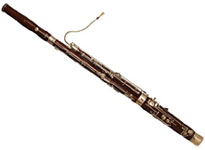
Bassoon
A bit rusty? Don't be put off. Browse our helpful hints, and watch a video guide to get you started.
Hints and Tips
Assemble the various parts of your bassoon, taking care not to damage the keys and their rods and levers. Apply some cork grease if any of the sections fit too tightly.
The bassoon’s a heavy instrument so make sure you’ve got a sling to go around your neck to support it, or use a spike.
Put your reed in warm water for about a minute, wipe off the excess, fit it into the crook, and you’ll be ready to play.
To begin with, keep it simple and don’t play for too long, as you’ll need to gradually strengthen your embouchure (the muscles around your mouth).
Practice your embouchure by rolling the top lip over your top teeth and the bottom lip over your bottom teeth. The reed should be tightly gripped between them.
If you haven’t played for a while you’ll also need to think about your breathing – the bassoon takes a lot of blowing, so don’t make yourself dizzy by overdoing it.
Begin by playing in the bassoon’s middle range and then gradually go higher and lower as you warm-up.
After playing make sure you use a pull-through to mop up the moisture from the various sections, including the crook – this can damage the key pads if left.
Use a cotton or silver cloth on the keys to avoid tarnishing – you can now buy cloths impregnated with an anti-tarnish agent.
