
Bettye LaVette
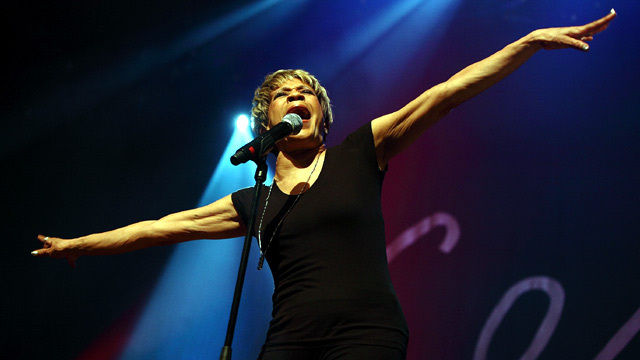
Bettye LaVette live at Celtic Connections
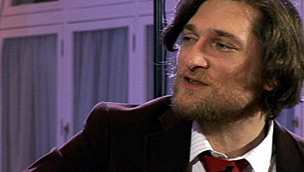
Bettye LaVette performs The Word and Take Me Like I Am live at Celtic Connections at the Old Fruitmarket in Glasgow. The concert was filmed for BBC Two Scotland.
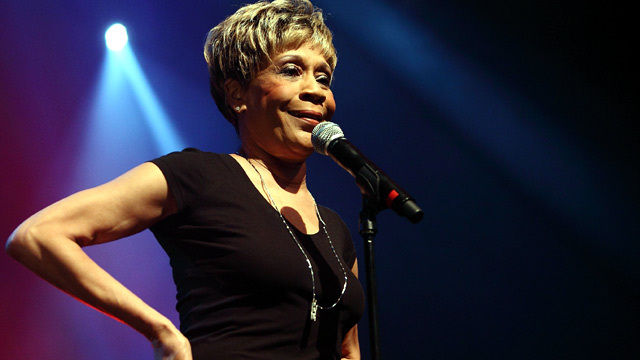
More Celtic Connections on TV
 Watch more footage from the BBC concert at the Old Fruitmarket on Celtic Connections on BBC Two Scotland, Sunday 30th January at 11pm
Bettye LaVette and the Blind Boys of Alabama
Glasgow Royal Concert Hall, 23rd January 2011
Richard Bull reports

On Sunday night at the Royal Concert Hall, anyone looking for that elusive thing called soul was in exactly the right place. Bettye LaVette had been billed as part of Celtic Connections’ Gospel strand, but her set was a God-free zone. Instead she sang songs of heartbreak and experience with more emotion than you’d think possible.
“Good to be here with you,” she told us, “or as they used to say on the chitlin’ circuit, it’s good to be anywhere.” 64 years old, she’s quite open that hers has been a life of struggle, and it’s only in the last six years that she’s emerged from the wilderness and achieved the acclaim and profile that she deserves.
With her small, wiry body in thrall to the emotion of the songs, she took passion-filled numbers like George Jones’s hit Choices, and Lucinda Williams’s Joy, and sung them like they were her own autobiography.
Her latest album, Interpretations: The British Rock Songbook, is an unlikely collection. It consists of songs by the young, white, English musicians who conquered America in the ’60s and ’70s, and drove artists like her off the radio. Yet somehow she pours into these songs the pain and emotion of her own experience. Sung live, George Harrison’s Isn’t It A Pity and The Who’s Love Reign O’er Me were each breathtaking, but best of all was Traffic’s No Time To Live, which she sang seated on the floor, reflecting on life nearing its end – with such lucidity that we were transported deep into thoughts of our own mortality.
She left us emotionally wrung out, but aglow and inspired.
The Blind Boys of Alabama in contrast were all about God.
The group’s roots stretch back to Talladega Institute for the Deaf and Blind near Birmingham, Alabama, at the end of the 1930s, and unbelievably Jimmy Carter has been with them all the way. These days he’s joined in the band by three other eminent blind boys and three sighted musicians who double as guides.
Jimmy’s still a livewire, providing hilarious banter and hawking the band’s CDs. “We have a saying we tell the people wherever we go,” he told us, “we love to eat.” And they certainly know how to put on a show for their supper.
There are six distinct voices in the band, who took turns to give praise. When the singers were carefully seated by their minders, they would spring back up as the music coursed through them. At one point Jimmy set off on a promenade around the stalls, vigorously waving his microphone at us, defying both his guide and his years. It’s exactly the kind of stagecraft that a younger man like James Brown drew upon, and it had us out of our seats, clapping Jimmy on.
It was joyous stuff, especially when their voices combined on songs like God Said It (“that’s good enough for me”), though they did also touch upon war and the devil, who – as viewers of high-end American TV drama know – must be kept way down in the hole.
Once again, it was an unforgettable Celtic Connections double bill, bringing together the secular and the godly, a woman of experience and a group of old boys, and we filed out doubly fulfilled.
 Contact us

~RS~q~RS~_bbc_=0&_l_=1&__ip__=54.76.44.195&dnainitialtitle=Comments&dnahostpageurl=http://www-sis.bbc.net.uk/music/celticconnections/2011/artists/bettye_lavette/&dnauid=celticconnections_2011_artists_bettye_lavette&s_baseHeadingLevel=1&dnashow=10&dnafrom=0&dnato=9&dna_encoding=utf-8&s_sssicomponent=1&s_sssiCommentCount=&dnacommentforumlistprefix=%5B_%5D&dnarecentcommentsprefix=%5B_%5D&s_commentprofileurl=comment-profile.shtml&s_contact=0~RS~z~RS~57~RS~)


Comments
Sign in or register to comment.