| 28 October 2014 |

| |
| BBC Homepage | | |
| |||
| Contact Us | | |
New Kids From The BlocYou are in: Manchester > New Kids From The Bloc > Why I came to Manchester Why I came to ManchesterWhat’s it like to leave your home and your family to find work in a country where you don’t even speak the language? Mika Vetrakova is one of thousands of economic migrants who have done just that. For her, it's been a tale of good - and bad. 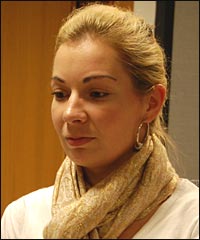 Mika Vetrakova Mika came to Manchester on one of the first buses out of Slovakia on midnight May 1 2004, - the moment when the EU enlarged to include countries from Eastern and Central Europe. Back home, Mika had already left her home town and moved 300 miles to Bratislava, the capital of Slovakia in search of better pay. But she soon found that to land a good job, she needed good English. "So that was the main reason to come over," she explained. "To learn quickly the English language and then go back and get a better job. But I’m still here!”
Audio and Video links on this page require Realplayer FrighteningMika arrived three years ago at Victoria bus station in London - with no English. As she recalls, it was a frightening moment. “This bus station was bigger than my town! I was completely lost there, completely. I was told to pick up my bus tickets to Manchester there and I couldn’t do it! I was calling my mum, saying: “Please, what have I done? I want to go home!"
Eventually, Mika got to Manchester where she worked for a while as an au pair, while she slowly picked up the language. “It was the right move,” she said. “I would not be able to learn English like this for three years in Slovakia. Wherever I go, that is my big plus. I can speak, not brilliant, but I can.” With her good standard of English, Mika now has a job working for a recruitment agency which specialises in finding skilled workers such as builders, welders and plumbers for the construction industry. For Poles, there's plenty of work. But Mika believes that other migrants like Slovaks are not so lucky. 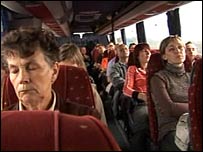 On the bus: plenty of work for Poles "Polish people have this good name here already. They know they are hard workers and are going to work for less money than anybody else. "This recruitment agency where I work is showing our clients that there are also Romanian or Slovakian people. They can speak even better English than maybe some of the Polish, they are skilled – so what’s the difference? But they don’t want.” The futureSo, three years on, has moving to the UK been good for Mika financially? "I’m working harder than maybe some other English people but get a lower rate so that’s why I can’t save any money. So when I compare my situation to Slovakia, it’s actually the same. "I feel angry. Sometimes, I just don’t know what to do. I’m getting up at six in the morning til six o’clock in the evening, but I’m getting so much less. But I also think: what can I do? Nothing. If I leave this job, I don’t have money." “Probably I will go home. I am missing my country so much.” last updated: 08/10/07 You are in: Manchester > New Kids From The Bloc > Why I came to Manchester  |
| | About the BBC | Help | Terms of Use | Privacy & Cookies Policy |