| 28 October 2014 |

| |
| BBC Homepage | | |
| |||
| Contact Us | | |
Arts and LiteratureYou are in: Manchester > Entertainment > Arts, Film and Culture > Arts and Literature > The lord restored 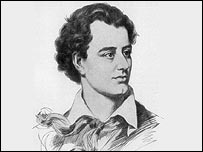 George Gordon Byron The lord restoredThere can be no more controversial figures in British literature than George Gordon Byron. Since his death in 1824, he has often been vilified as an over-sexed Regency dandy more interested in extravagance and debauchery than his poetry. Lord Byron- George Gordon Byron, 6th Baron Byron of Rochdale, was born on 22 January, 1788 and died on 19 April, 1824. And while there may be an element of truth to those claims (such was his reputation in his lifetime that one of his lover’s described him as 'mad, bad and dangerous to know'), a new centre at the University of Manchester’s John Rylands Library is looking to set the record straight by bringing together an archive of Lord Byron’s work. Bigger than ShakespeareThe Byron Centre will be the first multidisciplinary grouping of academics dedicated to investigating the massive significance of Byron in European literature, music, art and politics. Within it will be an archive of his work and works influenced by him, along with a small handbag made by Byron's childhood love Mary Chaworth, material from Byron Societies around the world and 30 years of research by renowned Byron enthusiast Megan Boyes, all topped off with a bronze bust of the poet, made by Greek sculptor Nicolas Kotziamani. 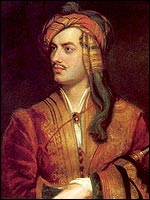 George Gordon Byron by Thomas Phillips For the archive’s director, Dr Alan Rawes, the time is right for Byron to take his deserved place amongst the literary elite. "There is a Wordsworth Centre, there’s a Shakespeare Centre and in somewhere like Germany in the nineteenth century, Byron was bigger than Shakespeare, while – and Wordworthians will disagree with me on this – in world terms, he’s a much more important figure in European Romanticism than Wordsworth. "So in a sense, it’s a case of us catching up. There are statues of Byron all over Europe, more than 40 operas have been inspired by his writing, and he was a formative influence on, among many others, Lamartine, Pushkin, Nietzsche, Berlioz, Liszt, Delacroix, Bismarck and Mazzini. "Byron was one of the biggest cultural figures in nineteenth century Europe and yet Britain has been resistant to acknowledge this." 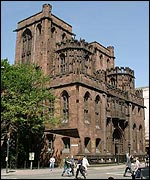 The John Rylands Library Detracting from his greatnessThe reasons for that resistance come from the poet’s non-literary interests and the times that came after his life. As Dr Rawes explains, the British Victorians let “Byron's bisexuality and affair with his half-sister detract from his greatness”. In fact, it’s only in recent times that scholars and readers have been willing to separate the man and the myth. "Even in British culture in the 1950s, there’s a lot going on the level of subculture but the mainstream culture is still strongly moral and reactionary, and Byron isn’t a figure that isn’t going to fit into that. Post-60s, Byron becomes a much more available figure. "But also tastes change. Up to the 50s, people liked well-wrought beautiful poetry, like Keats, rather than a chatty, racy, slighty bawdy Byron voice, but that has become more popular since the late twentieth century. 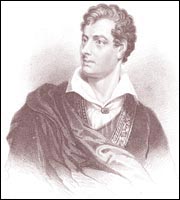 Lord Byron by George Cruikshank "So a number of things have shifted in British culture that might give Byron more room and allow people to hear what’s good about him." And Dr Rawes is sure that part of Byron’s growing appeal is the poet’s fluid notions of gender and interest in the place of sex and sexuality in human life, things that he sees as being very relevant to modern times. "They are topics that in more reactionary times vanish from discussions, but these days we’re much more open with speaking about these areas.
"And of course, he has a political edge that we’re much more comfortable with – he speaks of the revolutionary or at least stands for the underdog, things that ages previously weren’t quite so happy to discuss." A sort of homecomingRevolutionary, chatty, racy, slightly bawdy… it’s a description that could fit Manchester as well as the great poet, but it’s not the reason why the Byron Centre is being opened here – that is much simpler, says Dr Rawes. "Firstly, it’s the library itself. It’s a growing centre of a number of special collections and Byron can only add to that. "But perhaps more importantly, Byron was Baron of Rochdale in the Palatine of Lancashire, so I suppose, in a way, we’re his local university." The Byron Centre is launched on Thursday 13 September at the John Rylands Librarylast updated: 12/09/07 You are in: Manchester > Entertainment > Arts, Film and Culture > Arts and Literature > The lord restored  How Manchester makes Art & Art makes Manchester |
| | About the BBC | Help | Terms of Use | Privacy & Cookies Policy |