| 24 September 2014 |

| |
| BBC Homepage | | |
| |||
| Contact Us | | |
History featuresYou are in: Manchester > History > History features > Suffrage and slavery Suffrage and slaveryJo O'Connor Some 20 years before the 1807 Act to abolish the slave trade, the people of Manchester had been campaigning against slavery, including women who, despite not having the right to vote, played a vital role in abolition. 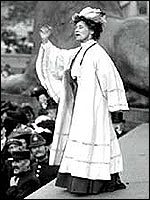 Emmeline Pankhurst Abolitionist William Wilberforce was against women’s involvement in the anti-slavery campaign, believing that women had no place in politics. Despite Wilberforce’s views, women continued to campaign. Records from the Society for the Abolition of the Slave Trade show that about ten per cent of the financial supporters of the organisation were women. Here in Manchester, women made up a quarter of all subscribers. One of the many women involved in the campaigns was Emmeline Pankhurst’s mother, Sophia Crane. Sophia joined her husband Robert in the anti-slavery campaign. She was also a passionate feminist and took Emmeline to suffragette meetings. It was this and 'Uncle Tom’s Cabin', a novel on African-American slavery written by abolitionist Harriett Beecher Stowe, that inspired Emmeline to go on to become an advocate of women's rights. 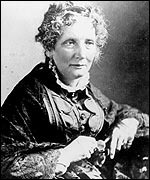 Harriet Beecher Stowe From 1807 to 2007"The techniques used by women during the anti-slavery campaign were adopted for later campaigns, including factory reform and the suffragette movement," says local historian Domique Tessier. "The suffragettes were really good at building networks during their campaign. The anti-slavery campaign was a success because of the networks people created and women played a big part in that. Women today have far more rights and yet they are not as vocal." Dominque is working with the Women’s Electronic Village Hall, WEVH, to highlight the significance of women’s networks during the anti-slavery campaign.
"Women were always campaigning but the slave trade is a good example of how much was achieved by networking. Groups were learning from one another, women would learn from men and men would learn from women. The middle class did and still do use tactics created by the working class to achieve their political goals; it really shaped the way we do politics today," explains Dominique. As part of the exhibition, there will be free workshops for women to learn about the campaign and contribute to the Manchester Against Slavery website, something that Dominique hopes will inspire today's Mancunian women. "The WEVH was set up to provide IT training for women in Greater Manchester and we hope that this exhibition will show women how networks can help them today." The Women Against Slavery exhibition will run at the Women’s Electornic Village Hall until March 31.last updated: 19/03/2008 at 16:08 SEE ALSOYou are in: Manchester > History > History features > Suffrage and slavery   |
| | About the BBC | Help | Terms of Use | Privacy & Cookies Policy |