| Maroons | Maroons were runaway slaves who settled in the mountains of Jamaica above Saint Ann, Clarendon and Elizabeth Their attacks on white landowners, stealing livestock and freeing slaves, threatened the prosperous sugar plantations English planters were forced to make peace with the Maroons giving them 1500 acres of crown land The most famous of the leaders of the Maroons was Captain Cudjoe who signed the first Peace Treaty with the British |
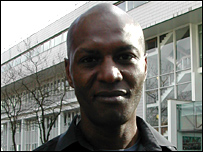
David’s parents came to Britain after the War as part of the Windrush generation. They’re rightly proud of the family’s sporting heritage which has produced two successful West Indian cricketers – Lawrence Rowe and Laurie Williams. But like many people from the West Indies, they're less proud of their slave ancestry. The first generations of free slaves buried the yokes and chains used by their former white owners. And with those symbols of oppression was buried much of that brutal history. “A lot of the West Indian community, they don’t really talk about slavery and how it affected them,” explains David. “Simply because it was a bad time and it’s best left in the past so it’s not something that’s talked about openly.” 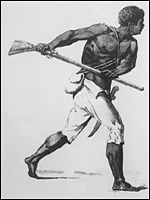 | | Maroon: a runaway slave |
In asking the questions: ‘Who am I?’ and ‘Where do I come from?’ David now knows that his family - from the Saint Ann’s region of Jamaica - are all descended from a single African ancestor. But what he’s revealed is an extraordinary story of slave rebellion. MaroonsDavid’s great-great-great-great grandfather was one of the Akan people from the Ghana region of West Africa. As a young man, he was captured and taken to the ‘slave coast’ near Burkina Faso before being shipped to Jamaica as part of the Atlantic Slave Trade to work on the sugar plantations. Slaves from this region of Africa were called Koromanti by slave traders and were known for their pride and discipline. They were also the most stubborn. | "I feel quite proud to be honest. I wouldn’t say I’m a renegade, and I don’t resent authority but I think there’s a bit of that in me today. " | | David Williams |
What happened next is remarkable: David’s African ancestor escaped his white captors and became one of the original Maroons, a courageous band of runaway slaves who settled in the mountains above Saint Ann, Clarendon and Elizabeth where they continued their African traditions. “They were marauders, renegades who would live in the hills and come down try to free the other slaves, steal livestock and fight the white landowners,” explains David. 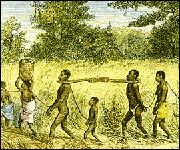 | | Captured: Africans sold slaves |
The Maroons became such a thorn in the side of the English planters that they were granted a kind of freedom long before abolition in 1807 and the emancipation of slaves in 1838. “I feel quite proud to be honest,” says David. "I wouldn’t say I’m a renegade, and I don’t resent authority but I think there’s a bit of that in me now today." Adding: "Somewhere along the line, his descendants were adopted by some Welsh landowner and given the name Williams which we’ve kept for the past 120 years or so. But I’d like to know more about him, what his original name was. I think it would be fascinating.” |