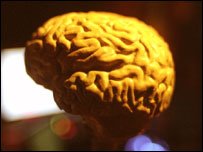
The university’s School of Psychological Sciences is currently running an investigation into whether such occurrences have a much more mundane explanation. Their theory is that the incidents are actually down to reactions in the brain. The department’s web survey aims to collect data from both people who have and have not felt the feelings of displacement, looking specifically at the social and emotional aspects of the phenomena, and they’ve got a very open mind about what it will reveal. As the head researcher on the project, David Wilde, puts it, "if someone’s had an experience, then we take that as real. We can’t prove or disprove anything, so we take that as our starting point."  | | Out-of-body: in the mind? |
So the question isn’t whether the experience was real, but what actually happened. David explains that through questioning participants about how they view their bodies and what they feel about how other people perceive them, conclusions may be drawn. Existing evidence shows that there are perceivable differences in body attitudes between those who do and don’t report OBEs. It definitely isn’t the aim of the project show that those reporting them are imagining things. A previous theory did suggest that imagination may have been at work, but David insists that they don’t agree with such a supposition. "Our intention isn’t to pathologise the OBE, we’re not saying that it is a mental illness. People do genuinely believe they have these experiences and as a scientist, it’s not up to me to believe anything. I’ve just got to take the evidence at face value." Unfortunately, the research also won’t be able to stretch a hand into the great beyond. David says that it "can’t disprove or prove any paranormal event that happens." It seems that the department are carrying it out for much more practical reasons. "As psychologists, we’re interested in people’s behaviour, how they react to certain things, and the more information we have about OBEs, the better position we’ll be in to give these people advice." |