| 13 November 2014 |

| |
| BBC Homepage | | |
| |||
| Contact Us | | |
History featuresYou are in: Manchester > History > History features > Elizabeth Gaskell - woman of the people 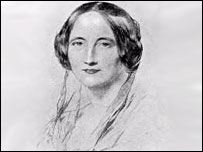 Elizabeth Gaskell Elizabeth Gaskell - woman of the peopleManchester has a history of social reformers to rival any city in the world. One of the best known and best loved is Elizabeth Gaskell, gifted novelist and champion of the working classes. Elizabeth Gaskell
Gaskell was born in London in 1810 to a Unitarian minister. Raised in Knutsford by an aunt, she married William Gaskell (also a minister in the Unitarian church) in 1832 and settled in Manchester for a life of motherhood and church obligations. However, all that changed when her only son died. As a Unitarian, she believed in education for all, and she found herself identifying with the poor and wanted desperately to express their hardships. So she began to write. Her first novel, Mary Barton, told the story of a working class family in which the father lapses into bitter class hatred and carries out a murder for his trade union. 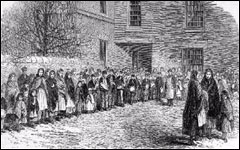 Cotton Famine Soup Kitchen, 1862 Yet, it was the shocking descriptions of the conditions for the poor in Manchester that stood out most in the novel and when it was published in 1848 (in a period of social change that saw the Irish famine, the repeal of the corn laws and the introduction of public health legislation), it won praise from no lesser figures than Charles Dickens and Thomas Carlyle. Dickens was so impressed that he invited her to contribute to his magazine, Household Words, where her next major work, Cranford, appeared in 1853. This described her girlhood in Knutsford and the efforts of its inhabitants to keep up appearances. 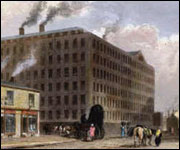 Oxford Street Twist Factory, 1860 Her work brought her fame and friends, including Charlotte Bronte, whose biography she wrote after Charlotte’s death in 1855. It was also in this year that North and South was published. The novel is seen as the last of her social-problem works and is set in Manchester (called Milton in the book). It deals with the issues of status and money through a love story between a displaced and disinherited southerner, Margaret Hale, and a wealthy northern manufacturer, John Thornton. 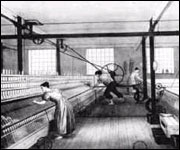 Spinning, 1840 While she never wrote so overtly about the class struggle again, the issues remained in her mind. Her last and longest work, Wives and Daughters (1864-66), concerned the fortunes of country families and is widely considered her finest work. She died before it was finished, having produced 11 novels. Her devotion to the plight of the poor, portrayed again and again within her stories, and her ability as a writer helped push forward not only the social reform process but also the respect for female authors. last updated: 16/04/2009 at 11:09 You are in: Manchester > History > History features > Elizabeth Gaskell - woman of the people   |
| | About the BBC | Help | Terms of Use | Privacy & Cookies Policy |