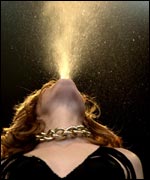
 | | Ana Matronic (© Karen McBride) |
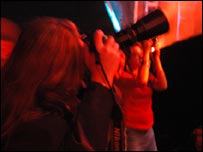
Photographers have to carry their kit round all day with them, and that means lumping two cameras, film, flashes and the rest in a bag and round your neck for ten hours. Such things aren’t helped when security get a bit over-excited. Things aren’t starting well. “They stopped me on the way in and made me empty all my bags onto the ground, even though I have a photo pass on!” she says angrily when we meet up. Once she’s ready to roll though, things improve, and there are tricks to learn from the fellow snappers. “This is my first festival of this size so I’m coming at it green. It’s simple things like the chairs. Older photographers hide them in the bushes so they have one to take into the pit. The rest of us have to share.” And why does a photographer need a chair? “To stand on!” smiles Karen. “The stages are so high, you wouldn’t get a decent shot just standing, so you end up perched on a chair to one side of the stage, hoping that no-one will knock you off.” | "The stages are so high, you wouldn’t get a decent shot just standing, so you end up perched on a chair to one side of the stage." | | Karen McBride |
She has tricks of her own though. “I lived in Italy for years and they don’t queue over there, so I’ve got used to discreetly pushing to the front. That means once we’re let in, I’m first to the best spot. Then it’s like chess or something. I move from there, several people go for my space so I have a greater choice of getting quirkier shots from different places.” 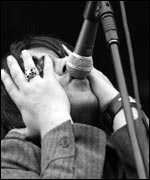 | | Tim Burgess (© Karen McBride) |
”Most photographers say you can’t be creative in this situation. I think you can be. You just have to plan your shots.” That’s something that you have more time to do at a big festival. “There’s so much distance between the stages that you can’t do it all, plus we have to report to the press office twenty minutes in advance of a set to make sure we get in. It seems like a waste but it’s time you can spend thinking about the band and thinking about your photos.” With so much on offer, how does a photographer decide who to cover? Karen’s process is a simple one. “I start with the bands I like and the ones I have to get. Then it’s adding to your archive so if I’ve done a band before, I’ll probably choose someone new at a festival.” Sometimes the choices are for more political reasons. Muse have posted a list in the press office of who can and can’t photo them. Karen’s down to get in, but she won’t be doing it. “It puts me off, puts a bad taste in my mouth. It’s down to reviewers and photographers to bring the festival to people and how can they do that if they’re facing restrictions? I’ll boycott it and cover Kings Of Leon instead.” 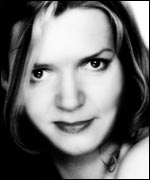 | | Karen McBride |
There are other downsides. Most people, reviewers included, go to festivals with at least one other person. The snapper is nearly always alone. “It does get lonely,” says Karen, “but after a few times in the pit, you start to build up a sense of community with the other photographers. Everyone starts to look at everyone else’s pictures. And it’s better than doing it at a place like the Roadhouse or Academy 3, where you’re nearly always guaranteed to be by yourself.” It’s all worth it though. Karen proudly shows the photos she’s got, of the Scissor Sisters’ Ana Matronic spraying beer in the air that none of the other snappers captured or of Jamie Cullum clambering into his piano, and she is genuinely pleased. The hard work has paid off, but at a price. “I’ve got backache, footache and bruises all over my ankles and lower legs.” From the look in her eyes, she wouldn’t change it for the world. |