 | 13 November 2014 |

| |
| BBC Homepage | | |
| |||
| Contact Us | | |
Weather HistoryYou are in: London > Weather > Weather History > D-Day: A crucial decision 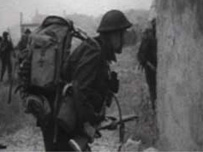 Troops on the beaches in Normandy D-Day: A crucial decisionBBC London's Peter Cockroft looks at how the weather forecast was crucial to D-Day's success. Planning for D-Day
Under the barrage, landing craft sped towards the shore. It was D-Day the 6th of June 1944. The greatest invasion ever mounted was underway. 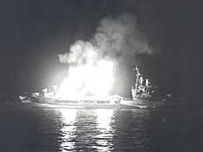 HMS Belfast opens fire 6th June 1944 The military planners believed they had come up with solutions to all the obstacles bar one - the weather. The decision to go ahead would come down to the most important weather forecast ever made. London was at the heart of planning for D-Day. The crucial weather advice, on which General Eisenhower would decide on when to invade occupied France, came from the main allied forecasting centres which were all close to the Capital.  James Stagg The invasion would use allied air, naval and land forces. Because it would be a truly combined operation the decision was made that the weather forecast for D-Day would be a combined effort as well. The man given the job of getting consensus amongst the weather experts and presenting the forecast to the allied commanders was meteorologist James Stagg. A dour 43 year old Scot who had been Superintendent of Kew Observatory. 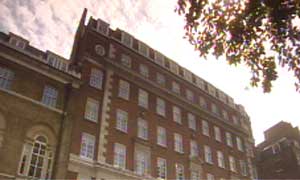 Norfolk House, St James's Square, London On a chilly November day in 1943 he left his Air Ministry office in Kingsway and headed for St James's Square. He needed to find out from the D-Day planners in Norfolk House what they had in mind, the sort of weather they wanted and how much notice they needed. Operation OverlordThe plan, called OPERATION OVERLORD, was to land allied troops on 5 Normandy beaches at low water around dawn. Ideally there should be two low tides during daylight hours and the night before should be moonlit. The beaches were code-named UTAH, OMAHA, GOLD, JUNO and SWORD. The night before airborne forces would land to the west and to the east of the "beachhead". Their job was to secure the roads off the beaches and neutralise German coastal batteries. German defences would also be "softened up" by air and naval bombardment.  Troops disembark from landing craft To set it all in motion the allied commanders would need several days warning of what the planners called "quiet" weather. Stagg reckoned if the planners insisted on their quiet weather "wish-list" the invasion might not get going for another hundred years! So he re-phrased his question - "What are your least favourable conditions?" - this greatly simplified things. However forecasting the weather more than 24 hours ahead in the 1940s was thought to be stretching the imagination. But here he had the help of the top British and American weather experts of the day. The British team was based at Dunstable on the edge of the Bedfordshire Downs. Charles Douglas was a very experienced forecaster known for his encyclopaedic knowledge of past weather events. But he felt that it was "just not possible to make regular forecasts" several days ahead "that can have any real value for military operations". Sverre Pettersen, a Norwegian working for the British, on the other hand believed extended forecasts were possible by using details of what was happening high up in the atmosphere.  Peter with the D-Day weather chart Krick thought that long range forecasts could be made by looking for similar weather situations from the past - if the weather had done it before it would do it again. These two main teams, along with naval experts from the Admiralty, would telephone conference each day. Stagg would act as chair seeking agreement before briefing Eisenhower and the other senior commanders. During April and May 1944 the weather had been relatively settled and the forecast centres in general agreement. Once the decision was made to invade in early June the weather became much more unsettled. The Big DecisionThe American forecasters were optimistic for the 5th June. They felt a nose of high pressure would keep the Channel weather relatively quiet. The British disagreed, concerned that the weather fronts west of Ireland would sweep wind and rain into Northern France. Stagg favoured the British caution. The invasion was postponed. Then unexpectedly there were signs of a "weather window" opening on the 6th June. The troublesome weather front should be heading south across France, another bump of high pressure should clear the skies and bring lighter winds to the Normandy coast. The forecasters agreed. 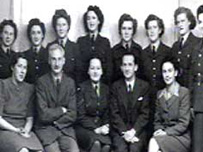 Charles Douglas (l);Sverre Pettersen (r) On the 4th June the order to go was issued - "road and rail parties will now move 6th June same time and routes". The first weather report from SWORD beach arrived back at Dunstable 8 hours after the first British troops waded ashore. It read - "mainly sunny, wind north westerly force 4, small amounts of cloud above 4000 feet, good visibility". Just acceptable for landing on the beaches. The weathermen had got it right! If Eisenhower had waited for the next combination of moonlight and tide, a couple of weeks later, the invasion would have been a disaster. The Channel was hit by one of the worst summer storms in decades. He was to write - "I thank the gods of war we went when we did." last updated: 02/09/2008 at 17:47 SEE ALSOYou are in: London > Weather > Weather History > D-Day: A crucial decision  Watch the latest weather forecast from BBC London. Monday to Friday only.  Weather photos, features and video |
| | About the BBC | Help | Terms of Use | Privacy & Cookies Policy |
