 | 13 November 2014 |

| |
| BBC Homepage | | |
| |||
| Contact Us | | |
RemembranceYou are in: London > History > Remembrance > The extraordinary life of Walter Tull 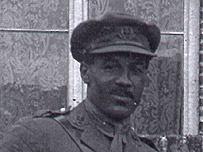 Walter Tull The extraordinary life of Walter TullThe life of a man who was one of the country's first black footballers and who then became the first black officer in the British Army is being honoured with a travelling exhibition organised by the City of Westminster Archives. Walter Tull was born in Folkestone on the 28th April 1888. His father was a carpenter from Barbados who had moved to Kent and married a local woman. Sadly, both his parents had died by the time Walter was nine-years-old. As a result, he was taken with his brother, Edward, to live in a Methodist orphanage in Bethnal Green, East London. Keen footballerYoung Walter showed a talent for football and was soon playing for the orphanage side. Despite starting an apprenticeship as a printer, football was always his first love. In 1908, following a successful trial, Walter was signed by a local amateur side, Clapton FC, where he would play inside-forward. Less than a year later, after winning the FA Amateur Cup, the London Amateur County Cup and the London Senior Cup, Walter Tull was signed by Tottenham Hotspur to become Britain's first black professional outfield footballer. Arthur Wharton, a goalkeeper for Preston North End in 1886, was the first black footballer. Wharton would also go on to play for Rotherham and Sheffield United. Racist tauntsA journalist for the Football Star newspaper attended the Bristol City v Spurs match in 1909 and noted the appalling racism that Walter Tull was being subjected to. The journalist wrote in his report: "Let me tell those Bristol hooligans that Tull is so clean in mind and method as to be a model for all white men who play football... In point of ability, if not actual achievement, Tull was the best forward on the field." 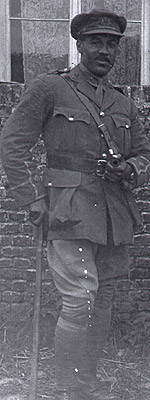 The Great WarIn October 1911 Walter Tull moved to Northampton Town where he played half-back and scored nine goals in 110 appearances. When the First World War broke out Tull abandoned his football career to join the 17th (1st Football) Battalion of the Middlesex Regiment. His battalion arrived in France in November 1915. In the army, Tull's leadership qualities were quickly recognised and he was promoted to sergeant. Despite military regulations forbidding 'any negro or person of colour' being commissioned as an officer, Walter was promoted to lieutenant in 1917 after attending the officer training school at Gailes, Scotland. Walter Tull met his death while leading an attack on the Western front in March 1918. Some of his men made several attempts to bring him back to the British trenches but his body was never recovered. He was 29 years old. Honouring Walter TullToday, the story of Walter's extraordinary life is not especially well-known although in 1999 Northampton Town did unveil a memorial dedicated to him at Sixfields Stadium. However, thanks to a £49,900 grant from the Heritage Lottery Fund, plans are now in place to celebrate his achievements. There will be a touring exhibition and a range of activities organised by the City of Westminster Archives to mark the 90th anniversary of Walter Tull's death. Sue Bowers of the Heritage Lottery Fund said: "This project will make an important contribution to Black British heritage and provide young Black people with an excellent role model." Westminster Archives Education and Interpretation Officer, Peter Daniel said: "As an organisation we are committed to celebrating diversity and this funding will allow us to bring the story of a Great Black Briton to the wider audience he deserves." Touring exhibitionOne element of the project is a six-minute animated film using characters created by pupils at Mundella Primary School in Folkestone. The school (under a different name) was the one where Tull was educated before he moved to London. The film can be viewed on a website dedicated to telling Walter Tull's story. The BBC is not responsible for the content of external websites The exhibition took place at the National Army Museum in Chelsea from September and then moved to the Central Methodist Hall in Westminster in November to coincide with Remembrance Day. It then moves to the National Football Museum in Preston before touring in Northampton, Scotland and finishing in Folkestone. last updated: 20/11/2008 at 08:59 Have Your SayEsther Tasha Andy zain M age 6 gary Crossing The White Line Miss Linton Julie Toney Damieon Ken Toye JAMES Peter Murphy You are in: London > History > Remembrance > The extraordinary life of Walter Tull    Uncover the stories and evidence of the Whitechapel murders |
| | About the BBC | Help | Terms of Use | Privacy & Cookies Policy |
