 | 28 October 2014 |

| |
| BBC Homepage | | |
| |||
| Contact Us | | |
2012 FeaturesYou are in: London > 2012 Olympic Games > 2012 Features > Countdown to Beijing 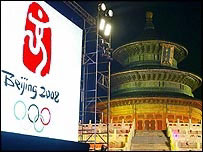 Beijing prepares for the Olympics. Countdown to BeijingBy Adrian Warner BBC London's Olympics Correspondent Adrian Warner has visited Beijing to see how preparations are going for the 2008 Games Watch Adrian Warner's news report from Beijing
Help playing audio/video In the days of Mao's Communist China, English was frowned upon and Russian was taught as the main foreign language in many schools. Today everybody appears to be falling over themselves to learn English in the build-up to next year's Beijing Olympics. Last week in the Chinese capital, I met 60 and 70-year-olds learning English for the first time and 10-year-olds speaking a foreign language with confidence and fluency which would be rare to find in their British counterparts. British visitors to next year's Games will still find it hard to make themselves understood in English away from the main Olympic arenas. But Beijing is changing fast. China has realised that speaking English is a crucial part of its global economic aspirations and next year's Olympics have given people an extra incentive to learn. Some of the students at Baijiazhuang elementary school in the capital were sent by their parents to special English classes at the age of four. It shows. Standing to attention along the corridor, the 10 and 11-year-olds tell me about the history of Beijing and China, pointing to pictures they have drawn on the walls behind them. Many are nervous but they deliver their lines almost word perfect. Could 10-year-olds in Britain have produced the same speeches in French, German or Spanish? KEEN PENSIONERSAnd it's not just the next generation which is determined to speak to the world. We also met pensioners determined to learn English, especially women. Sitting in an English class at her local community centre, 70-year-old retired engineer Fan Jifang told me she needed to understand more of the language to help her granddaughter with her homework. Zhi Lihong, 63, is far more ambitious. She is determined to become a volunteer at next year's Games. When she was at school in the 1950s, only Russian was taught and it's time to make up for lost time. If you are planning on going to Beijing for next year's Games, don't expect all this learning to make everything easy. But once this generation of children move into the workplace in a decade, China is going to be in an even more powerful position to do business around the world. It is clear that the country regards next year's Olympics as a crucial moment in this economic renaissance. SERIOUS CHALLENGESBut it was clear from our visit to the Chinese capital that there are serious challenges ahead next summer, particularly regarding pollution and human rights. Firstly, with 1,000 new cars being registered in the capital EVERY DAY, the authorities have a serious pollution problem. There are now three millions cars on Beijing's streets. The authorities are expected to take one million of them off the streets during the Games through licence plate restrictions. But the International Olympic Committee admit that they may have to postpone endurance events like the marathons or cycling road races if pollution levels are too high. During her fact-finding visit to Beijing last week, Olympics Minister Tessa Jowell said it was crucial that foreign journalists are given the right to report freely from the Games both during the Games and beyond. These are likely to be the two main issues on which the world's media will focus next summer. The officials in the Beijing organising committee are going to need those newly-acquired English skills to explain them. Watch Adrian Warner's news report from Beijing
Help playing audio/video last updated: 19/05/2008 at 15:54 You are in: London > 2012 Olympic Games > 2012 Features > Countdown to Beijing
|
| | About the BBC | Help | Terms of Use | Privacy & Cookies Policy |



 Listen to the