 | 24 September 2014 |

| |
| BBC Homepage | | |
| |||
| Contact Us | | |
Community LifeYou are in: London > London Local > Redbridge > Community Life > Ancient Sikh Sounds 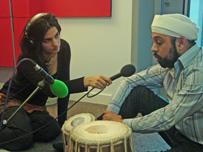 Ramaa Sharma talking to Charanjeev Chana Ancient Sikh SoundsRamaa Sharma Namdhari Sikhs believe the only way to reach God is to sing in Raag, the mode of Classical Indian Music. Classical Indian Instruments
The Harmonium is a keyboard instrument with 42 black and white keys, but not used in the Namdhari tradition. Music plays a fundamental part in Sikh worship. Singing shabads (holy songs) and reading from the holy book, the Guru Granth Sahib is the most popular form of prayer. Prayers that are often accompanied by devotees playing the harmonium and the tabla. For Namdhari Sikhs though, the instruments they play and the style they sing in is very particular. They place a firm emphasis on rare instruments dating back to the 16th century, the time of Guru Nanak, the first revered Sikh Guru. He continued the Vedic tradition of writing the holy scriptures in Raag, the scale or mode of Classical Indian music. East Londoners, Charanjeev, Gurbaksh and Uday are three young British Sikhs who've learnt to play these unique instruments. For them it's the only way to pray. Gurbaksh says it's a mystical experience. Gurbaksh Matharu: 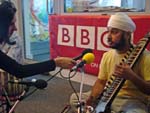 Ramaa speaking to Gurbaksh on Tarshenai "(I'm transported) as soon as we hit the notes on the instrument... I feel I get such positive vibrations from the music." What does it mean to be Namdhari?Namdhari Sikhs are a relatively small but distinct community in the UK. Wearing white turbans, they too follow the teachings of the ten Sikh Gurus. But unlike the larger Sikh sect, they believe the Guru lineage continued after the tenth Guru, Guru Gobind Singh. The current Namdhari Guru is Sat Guru Jagjit Singh, who lives in Panjab, India. Most Sikhs consider the holy book the Guru Granth Sahib to be the last and final Guru of the Sikhs. To hear a full interview with musicians Charanjeev, Gurbaksh, Uday and to hear the extraordinary Namdhari sound, click on the link below. Your views welcome: email ramaa.sharma@bbc.co.ukHelp playing audio/video last updated: 20/12/2007 at 18:09 SEE ALSOYou are in: London > London Local > Redbridge > Community Life > Ancient Sikh Sounds
|
| | About the BBC | Help | Terms of Use | Privacy & Cookies Policy |



 Listen to the