 | 24 September 2014 |

| |
| BBC Homepage | | |
| |||
| Contact Us | | |
Your StoriesYou are in: London > London Local > Redbridge > Your Stories > Chanting Om Chanting Om'Japa' or chanting is just one method used by Hindus to meditate. Speaking to an Indian Guru, Ramaa Sharma explores the relevance of mantras in meditation and the effect it has on those who practice. A Sacred SoundThe syllable Om is composed of the three sounds a-u-m (in Sanskrit, the vowels a and u combine to become o) and the symbol's threefold nature is central to its meaning. It represent several important triads: The three worlds - earth, atmosphere, and heaven The three major Hindu gods - Brahma, Vishnu, and Siva The three sacred Vedic scriptures - Rg, Yajur, and Sama
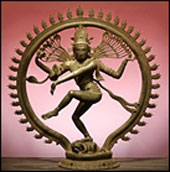 A statue of Natraj, dancing Shiva. The Beatles probably put Hindu sound and symbolism on the world map. When George Harrison took up the sitar and embraced the Hare Krishna movement, little was he to know his actions would spark an obsession with Hindu ideas and iconography. The Om symbol began to appear on clothes from T-shirts to sarongs. More recently and more controversially on underwear and designer shoes. But 'Om' is far more than a decorative sign from the Hindu faith. When chanted it's considered to have a divine frequency, to be a positive affirmation and a symbol of peace and perfection.  Swamini Indian guru, Swamini Atmaprakashananda, from the Arsha Vidya Centre, talks about Om being the vehicle used to assimilate with god. She says: "Om calms the mind... if you direct your attention on the meaning of Om, [contemplate as our scriptures say] it will result in the ultimate understanding of the Lord. " Om is just one of the sounds used by Hindus to meditate. Mantras from religious scriptures such as the Vedas and Upanishads are also repeated chorally or/and internally. Sheila Maharaj, one East London resident, says music can help create the required mind set for meditation. "Great saints say because we are in the time of Kalyug, this particular age, the human mind is so restless and so fraught with anxiety. So they don't have the discipline to sit and meditate. So, as long as you can chant the varied names of the Lord, Bhagvan (the divine person)... even by doing that, it will lead you closer to spirituality and the discovery of divinity within one's own self. So I suppose it's not necessary, but it can facilitate that approach to a spiritual mode of contemplation. " To hear some mantra meditation and a full interview with the Swamini and Sheila Maharaj click on the audio link. Your views are welcome email: ramaa.sharma@bbc.co.ukHelp playing audio/video last updated: 20/12/2007 at 18:12 SEE ALSOYou are in: London > London Local > Redbridge > Your Stories > Chanting Om
|
| | About the BBC | Help | Terms of Use | Privacy & Cookies Policy |



 Listen to the