 | 28 October 2014 |

| |
| BBC Homepage | | |
| |||
| Contact Us | | |
London LifeYou are in: London > Features > My London > London Life > What is ABVD chemotherapy? 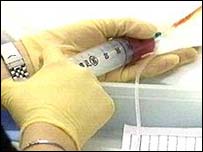 Chemotherapy syringe What is ABVD chemotherapy?Read this fact sheet, compiled by Cancerbackup, on ABVD Chemotherapy ABVD is a type of chemotherapy that's often used to treat Hodgkin's lymphoma. It's named after the initials of the drugs that make up the treatment: ABVD chemotherapy is usually given in an out-patient clinic. It generally takes about two hours to give. Treatments are every two weeks for between 4 to 16 treatments. The drugs are given into a vein (intravenously). Dacarbazine can cause pain in the vein when it is being given. This is because it can cause spasm in the vein. Putting warm packs above the injection site helps to open up the vein and makes it a bit less sore. Sometimes bleomycin is given as an injection into a muscle (intramuscularly). ABVD can cause side effects. They vary from person to person but common problems include: How chemotherapy might affect everyday lifeEven though chemotherapy treatment can cause unpleasant side effects, some people still manage to lead an almost normal life during their treatment. The chemotherapy may make you feel better, by relieving the symptoms of the cancer. Even if you feel unwell during your course of treatment, you may find that you recover quickly between courses and can take up your usual activities again as you begin to feel better. You may be able to go to work and carry on with your social activities as usual, but may need to take rests during the day or shorten your working hours. Some people feel very tired during chemotherapy. This is quite normal and may be caused by the drugs themselves and your body fighting the disease, or may simply be because you are not sleeping well. For someone who normally has a lot of energy, feeling tired all the time can be very frustrating and difficult to cope with. The hardest time may be towards the end of the course of chemotherapy. Cut down on unnecessary activities and ask your family or friends to help with jobs such as shopping and housework. Give yourself time to rest. If you are still working see if it is possible to reduce your hours while you are having treatment. Social lifeWhile you are having chemotherapy you may find that you can’t do some of the things you used to take for granted. But you needn't stop your social life completely. Depending on how well you feel, there is no reason to stop going out or visiting friends, especially if you can plan ahead for social occasions. For example, if you are going out for the evening, you could make sure that you get plenty of rest during the day so you have more energy for the evening. If you have an important social event (such as a wedding) coming up, discuss with your doctor whether the time of your treatment can be changed so that you can feel as well as possible for the occasion. AlcoholFor most people, having the occasional alcoholic drink will not affect the chemotherapy treatment, but it is best to check with your doctor first. Holidays and vaccinationsIf you are going abroad on holiday, you shouldn’t have any 'live virus' vaccines while you are having chemotherapy. These include polio, measles, rubella (German measles), MMR (the triple vaccine for measles, mumps and rubella), BCG (tuberculosis), yellow fever and typhoid medicine. Some countries recommend vaccines such as diphtheria, tetanus, flu, hepatitis B, hepatitis A, rabies, cholera or typhoid injection. These may be okay to have but check with your doctor. Sometimes people who have, or have had, cancer can find it difficult to get travel insurance to travel abroad. Cancerbackup has a list of insurance companies that may offer travel insurance for people with cancer. This information has been provided by Cancerbackup, the UK’s leading cancer information charity, providing information, understanding and support to anyone affected by a cancer diagnosis. Their cancer nurse specialists can answer any question on any cancer: Freephone 0808 800 1234 (Mon-Fri, 9am-8pm). www.cancerbackup.org.uk last updated: 17/07/07 You are in: London > Features > My London > London Life > What is ABVD chemotherapy?
|
| | About the BBC | Help | Terms of Use | Privacy & Cookies Policy |



 Listen to the