 | 24 September 2014 |

| |
| BBC Homepage | | |
| |||
| Contact Us | | |
Your StoriesYou are in: London > London Local > Tower Hamlets > Your Stories > To pay or not to pay 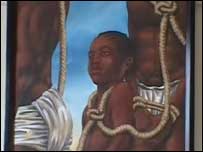 Slavery lives on in its descendants To pay or not to payBy Angela Saini Should reparations be paid to the descendants of slaves for their suffering 200 years ago? A BBC London debate revealed that people are divided on the issue... To mark the 200th anniversary of the abolition of slavery, BBC London hosted a public debate in the historic heart of Docklands in East London. This area had once been a hub of the international slave trade, where thousands of African slaves were brought and sold. The discussion panel, chaired by BBC London 94.9 presenter Eddie Nestor, was united on certain points. For example, many agreed that the legacy of slavery was an important factor in modern racism, and in the cultural and social divisions in British society. However, the issue of reparations split the audience in different directions. A legal dilemma"I don’t see how a comprehensive case for reparations could ever be made that could successfully be pushed through any court," said Judith Edwards, a lawyer and active member of the Conservative Party. She mentioned that a legal case would find it difficult to trace descendants of slaves and gauge the level of damages they had suffered in the 200 years since slavery was abolished.
Meanwhile, Esther Stanford, a lawyer and reparations campaigner, argued that the horrors of slavery continue to directly affect many institutions. "This is not something that is of the past. It’s evident in unequal relations with the west, in gun crime, prisons and care homes. We can make the case that there has been an unbroken chain of suffering," she said. Members of the audience suggested said that reparation payments could take the form of social aid to improve education and employment in the British black community. Others said that trade barriers with African and Caribbean nations could be reduced, as a gesture to compensate for the detriment of labour and resources during the slave trade. 'Sorrow' but not 'Sorry'In November 2006, Tony Blair expressed "deep sorrow" for Britain’s role in the slave trade. It was an unprecedented step for a Western leader, but fell short of a full apology or an offer of reparations. Many at the BBC slavery debate said that the Prime Minister should formally apologise to Africa, the Caribbean and the British black community. For about a century and a half towards the late 1600s, the English were the main slave carriers in Europe, responsible for at least 11,000 slaving voyages, which carried approximately 3.3 million enslaved Africans across the Atlantic. Lawyer, Shaun Wallace, said: "It’s important to see whether or not reparations can really deliver justice and put us back in the position we were in before we suffered slavery." Help playing audio/video To watch Angela Saini's report about the slavery debate at the Museum in Docklands click on the link at the top right of this page. You can also listen to the radio debate chaired by BBC London 94.9's Eddie Nestorangela.saini@bbc.co.uklast updated: 01/01/2008 at 17:24 SEE ALSOYou are in: London > London Local > Tower Hamlets > Your Stories > To pay or not to pay
|
| | About the BBC | Help | Terms of Use | Privacy & Cookies Policy |



 Listen to the