| 13 November 2014 |

| |
| BBC Homepage | | |
| |||
| Contact Us | | |
I - ZYou are in: London > Faith > Communities > I - Z > Nigerian London 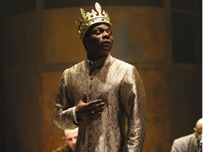 Chuk Iwuji as Henry VI Nigerian LondonFind out about the history of the Nigerian community in London and how this vivacious and lively community have brought a little bit of Lagos to the capital. 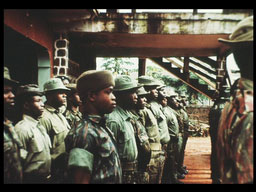 Nigeria's civil war lasted two and half years West Africa may seem a long way off for Nigerians but many people came to this country as part of a general African migration, with individuals seeking better education. The Nigerian community makes up the oldest Black community in the United Kingdom. Over 200 years ago some of the earliest Nigerian arrivals found themselves inLondon as a direct result of the transatlantic slave trade. Olaudah Equiano, also known as Gustavus Vassa, was one of the most prominent people of African heritage involved in the British debate for the abolition of the slave trade. In his famous book written at the time he describes how his early life began in the region of 'Essaka' near the River Niger, an Igbo-speaking region of modern day Nigeria. Later Britain's colonial relationship with Nigeria meant firm links between the two countries were established. Once independence was achieved in 1960, the need for more skills and higher levels of education was great. But from the late 1960s a mix of civil and political unrest in the country lead to refugees arriving in the capital as well as skilled migrants. Nigerians in London primarily come from the Igbo or Yoruba communities with each having their respective languages.  Nigerians are widely dispersed across the whole of London with most people living in the areas of Dalston, Hackney, and more recently Swiss Cottage and Kilburn, where you can buy authentic Nigerian foodstuffs, cloth and clothing. 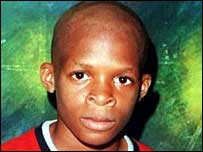 Damilola Taylor In addition, Peckham in South London has one of the highest concentrations of Nigerians with a range of businesses from hairdressers, radio stations, butchers, newspapers, estate agents and boutiques run by Nigerians. However in late 2000 Peckham became the centre of national interest, but sadly for the wrong reasons. Following the tragic death of ten-year-old Nigerian born Damilola Taylor, the Peckham Partnership was developed to regenerate the area and recover from the pain of that incident. 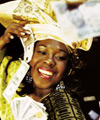 Nigerians in London have a range of religious faiths, from Christian Pentecostal, Cherubim and Seraphim, Celestial (white garment churches), Apostolic, Catholic, Anglican, Methodist and Baptist as well as Islam. All faiths intermingle easily within the same communities. Nigerian FactsThere are over 250 ethnic groups and 3 major tribes in Nigeria. The younger generation of British born Nigerians face the problem of living with one foot in the west and the other in Africa. Within their individual cultural groups there are several celebrations each year. Over the last couple of years, the Nigerian Carnival in South London has been the biggest crowd puller for the community, showcasing a range of Nigerian culture and tradition. There are many cultural groups and professional networks, which allow Nigerians to maintain their cultural heritage within a busy modern society. These societies are a great way of meeting and hanging out with other Nigerians - especially during the football season. 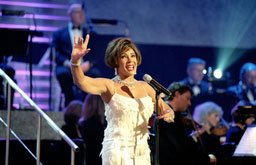 Shirely Bassey performing Goldfinger There are over 300 Nigerian restaurants in London. Menus includes popular dishes like jollof rice, pounded yam and egusi soup with meat, as well as the well-known version of Guiness brewed in Nigeria. Nigerians have contributed to the British media and entertainment industry and continue to ascend great heights. The famous singer Shirley Bassey was born in Cardiff, to a Nigerian sailor father and a mother from Yorkshire, who divorced when she was three. Up and coming actor Chuk Iwuji played Henry VI with the Royal Shakespeare Company and was brought up in Nigeria until he was ten before going to boarding school in Surrey. And of course, BBC London's own Dotun Adebayo hails originally from Nigeria. last updated: 20/08/2008 at 11:37 SEE ALSOYou are in: London > Faith > Communities > I - Z > Nigerian London 
Podcast[an error occurred while processing this directive] |
| | About the BBC | Help | Terms of Use | Privacy & Cookies Policy |