 | 24 September 2014 |

| |
| BBC Homepage | | |
| |||
| Contact Us | | |
CemeteriesYou are in: London > History > Cemeteries > Magnificent Seven 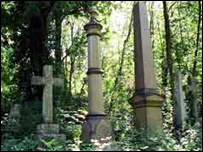 Nunhead Cemetery Magnificent SevenThe growth in Victorian cemeteries and how they have become havens not only for the deceased. In 1800 the population of London was 1 million. By 1850 it had risen to 2.3 million. Such rapid population growth resulted in a lack of burial space. There were instances of body snatching, bodies left out to rot or not buried deep enough and bodies cleared from graves too soon. Considerable sanitary problems arose as churchyards became overfull. This resulted in the "garden cemetery" movement. Churchyard cemeteries were filling up and prohibiting additional burials. From the 1820s onwards, private entrepreneurs solved the problem by creating suburban cemeteries, independent of the parish church, with ample, lovingly-landscaped acreage. In an era before the existence of large urban parks, these garden cemeteries became popular places for a carriage ride or a stroll. In 1832 Parliament passed a bill encouraging the establishment of seven private cemeteries in a ring around outer London. The 'new' cemeteries were built to accommodate the growth of London and alleviate the scandal of overcrowded graveyards in the city. Stone JunkyardsThe Magnificent Seven appealed to the newly emerging middle class, keen to distance itself from the working class and to present to the public it's social status. Graves were seen as a public extension to the family's property, and cemeteries provided a place for families to establish permanent monuments to themselves. Many of the magnificent seven are now overgrown stone junkyards, with the odd jewel shining through the ivy. Getting the balance right between conservation, preservation and restoration is an issue that taxes most of the nation's cemetery groups. The relatively undisturbed pockets of many cemeteries have allowed the development of unique natural habitats. Cemeteries are now recognised as havens for flora and fauna, and many cemetery groups operate conservation schemes. last updated: 09/04/2008 at 13:16 SEE ALSOYou are in: London > History > Cemeteries > Magnificent Seven
|
| | About the BBC | Help | Terms of Use | Privacy & Cookies Policy |



 Listen to the