A film depicting multi-cultural life in Liverpool in the early 1990’s will be shown as part of a retrospective of the Black Audio Film Collective at FACT. ‘Touch of the Tar Brush’ a documentary about the progress of social integration in Liverpool was made in 1991. The touring exhibition showcases the work of a seven person team who came together in the early 1980’s and made a number of films until their dissolution in 1998. The artists believed that they had more power as a group and so created the Black Audio Film Collective. John Akomfrah who has since gone on to make documentaries for Channel 4 filmed ‘Touch of a Tar Brush’ with a group of Liverpool families. | "What’s really interesting is looking at how things have changed even since 1991" | | Curator - Karen Allen |
“It was inspired by J.B. Priestly who came to Liverpool in 1933,” explains FACT curator Karen Allen. “He was researching Liverpool for his book ‘The English Journey’. The book was about the idea or the hope for a multi cultural England. He was looking at families of mixed race who had settled in Liverpool.” “What John Akomfrah wanted to do was to make a film in Liverpool and look, in 1991, back at how attitudes towards mixed cultural settlement had changed. In that time there had been some massive changes in attitudes to multi-culturalism.” John Akomfrah set out to find families to take part in his documentary to see how much the city had changed. 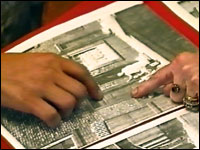 | | A scene from the film |
“He put out an appeal on BBC Radio Merseyside,” says Karen Allen, “For people to get in touch who were from mixed race families whose families had settled in Liverpool since the 1930’s. “Then he interviewed these families about their experiences of living as part of a truly multi-cultural society.” As part of the retrospective FACT has reunited many of the people who took part in the film and one of them ex-boxer John Conteh will be present at the screening of ‘Touch of the Tar Brush’ on 28 February 2007. Karen Allen says the films have a new resonance today, “What’s really interesting is looking at how things have changed even since 1991. That things are generally moving towards a kind of true multi-culturalism and a true multi-cultural society. It’s really interesting to see how people’s attitudes have changed.” |