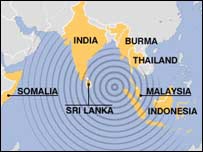
Sri Lanka nowWhat a shock to find so many desperate people looking for housing and basic needs, 28 months after the disaster. | "People were still in tents or temporary built shacks, which makes you wonder about basic sanitation." | | Betty Hall, Guest Contributor |
We must ask has all the money collected worldwide been spent? If so, how and where? Has it been spent wisely? Who can tell us where the remainder of the money is and who is controlling it? We travelled down the west coast tourist route from Colombo to Galle, and found many ruined homes or just bare foundations where houses once stood. People were still in tents or temporary built shacks, which makes you wonder about basic sanitation. New government rules following the tsunami prevent families rebuilding near the beach where they had previously lived. Life is very different and many are struggling to find work as the tourist trade has only slightly recovered. Many people used to have jobs associated with the tourist industry. 26 December 2004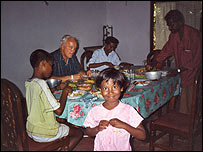 | | Sri Lanka: family meal |
We visited Sri Lanka three times before the disaster, and had kept in contact with a family, writing to their son, Danish, for nine years, initially helping him with his written English. This family of seven (father, mother, two girls and three boys) lived in a house close to the beach. Following the disaster we tried over a number of weeks to see if they had survived. After three months we received a letter to say that they had all survived, including their two grandparents. They were all (nine people) living in a tent and receiving one meal of rice each day, together with supplies of drinking water. Their house had been completely destroyed. 2005They lived in a tent for most of 2005, but during this period Danish caught a serious infection and had to stay in hospital for some days. Because of this the family moved to another camp site. 2006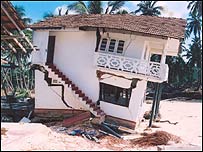 | | Sri Lanka post-tsunami |
The family started 2006 in a tent but after two or three months they were moved to a temporary shack, which had three open sides and a corrugated tin roof. These shacks were locally known as microwave ovens, as the air temperature was often 30 to 40 degrees, and they became unbearable. Then during the rainy season the wind blew the rain into the shack, wetting the family and all their possessions. Later in the year they were offered a small, one-bedroom house by a Japanese charity, but after consideration turned it down because it was much too small for nine people. We collected money from family and friends to send to them as they wished to buy land and start again. Meantime their government paid them a poor compensation for the land they had owned, but had been forbidden to rebuild on. They purchased a plot of land and started to lay foundations for a new home. 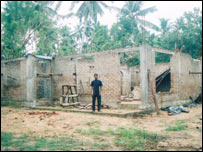 | | Sri Lanka: post-tsunama |
At this time the boy's uncle felt so sorry for them, and the way they were living, that he moved in with his son and family leaving his home for their temporary use. 2007In February we visited the family again and found that the walls of their new house were now up to 2–2.5 metre high, but work had stopped until the family were able to get more money, which would mean finding jobs. The eldest boy, now 20 years old, has just been accepted for university, which is a big achievement in Sri Lanka. Unfortunately though it means that they now have a further expense, but they have also lost a wage earner and part-time builder. |