| Good reasons to be carless | - Most people pay at least £2,500 - £3,800 a year to own a car - an income of £71-£118 weekly for standard tax payers.
- A quarter of all main roads are jammed for an hour a day.
- Research by the AA shows car use is 14 times greater than in the 1950s and bus use has halved.
- The average car trip is 2.5 miles and lasts around 11 minutes.
- Sixty per cent of cars on the road have only one occupant.
|
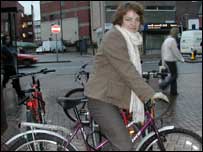
Well several months into my new car-free lifestyle I think I can safely say that I rather like it! The initial decision to get rid of our trusty but rusty motor was on an experimental basis. There was always the option to change our minds but to be honest there's no incentive to revert to getting behind the wheel yet. My husband bought me a top-notch cycle helmet for Christmas (who says romance is dead). And I'm finding that motorists are largely quite bike friendly - leaving plenty of space for me when they overtake. Of course it's not all plain sailing. Trying to cycle up hill with a basket full of shopping is a bit tricky. But in view of the fact that it was mostly chocolate and wine, I think I needed the exercise. Most of our shopping, however, is now done locally and on foot. We reckon we're saving money by avoiding unnecessary extra purchases at the supermarkets and it's certainly much more pleasant than standing in a queue along with lots of other bored looking people. My worst experience so far was trying to take my bike on the train. Despite best laid plans - I made a reservation in advance for the journey between Leicester and Loughborough - things didn't work out according to plan. | "By shopping locally we're eating fresher and cheaper produce, using less packaging, supporting local outlets and getting a bit more exercise." | | Karen Pirie |
When I got down to the guard's van as we approached Loughborough Station I was told I couldn't take my bike off at that end of the train because of the short platform. So I had to go all the way to Nottingham and back and get off at Loughborough on the other side! Needless to say I was just a wee bit irritated by this. It took a great deal of self-control not to blast the guard with a full and frank appraisal of the situation. That incident aside - it's all been quite positive and I've somehow managed to avoid getting caught by a shower on the bike .... so far. This doesn't mean we haven't snuck in the odd bit of car travel. We hired a car for a pre-visit Christmas to Cornwall and borrowed my sister's car over Christmas. And this week I can borrow it again which will avoid me having to pay for an expensive taxi when I go out late tomorrow night. Flexibility seems to be the key to making this work. |