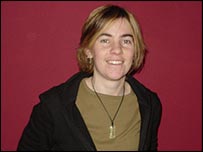
Vik Banks sells fairly traded clothes in Leeds. She says: "Everyone's getting used to the idea of buying Fairtrade food, but it's actually quite difficult to get hold of clothes. I thought I'd like to be able to go somewhere in Leeds and buy fairly traded clothes, and there isn't anywhere so it seemed like a good idea to do it." "There's been quite a lot of publicity over the years about sweatshops and the conditions that some people have to work in to make clothes, so I think people have a general awareness. 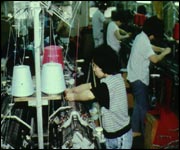 | | Do you know where your clothes are made? |
"It doesn't stop people buying clothes in the high street where they have no guarantee of the working conditions of the people who make them, but if you offer that as an additional thing it's an added incentive. "The clothes obviously have to be ones that people want to wear in the first place – they're not going to wear them just because they're fairly traded." "We call them sweatshop-free, rather than Fairtrade, because there isn't yet a Fairtrade certification for clothes. The clothes are made in factories where we know that people are getting decent pay rates and working reasonable hours. " The other aspect is that most of the clothes we sell are organic cotton. About 25% of all agricultural pesticides are used on cotton, which is bad for the environment and for the farmers who are actually growing it. Organic cotton is grown without pesticides. That's good for the environment, and also good for the workers' health and safety." Aren't these clothes more expensive though? "It is more expensive, because the method of production is more labour intensive. Also if you're paying factory workers decent wages, obviously that part of the production is going to be more expensive. But if you compare them to high street shops at a slightly higher level, the prices are not unrealistic. "At the moment it's a very small market in terms of the whole global clothing market, so as interest grows prices may come down." Vik calls her company Arkadash, which is the Turkish word for friend. She works from home and attends organic and Fairtrade fairs. She also has a stall in the Corn Exchange once a month. |