BBC HomeExplore the BBC
This page has been archived and is no longer updated. Find out more about page archiving.

13 November 2014

BBC Homepage

Local BBC Sites

Neighbouring Sites

Related BBC Sites


Contact Us

Faith

You are in: Lancashire > Faith > My faith and me - Humanist

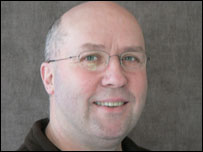
Ian Abbott

My faith and me - Humanist

Retired policeman Ian Abbott tells us all about his Faith - Humanism.

Tell us about your faith…

‘Humanism’ is the belief that we can live good lives without religious or superstitious beliefs. Humanists make sense of the world using reason, experience and shared human values. We seek to make the best of the one life we have by creating meaning and purpose for ourselves. We take responsibility for our own actions and work with others for the common good.


Are there many Humanists in the UK?


We have 6,500 members and another 1,000 ‘supporters’ but usually find that people who join say they made that decision after attending a Humanist ceremony or when they’ve been assisted by the BHA with a campaign or dispute.
Having said that, most opinion polls indicate that around 40% of the population would describe themselves as non-religious and a recent Ipsos MORI Poll (24/11/06) has shown that 36% of people – equivalent to around 17,000,000 adults – are in fact humanists in their basic outlook.


Have you always been a Humanist?


I sometimes describe myself as a ‘Born Again Atheist’. When I was born I had no belief in any god or gods; that was only instilled in me by adults who believed those things; (enthusiastically supported by an Education system that insists on RE classes and collective worship assemblies). I experienced a strong Methodist upbringing, attending Bible Study classes assiduously until, at the age of 16 / 17, I made my own mind up about religion and reverted to the free-thinking individual I was when I was born.

Why did you change your faith?


Because my intellect told me that the things I was being taught as truths were unsustainable; they had no basis in fact and no evidence to support them. I came to realise that it was perfectly possible to be a good and moral human being without believing in, what I came to regard as, superstitious rhetoric. 


What do your family and friends think?


I come from a large(ish) family...I have two brothers & two sisters. My eldest sister would describe herself as a ‘Born Again Christian’ and vehemently refuses to accept my outlook; my other sister and two brothers would tick a box as ‘CofE’ if they were filling out an official form.


They happily sing the hymns and join in prayers at weddings, christenings and funerals but don’t appear to give any more thought to it than that. Some of my friends are very religious others are ‘committed atheists’.


They all know me to be an outspoken atheist. They appear to respect my opinions although I do come in for some good natured ‘ribbing’ by the religious ones when Christmas, & Easter come around.


What's the biggest lie you have ever heard told about your faith?


That we are anti-religious and want to destroy the beliefs of others; also, that because we’re atheists we ‘must’ therefore be evil!


Who is the most inspirational person you've met through your faith?


This will sound trite I know but I meet the most inspirational people all the time. I meet people who have lost babies & children, brothers & sisters, husbands & wives; parents, grandparents & friends; people who are themselves dying of terminal illness, and yet refuse to be emotionally blackmailed into changing their views on religion and life. They have arrived at those views through their intellect and experience and are entirely comfortable with them.


Who is the most famous person that follows your faith?


There's too many to list but if I ‘had’ to I suppose I’d choose one of my personal heroes from Albert Einstien; Robyn Williams; John Lennon; Steve Irwin; or Richard Dawkins.


What's the longest distance you've travelled to follow your faith?


I travel to London four times a year for meetings then I attend conferences (usually in the midlands); I’ve conducted a wedding in London and on the Isle of Man and in 2008 I am travelling to the South of France to conduct a wedding there.


Is there a part of your faith that you could manage without?


My ‘Faith’ is Humanism which is more an outlook on life; consequently it impinges on how I live my life so it would be difficult to separate one part … having said that, I suppose I could happily live without the frequent conflicts I have when I assert my right to ‘not believe’ because some people of faith conclude that I am (somehow) attacks their beliefs?


Have you had any difficulties in being a Humanist?


Yes, we wanted our daughter to attend a ‘community school rather than the nearer ‘CofE school’. We eventually secured a place for her but the local authority refused to provide her with a bus pass; even though they were happy to provide passes for children to travel too a faith School they would not provide a pass for children to avoid one.


We were engaged in a five-year of arguing that non-religious families have the same rights as religious ones. That campaign took us to London where we gave evidence before a Parliamentary Select Committee. We won the case and the rules are now changed: too late for our daughter but hopefully others will benefit. 


Humanists and other non-religious families also suffer from being un-represented or not considered in many walks of life. For example, even though around 70% of all teenage schoolchildren would describe themselves as ‘not religious’ there are no Humanist representative on the Education Committee (called a SACRE) that decides what religious education these students should receive.


Most Crematoriums (which are in fact ‘public buildings’) have Christian symbols that cannot be removed or covered. War memorials to those killed in conflicts often contain crosses (when it is patently obvious that they would not all have be Christians) … and so on. 


I always said that if ever I won the lottery I would open a completely Secular School. The idea of having ‘Faith Schools’ is, to my mind, an outrageous concept. It seems to me that segregating children at the age of four; on broadly racial grounds (because religion is culturally inherited [most children assume the faith of their parents] … and people of different faiths are often distinguished racially); then teaching them in isolation for the next thirteen years before releasing them into the world to mix with everybody else is not the obvious plan for a racially harmonious society.


So....if ever you hear that a Secular School has opened in Blackpool the chances are I’ve won the lottery.


Tell us the difference between a humanist ceremony and a religious service...


Humanist funerals differ from those people are more used to in two ways:
Firstly, we have no religious content in our ceremonies, no hymns or prayers. Because most people who have been educated in England are brought up to experience prayers and hymns at most formal gatherings some find this difficult to imagine but when they hear the alternative poetry and readings we use instead they find it just as moving.
We encourage families to choose music that is relevant to the life of the person we are talking about so if they liked classical music that’s fine … if they liked heavy metal, or punk or any other music, that’s fine too.


Secondly, and more importantly, at our funerals we don’t want to spend the time talking about the fact that someone has died; we want to talk about the fact that they have lived. It is truly a celebration of their life.


Humanist Weddings and Naming ceremonies are very different to Church weddings and Christenings. 

These ceremonies are very important because it’s good to publicly declare your promises, or your hopes and aspirations in a more formal setting so we work very closely with the couple [or parent(s) if it’s a naming ceremony] to find out what ‘they’ are hoping for, and between us we write a ceremony that expresses ‘their’ aspirations and promises in a place that means something to ‘them’ and using the words ‘they’ want to use.


You don't believe in the after life - wouldn't you find comfort in believing in it?


Does it not make death harder to bear? No; not at all, quite the opposite in fact. I believe that death brings the end of a person’s life. In many ways that brings me comfort. After all, I’ve been dead before! Death is merely the absence of life.

I was dead for billions & billions of years before I was born; I’ll be dead for billions & billions of years once my life has ended. 

 The part before I was born hasn’t given me any problems, why should the part after I die be any different?

And just because somebody dies doesn’t mean that their influence in the world has stopped, many people have children who carry with them aspects of their relationship to that parent.

 But we all impact on other peoples lives in ways we can’t possibly imagine. I often refer to this as ‘ripples’ and those ripples continue to spread and touch on the lives of untold numbers of people, long after we’re gone.


We’ve all had conversations when somebody says to us: “I’ll never forget the time you did (this)” or “I’ll always remember when you said (that)".

We have no recollection of these events; they meant little to us, but it has stayed with that person and will probably influence, in some small way, how he or she will deal with all the people they will meet throughout their lives; and so the ripples continue to spread.


last updated: 06/01/2009 at 11:38
created: 24/01/2007

Have Your Say

Have you been to a Humanist ceremony?

The BBC reserves the right to edit comments submitted.

Ian Abbott
Bob … I don’t check back here nearly frequently enough so I don’t know when you posted your question. I’m very sorry if a delay hindered your homework in any way. Speaking personally Humanism has changed my life in a very tangible way simply because, since retiring as a police officer, I conduct humanist ceremonies [Funerals, Weddings (Gay Weddings as well as Heterosexual Weddings), Baby Namings, Re-affirmation of Vows - etc] also I'm chairman of the Lancashire Secular Humanists group. So, hardly a day goes by when I'm not engaged in doing something connected with humanism. But, even before that, being a humanist has allowed me to be far more accepting and tolerant of other people whose life-choices and life-styles are different from my own. There really is only one rule in humanism “Treat other people as you would want to be treated in their situation. Don’t do things you wouldn’t want to have done to you.” This simply means that everybody has the right to live their (one) life as they choose to live it and not by anybody else’s leave. As long as what I, you, or others choose to do, or chose to live doesn’t prevent someone else from having the same rights then anything they choose to do is fine by me.The problem that often occurs is something Lee (above your question) touches on.Whenever someone who calls themselves a Humanist, Atheist, Agnostic, Freethinker (there are lots of titles for people who are not religious) declares their opinions they are invariably challenged by someone who is religious. In fact, it often goes much further than ‘challenged’. Look at the furore created by the Atheist Bus Adverts; or by Richard Dawkins books and programmes. Some religious people complain they are offended by reading / hearing such views being expressed. But what precisely could be considered ‘offensive’ by simply saying ‘I don’t believe what you believe’ has always escaped me. Taking that argument to its logical conclusion one would have to say that no religious views should be expressed because (leaving non-religious views aside for a moment) every religion differs in some way from the many other religions surrounding it; consequently, if we accept that hearing a differing view can cause offence, expressing one religious view would ‘unavoidably’ offend the beliefs of someone else.I suspect that what is really being promoted by those who claim (or should that be feign) offence is the principle that they alone have the right to express their views and nobody else has the right to voice disagreement. The world would be a very miserable and (even more) dangerous place if that was ever allowed. So Lee is quite right to challenge assumptions by anybody claiming universal agreement with their particular religious views but what is, I fear, invariably futile is allowing an argument to develop into a game of ‘I’m right – you’re wrong’ verbal ping-pong. It is enough to say “You have every right to believe what you believe. You have no right to insist that I (or others) believe it too”. My least favourite, and insultingly patronising comment religious people (usually vicars & priests) say to me is “I know you don’t believe in God Ian; but God believes in you.” I usually reply with “Oh really – which one?”

Lee Oades
It's obvious that humans crave and can thrive from religion - it doesn't make those delusions fact though. I'm completely comforted by the facts, backed up by evidence - and whilst I'm fairly ok with friends deluding themselves - I just wish that I didn't get so wound up by their flawed "logical" arguments regarding the existence of "God". My fault lies in that I try to reason with people that have clearly demonstrated that they've turned their back on reason.

bob gawdof
has being a humanist changed your life in anyway???(its for my home work!)

Anthony Roberts-Moore
I have been an atheist since age 12. Now 68. I knew from age 12 god or gods did not exist simply because knowing the earth and humanity well even then, I knew I was better than any god, so, therefore, god could not exist. Simple explanation, and none can dispute it.Thank youAnthony.

Ian Abbott
Chazz ... a good first stop would be BHA website www.humanism.org Or go to a local Humanist Group meeting (you'll find details on the same website)

Chazz
I'd never heard of 'Humanism' before. Though, reading it now - it's similar to my own 'beliefs'.I am not a religious person and have always considered myself an atheist, though i am open minded. May i also add that an Humanism funeral sounds perfect for me. I was recently discussing with relatives actually about funerals, i said that i hated the idea of having a big church funeral because it would go against everything i stood for in life.Admittingly, i probably have a few more years in me yet (i'm 17) though i'm definitely going to do abit more research on the Humanism funeral services. How do you even go about it?

natural
i recommend you to read some books which is relevant to Buddhism,because your ideas sounds like ideas of Buddhism.

Ian Abbott
“What do yu think happens when you die?” … I think I’ve already answered this question. But if elaboration is needed I would say that there is nothing whatsoever to suggest that, in this respect, Human beings are any different whatsoever from the multitude of other animals which have inhabited, currently inhabit, and will inhabit the planet we all share. We are conceived by parents we have not selected; we’re born at a time and in a place not of our choosing; we live out our lives in the best way we can; we reproduce along the way if we are able (and desire) to; and ultimately we die, usually (again) not at a time and place of our choosing. It is a perfectly natural lifecycle and one that I am entirely comfortable with. When I die that is it … The end of my life … I’ve passed on … I am no more … I have ceased to be … I’ve expired … A stiff … Bereft of life … My metabolic processes are history … I’m off the twig … I’ve kicked the bucket … I’ve shuffled off 'is mortal coil … I am an ex-person. Or … to put in more classical terms, (Quoting an Epicurean epitaph used from C300 BCE). “I was not – I have been – I am not – I do not mind”

.............
what do yu think happens when you die?

Drew Baxter
Ian does not need me to fight his corner, he does that very well himself, but I have to agree, to judge a life by a funeral is wrong Mrs Owen, let a life speak for itself. A Humanist funeral is about life before death, you are entitled to your belief about life after death but I see nothing desperate or futile in living life the best way you can.

Ian Abbott
I don’t want to carry on reacting to every poster who feels they have the right to challenge ‘my Humanism’ but I have visited several other contributors in this ‘My Faith And Me’ section of the BBC Radio Lancashire web-site: Buddhist, Baha’i, Christian, Pathways of Prayer, Pagan and Pagan Druid and no atheists/ humanists have challenged any of the completely unsubstantiated claims made by followers of other faiths & beliefs. Does this indicate that Humanists & Atheists are far more tolerant of other people’s rights to believe what ever they chose to believe than believers are of humanists / atheists to do the same I wonder? Jean talks about ‘No message of hope’ – ‘futility of his life’ – and – ‘whiff of desperation’ (in bold capitols which, in blogging etiquette is interpreted as SHOUTING by the way). There are an increasing number of people who claim to provide Humanist Ceremonies but not all have been trained and accredited by The British Humanist Association. Without knowing who the person was delivering her cousins ceremony I can’t say for certain but I’m fairly confident that whoever it was is not a BHA accredited celebrant. At ‘real’ Humanists ceremonies we don’t talk about the fact that someone has died we talk about the fact that they have lived. We talk about what that person has enjoyed about living and what other people have enjoyed about them living. We talk about the influence that persons life has had in our world. We talk about the repercussions from their life that will continue into the future and touch on the lived of countless other individuals. ‘Futility’ is not a word we would ever associate with anybody’s life … and I mean anybody! If by ‘message of hope’ you are referring to some unknowable, unproveable, life after death well all I say is (to repeat something someone else has said here) Humanists prefer to believe in life before death rather than life after death. I suspect what Jean sees as desperation we see as reality. I’m saddened that she views her cousin’s life as hopeless and futile; and (if she is a Christian) I’m confused as to why she would think that life was pre-ordained by her god to be so.

JEAN OWEN
BEEN TO A FUNERAL, TO ME ALTHOUGH MY COUSIND LIFE WAS CELEBRATED THERE WAS NO MESSAGE OF HOPE, FELT EXTREMELY SAD AT WHAT TO ME WAS THE FUTILITY OF HIS LIFE. EACH PERSON ENTITLED TO THEIR OWN BELIEFS BUT TO ME THERE IS A WHIFF OF DESPERATION IN THE HUMANIST BELIEFS.

Jayne Thompson
No, but I would love to see a humanist wedding. Well... I will see one in a few years when I get married!

Ian Abbott
I often find those ‘minds that are open to belief’ are invariably closed to reason. Perhaps it’s because “Reason is the enemy of faith” - Martin Luther 1483-1546. I don’t presume to speak for others but I do not ask for proof of the supernatural … there can be none … it does not exist. It is for the same reason that I have no need to discover ‘the Creator’ … it/he/she does not exist! I am happy that I do not believe and untroubled by the knowledge that ‘you’ do. I feel no obligation to convince you that you are wrong. It would be polite of you to extend that same consideration to others. What is it you people say … ‘you in your small corner and I in mine’.

Mike Williamson
Surely, George, you can tell the difference between so-called 'faith' in the knowledge of teachers, experts and doctors, and faith in the existence of God? The fact that they are described using this same word 'faith' is merely a failure of the English language, they're not the same thing.Similarly, it requires much less of this 'faith' to hypothesise that stars and planets (similar to those that we can see) exist outside of our experience of the universe, than it does to believe that there is a creator out there who is nothing like anything we experience here, and not only that but he's the Christian God who wants us to accept Jesus as our personal saviour. Totally unrelated matters of 'faith'.

George Burnell
I appreciate the responses of Drew Baxter and Ian Abbott to my earlier comments but they both prompt questions. In this life on earth nobody has all the answers and we take an awful lot on trust. Life would be intolerable if we did not have 'faith' in other people;scientists, doctors,teachers, 'experts' in all fields; but even they do not know everything. We continue with our faith despite the times we feel let down, misled or even deceived. Eminent scientific minds accept the probable existence of stars, planets, whole galaxies which we will never ever see, never ever hear and never ever be able to reach. No physical proof but a certainty of belief.So why do we demand physical proof of the supernatural? If there was phyical proof the SUPER - natural would not exist; wecannot see, hear, touch, taste or smell; but the existence is not beyond therealms of our intellect. Wecan arrive at the certainty of the existence of God by natural reason. We can discover the Creator in the wonders of creation; without the Creator the creature vanishes. On the natural plane we are forced at times to believe even without understanding or proof. In matters of the Supernatural or Divine I suggest that unless our minds are open to belief we could never begin to understand.

Mike Williamson
Replying to Neil Coyle's latest post. Maybe I've misread, but you claim that Humanists misrepresent arguments whilst you do exactly the same yourself! I know very little about Jung, but Sheldrake has not 'established' anything about consciousness, he wastes his time in pseudoscience such as telepathy. Dawkins' Selfish Gene is not negated by acts of altruism at all. It's the 'Selfish Gene', not the 'Selfish Individual'. The genes are what will continue to be passed on, we are merely bodies that carry them.

Drew Baxter
Re George Burnells comment - I have sat with people, genuine atheists, as they died. They did not hedge their bets at the last moment by calling to some god that had not been part of their life - they accepted life and death for the natural process it is. And as an atheist I would say to George, don't waste time praying for me, get out there and live a good meaningful life and leave behind a legacy of happy memories for your loved ones. I think life before death is much more important than life after death.

Ian Abbott
“… they may not believe in God, but God believes in them.” I was wondering how long it would be before this emerged. Although, I confess, I never expected to read it here; a web-page set up simply to inform about what people believe and how they view their lives… not having to defend those choices from others who see things differently. I assume you’re absolutely convinced that the god you believe in is the one true god … I don’t suppose there is any possibility at all that it / he / she may be the wrong one (of the countless other ‘one true’ gods that have been worshipped and sacrificed too over thousands of years). Please supply just one iota of tangible evidence that there is a god … anything – any evidence whatsoever; and just to make it easier I’ll be happy for it to be evidence of your god or any one of the very many others. Words like ‘faith’ and ‘belief’ are used for a reason … there is no evidence! I happen to find claims made by religion to be incredible and could not believe them no matter what unsubstantiated promises of future rewards are dangled before me. I have no problem at all with anybody believing whatever it is they want to believe (with the usual caveat of course) … but I absolutely demand the same consideration from them.

George Burnell
I read an inscription on a tomb stone: "Here lies an Atheist, all dressed up and nowhere to go." I believe there is no such person as a genuine atheist. To claim atheism one would have to suppress the most powerful instinct of the human intellect, belief in God. Some of us are afraid to face what lies deep in our innermost being; it takes courage because facing up to it could greatly impact our way oflife, and that can make us uncomfortable. It is almost impossible to live this self-deception for the whole of our lives and the moment of death. Avowed atheists should be prayed for with charity: they may not believe in God, but God believes in them.

(Little) Ian Abbott
And now he's intrigued!

Sum Doood
On this topic, and doubtless on many others too, Ian Abbott talks totally good sense. And he's only little!

lisa cookson
i found the above very interesting + can make good sence of what Ian Abbott has said

Kerry Gormley
I have attended a buddhist humanist funeral. I follow the buddhist practice of Nichiren Daishoniin, a 13th century japanese monk, we chant Nam Myoho Renge Kyo 'til out hearts are content'. I really enjoyed reading Ian's experience of hios humanist practice and I have to thank the folks who put this site together. I currently represent the Buddhist faith here in Hyndburn at the Community Network's interfaith Forum. I was christend and educated at christian schools and I value and respect the teachings of Jesus they have clearly been an inspiration to may people who have achieved great things for the good of others. However, many years ago I first learned about the terrible slaughter of millions women and men across europe accused of witchcraft by followers of the teaching of Jesus and I was shaocked, appalled and angry. I studied Paganism for many years and through that study found out about Hinduism. I often introduce myself as a Devil worshipping Pagan who practices Buddhism - just to get the debate going. I have many Pagan friends and many friends who are not of any particular religion but live very spiritual lives. The multi-facetted nature of human faith is what makes it so fabulous and i celebtate and commend all people who have faith - faith in each other, faith in the future, faith in all its forms.

Neil Coyle
In reply to Ian i would just like to say that i was not attacking Humanism,and i am not a monotheist.All iwas trying to say is that although i am sure that humanists are very good people they do have a disagreeable tendency to misrepresent arguments for a non-physical part of our being and its continuing existence after the death of the body. For example Jung's assertions were the product of a lifetime's research;Many quantum physicists see the basis of reality as intelligent,not material ; Rupert Sheldrake has established that our consciousness exists independently of the brain;Dawkin's theory of the Selfish Gene is negated by our own knowledge of acts of altruism we have experienced,even carried out.But it is the latter's simplistic take on belief which attracts many non-believers and why i think Humanism is a lazy philosophy.

Paul Amos
I was lucky enough to have Ian deliver the 'sermon' at the funerals of both my father and grandfather. The speeches were very well received and well thought out. His beliefs resonate strongly with my own and as my family are non-religious it would have been hypocritical to invite a priest or vicar to preside over the ceremony.I'd like to publicly thank Ian. I have to say he made some difficult times easier to bear. Thanks again.

Nigel Dawson
This afternoon I was looking on BBC Radio Lancashire's faith article site, when I came across Ian Abbott's views and comments about Humanism. I am in a rather fortunate position to work with Ian in my role as a Funeral Director in the Blackpool and Fylde area. I don't wish to comment about Ian's beliefs, or mine but what I can say is that I have only had very positive reaction from the families I have been called upon to serve when Ian has conducted a humanist funeral ceremony. Ian is a very good speaker and his services are conducted as a very personal and moving tribute to those who have passed away.

Tricia
Ian thank you for sharing your beliefs. I think its hard to against the norm. But when I read your article I can see that you really talk from the heart, so that in itself has helped me see that your beleifs work for you. Thanks again for sharing a differing view of life. to answer the question of a humanist ceremony.. I think I attend them many times a day... their not formal events.. but we all are witnesses of other peoples growth.

Ian Abbott
By including my Humanism in these pages it is not my intention to persuade anybody away from whatever beliefs or philosophical outlooks they themselves may hold. Neither is it born out of a feeling that I have some sort of obligation to defend my own philosophical outlook in any way whatsoever; I absolutely assert that I do not. I merely agreed to explain it to others who were possibly unaware or unclear about what Humanism is.Make of it what you will.However, as Neil Coyle sees fit to attack a viewpoint different from his own I should reply:‘Prove that there isn’t’ is a depressingly familiar (and facile) cry from people who hold superstitious beliefs. It is not the atheist who makes extraordinary claims but religion. And extraordinary claims require extraordinary evidence.I’m afraid the onus is on those who make those claims to provide the evidence. I have assumed (perhaps wrongly) that Mr Coyle is himself an atheist. However, if I am correct in assuming he is a monotheists (and please accept my unreserved apologies if you are not) then he himself has already rejected any evidence to support the existence of Thor , or Isis or Minerva or any of the multitude of other ‘gods’ that people have or still do believe in; so, as far as those gods are concerned, he is indeed an atheist . . . I simply believe in one less god than him. As to the spurious assertion that ‘most people have …. experience of the paranormal’ I certainly haven’t and I would refer you to ‘Flim-Flam’ by James Randi and especially to chapter 13 ‘Put Up Or Shut Up’. As far as I know Mr Randi’s $10,000 dollar reward to anyone who can prove ‘any’ paranormal phenomenon will be honoured by his estate ‘in perpetuity’! However, that reward has never been successfully claimed since 1964 so I leave others to draw their own conclusions. As for Pascal’s Wager … or to put it in Neil’s words “You do not gain anything and risk losing” … etc. There is a wealth of philosophical argument that rebuts this outlook; all I can say is a person of integrity cannot simply will him/herself to believe something that is evidently false just because to do so would be a ‘safer bet’Much of Carl Jung’s ‘research’ that he alludes to stems from what Jung described as his own near-death experience. I myself don’t put too much credence on the illusions of a son of a pastor who, whilst seriously ill and after three weeks of being unable to eat, experiences hallucinations in which, vivid as they no doubt were, all the objects and people he describes seeing were either people familiar to him or objects he had seen during his life.

Neil Coyle
Humanists are not as rational as they would like to think.For example where is their evidence for saying that nothing exists beyond the material world.I doubt very much that you would get many takers for that.Most people have personal ,or at least close, experience of the paranormal for example.There is a bundle of good scientific evidence to support the idea that the material world is only part of the picture.You do not gain anything and risk losing a lot if you suppress the irrational side of our Nature.Carl G jung did a lot of famous research into this and was happy to declare that he knew (not just believed)that God exists.Humanists never seem to pay attention to anything like this,which makes me think that their "atheism" is really just a lazy Faith.

Paul H
The quote about being dead for billions and billions of years before he was born came from Mark Twain.

Bill Waller
I enjoyed Ian Abbott's article; an excellent summary of the humanist position. I am a humanist as well, also with leanings toward Buddism, but even with Buddism I'm inclined to ask questions, which prevents me being a practicing or committed Buddist. My position is basically, extraordinary claims need extraordinary proofs. I'm not inclined to accept anything on faith, except that it's likely that the sun will come up tomorrow. Anyway, the core of my message is that I have a dilemma: on June 2nd I'm marrying an evangelical Christian (although neither she nor anyone else in her church seems to do much evangelising; they're all perfectly likeable people and don't hassle me about my beliefs.) We've been together for over 6 years, love each other unconditionally and respect our divergent spiritual positions. The problem is a fairly minor one, but I would like some advice from anyone with ideas: we are trying to make the service as balanced as possible and I'm trying to find a hymn and a reading (the reading from any source) both of which have an humanist/ ecumenical theme to reflect my world-view. I've trawled through my partner's hymn book but no luck.

JM
Yes I have been to a humanist funeral and it was perfect for that person. I did find the speech the humanist made was very honest maybe to honest in parts. but I later found out that it was written based on what the persons parents told the humanist therefore they must have been fine with them saying what I would say were probably private. It was very personal and going through the persons life gave the funeral a 'lighter' feel.

John R Harwood
Just the thing I would have liked to have written, we have a fledgling Humanist movement here in Canada but it little or no support from the Government. Something has to be done within twenty years or so or we will be swamped by one religion or another.

You are in: Lancashire > Faith > My faith and me - Humanist

BBC Religion
Diane Louise Jordan

Podcast

[an error occurred while processing this directive]
Religion & Ethics
Pic
Discover more about Faith:
[an error occurred while processing this directive]


About the BBC | Help | Terms of Use | Privacy & Cookies Policy