| 28 October 2014 |

| |
| BBC Homepage | | |
| |||
| Contact Us | | |
FeaturesYou are in: Kent > Thames Gateway > Features > Future Gateway: Underground Energy! 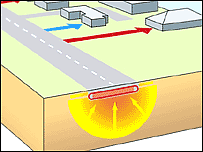 Future Gateway: Underground Energy!Cities like Stockholm and Amsterdam are using the sun's rays to trap heat underground. One designer sees the Thames Gateway as the perfect place to replicate this technique... Netherlands-based design engineer Bill Holdsworth sees the Thames Gateway as a perfect opportunity to install renewable energy in the form of Underground Thermal Energy Storage (UTES). But what is it?
Basically what happens is the surface of a road / playground / pavement warms up under the sun and the collected energy is stored in the ground for future use. This, in turn, is coupled to a heat pump, which provides either warmth to any building, business or home. Click through our photo gallery of the Gateway of the Future: The PlansHoldsworth sees the Thames Gateway region, in particular London’s 2012 Lea Valley Olympic site, as an ideal spot to start using renewable energy on a large scale. He promotes the idea of ‘Underground Thermal Energy Storage’ where users can store excess energy -from the sun's rays for example - for later use via heat pumps. As well as UTES, there is also the ATES (Aquifer Thermal Energy Storage) which uses rock deep underground to store excess energy. This has been used in the shipping terminal in Amsterdam where four deep wells are connected to a grid to provide the energy source for the city's ships' passenger terminal (see our photo gallery). The AimsThe main aims of the underground heating would be to: • Create a renewable energy source that is environmentally friendly and therefore reduce our ‘carbon footprint’. Where will it be?Underground heating (UTES) is suitable for areas where there are lots of roads, pavements, public concourses, playgrounds, roofs of buildings, and car parks – therefore anywhere in the Thames Gateway regeneration area. But will it happen?Holdsworth asked Eric Reynolds, founder of Urban Space Management and Chairman of Leaside Regeneration, if he was being ‘over enthusiastic’ with his plans for underground heating. Reynolds responded that they are actively promoting a green energy network as part of the preparation for the Games. So if the Olympic developers are willing to go ahead with UTES then whose to say that developers elsewhere won’t follow suit? last updated: 05/06/2008 at 10:17 SEE ALSOYou are in: Kent > Thames Gateway > Features > Future Gateway: Underground Energy! |
| | About the BBC | Help | Terms of Use | Privacy & Cookies Policy |